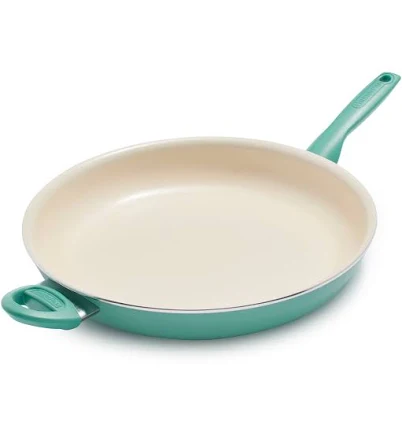
GreenPan Rio Ceramic Nonstick Frypan, Is It Non-Toxic?
Named ceramic non-stick coating, with a brand PFAS statement we have not verified.
GreenPan says its Thermolon coated food contact surface is free of PFAS, including Teflon-type coating and PFOA. We record that as an unverified brand claim.
Brand says: “GreenPan says its Thermolon coated food contact surface is free of PFAS, including PTFE and PFOA.”
We flunk more products than we pass. This one earned its grade. How we grade
Material
ceramic nonstick coating
Brand disclosure
Brand claims PFAS-free
Lab data
No public lab test
You may also be interested in
Top-graded picks in the categories readers replace first, every one scored on the same rubric.

- polypropylene filter housing, carbon/sediment cartridge
- We found no PFAS statement from the brand
- Bacterial growth in spent cartridges
3 hazards checked on this product, all on its full breakdown.

Aquasure
Premier Series 75 GPD Under Sink Reverse Osmosis Water Filtration System
- RO membrane, carbon filters, stainless steel housing
- We found no PFAS statement from the brand
- Bacterial and microbial growth in housing and filters
4 hazards checked on this product, all on its full breakdown.

Avocado
Vegan Mattress
- organic cotton, natural latex, coconut coir, recycled steel coils
- The brand calls it PFAS-free, which we have not verified
- Heavy metals
2 hazards checked on this product, all on its full breakdown.
Is GreenPan Rio Ceramic Nonstick Frypan non-toxic? What it is made of
GreenPan Rio uses a ceramic nonstick coating applied over aluminum or steel cookware base. Ceramic coatings are inorganic mineral layers that do not contain Teflon-type coating (Teflon) or the legacy PFAS chemicals PFOA and PFOS. The coating bonds to the metal substrate and degrades into inert minerals rather than releasing volatile organic compounds at normal cooking temperatures. This material class avoids the fume-release risk associated with overheated traditional nonstick cookware.
What’s concerning
Disclosed non-fluorinated coating
Coating is named and the brand states it is made without PFAS.
Category baseline
The starting point for this type of product, before anything specific to this product is counted.
Coating degradation and particulate release
Ceramic coatings are mechanically more fragile than Teflon-type coating and can chip or flake with aggressive cleaning or metal utensil contact. Shed ceramic particles are inert and pass through the digestive system, but visible degradation indicates loss of nonstick function and potential metal substrate exposure.
Aluminum leaching from base metal
If ceramic coating chips and exposes underlying aluminum, acidic foods (tomatoes, vinegar, citrus) can dissolve small amounts of aluminum into food. This is a general aluminum cookware concern, not specific to GreenPan, but coating integrity is the barrier; inspect regularly.
Thermal polymer decomposition fumes
While ceramic itself does not decompose to toxic fumes like Teflon-type coating does, the adhesive or binder layer between ceramic and metal substrate composition is not publicly disclosed. Overheating could theoretically release volatile compounds from the binder; use at moderate heat and avoid prolonged empty-pan heating.
What’s reassuring
Brand-stated PFAS-free
The brand states this product is PFAS-free. We have not verified the claim.
Lead
No recalls or published test findings document lead or cadmium contamination in GreenPan Rio ceramic coatings. Ceramic glazes can theoretically contain these metals if poorly formulated, but GreenPan has not faced enforcement actions or recalls for this hazard class.
Source, ATSDR ↗Teflon-type coating or related Teflon-family coating residue
GreenPan Rio is marketed and positioned as a ceramic-only nonstick product with no Teflon-type coating. No credible reports suggest Teflon-type coating is present in this product line, though independent lab confirmation of the claim is not publicly available.
How is this PFAS grade calculated?
The brand's record and disclosure
GreenPan publicly markets its cookware line as not containing PFAS and positions ceramic nonstick as having lower concern compared to Teflon-type coating. The company has not faced major recalls related to hazardous coatings or lead/cadmium contamination in glazes. However, their PFAS-free claim has not been independently verified through third-party testing we can confirm. GreenPan has maintained relatively transparent marketing around their ceramic coating technology without substantive controversies in public records.
How it compares in its category
Ceramic nonstick sits between traditional Teflon-type coating nonstick and cast iron in the cookware spectrum. Unlike Teflon-type coating, it avoids PFOA and PFOS concerns; unlike bare cast iron, it requires no seasoning. Ceramic coatings are more brittle than Teflon-type coating and degrade faster with metal utensils, shortening lifespan. GreenPan's ceramic option is middle-market pricing and appeals to consumers prioritizing PFAS avoidance over durability.
If you buy it
Use wooden or silicone utensils to extend coating life; avoid steel wool and abrasive scrubbers. Do not heat empty or above medium-high temperature, as ceramic can degrade faster than Teflon-type coating under extreme heat. Inspect the coating annually for chips, cracks, or bare spots. Once the nonstick surface flakes noticeably or food sticks consistently, replace the pan rather than continuing to cook on degraded coating.
What is not known about PFAS in this product?
- Basis
- Model estimate, 82% confidence, not a lab result
- Lab test
- None on record for this exact product
- Brand statement
- GreenPan has made a specific claim
Formulations change between production runs, so check the current label. How we grade.
More nonstick skillets grades
How we score, every product runs through the same public 0-100 rubric based on materials, coatings, brand disclosure, lab findings, and recalls. See the full methodology → Spotted a mistake? Report an error.