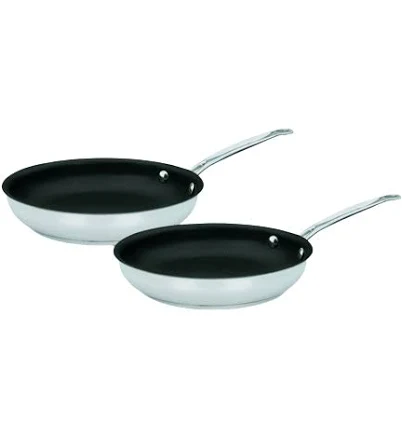
Cuisinart Chef's Classic Stainless Nonstick Skillet Set of 2, Is It Non-Toxic?
Pass until Cuisinart reveals nonstick coating chemistry.
Cuisinart's Chef's Classic uses nonstick without specifying Teflon-type coating, Teflon-family coating, or PFAS status. The stainless steel base is lower concern; the coating isn't disclosed.
The better-graded swap
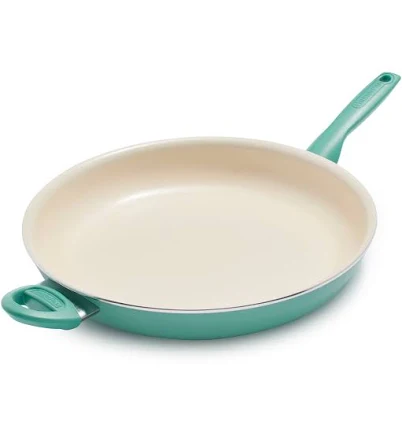
GreenPan
GreenPan Rio Ceramic Nonstick Frypan
70/100 safety
Same rubric that flunked this product. The swap earned Good.
Still want this one anyway? Check the price on Amazon. We’d swap it.
Material
Stainless steel with proprietary nonstick coating (unspecified)
Lab data
No public lab test
You may also be interested in
Top-graded picks in the categories readers replace first, every one scored on the same rubric.

- polypropylene filter housing, carbon/sediment cartridge
- We found no PFAS statement from the brand
- Bacterial growth in spent cartridges
3 hazards checked on this product, all on its full breakdown.

Aquasure
Premier Series 75 GPD Under Sink Reverse Osmosis Water Filtration System
- RO membrane, carbon filters, stainless steel housing
- We found no PFAS statement from the brand
- Bacterial and microbial growth in housing and filters
4 hazards checked on this product, all on its full breakdown.

Avocado
Vegan Mattress
- organic cotton, natural latex, coconut coir, recycled steel coils
- The brand calls it PFAS-free, which we have not verified
- Heavy metals
2 hazards checked on this product, all on its full breakdown.
Is Cuisinart Chef's Classic Skillet Set non-toxic? What it is made of
This skillet pairs a stainless steel body with a proprietary nonstick coating whose chemical identity Cuisinart has not publicly disclosed. The stainless steel itself does not leach under normal cooking conditions. The unknown coating composition is the primary concern, without disclosure, you cannot independently verify whether it contains PFOA, Teflon-type coating, or other regulated or emerging compounds. Coating durability over time determines whether metal or coating particles enter food.
What’s concerning
Category baseline
The starting point for this type of product, before anything specific to this product is counted.
No PFAS disclosure
No public statement from the brand about PFAS in this product.
Non-stick, chemistry undisclosed
Marketed as non-stick without stating the coating chemistry.
Teflon-type coating fume risk (nonstick coating thermal decomposition)
If the proprietary coating contains Teflon-type coating or related Teflon-family coating, overheating above 500F (260C) can release toxic fumes. Cuisinart has not disclosed whether Teflon-type coating is present. Risk is low under normal stovetop use but increases if skillet is preheated empty or used on high heat.
Coating degradation and particle shedding
Like most nonstick skillets, this coating will degrade with use, especially if exposed to metal utensils, dishwasher, or high heat. Small coating flakes may enter food if the skillet is damaged. No recalls specific to this model are on record, but degradation is a known wear mechanism for nonstick cookware.
Coating leachables from unknown chemical composition
Without public disclosure of the nonstick coating formula, potential monomers, additives, or unidentified compounds cannot be ruled out. While Cuisinart products are FDA-compliant for food contact, proprietary coatings may contain compounds that are legal but not independently validated as inert under all cooking conditions.
What’s reassuring
Aluminum leaching
The skillet is stainless steel, not aluminum, so aluminum leaching is not a concern for this product. Nonstick coating provides a barrier between food and the metal substrate.
Lead
Cuisinart products are subject to US FDA and consumer protection regulations that prohibit lead in cookware. No recalls or test reports have identified lead or cadmium in this skillet line. The proprietary coating is unlikely to contain these metals, but undisclosed composition prevents absolute verification.
Source, ATSDR ↗How is this PFAS grade calculated?
The brand's record and disclosure
Cuisinart has not issued public statements about PFAS avoidance, PFOA phase-out compliance, or nonstick coating chemistry in this product line. The brand does not list third-party certifications (e.g., GreenGuard, Cradle to Cradle) for these skillets. This silence is not evidence of harm, but it prevents informed comparison with brands that do disclose coating composition or PFAS status. Consumers requesting coating details directly from Cuisinart customer service have historically received vague responses.
How it compares in its category
Most mass-market nonstick skillets (T-fal, Calphalon, Tramontina) also use proprietary coatings with limited disclosure. Brands like GreenPan and Our Place explicitly market PFOA-free or ceramic-based coatings and publish technical specs. Stainless steel body construction is standard across price tiers; the real differentiator is coating transparency and durability. Cuisinart's lack of public commitment to PFAS-free formulations places it in the middle of the transparency spectrum, below disclosure leaders but typical of conventional cookware.
If you buy it
Use on medium heat or below; high heat accelerates nonstick coating breakdown and increases risk of fume inhalation if coating contains Teflon-type coating. Avoid metal utensils and abrasive scrubbing, which degrade the coating and expose underlying metal. Hand wash only; dishwasher use shortens coating life. Replace the skillet if the coating flakes, peels, or shows bare spots. Consider requesting coating chemistry details from Cuisinart before purchase; a clear answer strengthens your decision.
What is not known about PFAS in this product?
- Basis
- Model estimate, 45% confidence, not a lab result
- Lab test
- None on record for this exact product
- Brand statement
- Cuisinart has made a specific claim
Formulations change between production runs, so check the current label. How we grade.
What are the PFAS-free alternatives to Cuisinart Chef's Classic Stainless Nonstick Skillet Set of 2?
- ceramic nonstick coating
- The brand calls it PFAS-free, which we have not verified
- Coating degradation and particulate release
3 hazards checked on this product, all on its full breakdown.
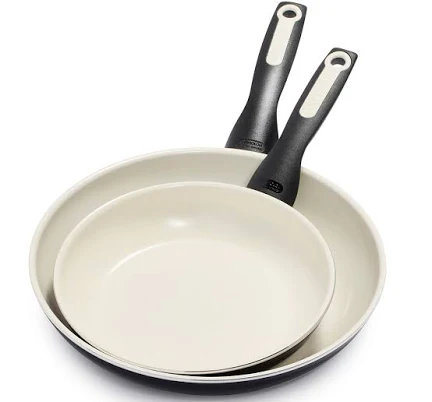
- ceramic non-stick coating
- The brand calls it PFAS-free, which we have not verified
- Coating degradation and aluminum leaching
3 hazards checked on this product, all on its full breakdown.
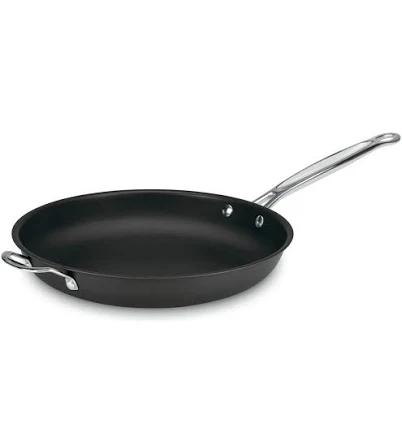
- anodized aluminum (hard-coat anodic oxidation)
- Coating degradation and leachables from breakdown
More nonstick skillets grades
How we score, every product runs through the same public 0-100 rubric based on materials, coatings, brand disclosure, lab findings, and recalls. See the full methodology → Spotted a mistake? Report an error.