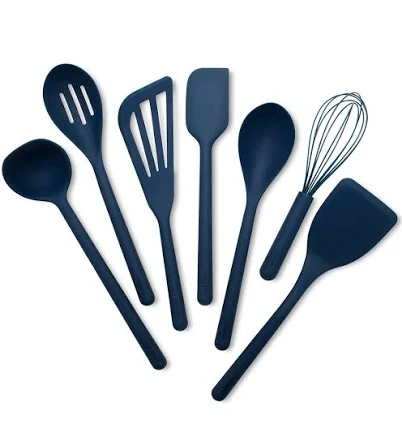
GreenPan · Non-Stick Kitchen Gadgets
GreenPan Silicone 7 Piece Cooking Utensil Set
No coating of concern recorded, and no PFAS statement from the brand.
The brand has published no PFAS statement for this product that we could find.
The better-graded swap
Our Place
Our Place Essential Utensil Set
90/100 safety
Same rubric that flunked this product. The swap earned Excellent.
Still want this one anyway? Check the price on Amazon. We’d swap it.
Material
silicone utensil heads, nylon handles
Lab data
No public lab test
Is GreenPan Silicone 7 Piece Cooking Utensil non-toxic? What it is made of
This set uses food-grade silicone for the utensil heads and nylon for the handles. Silicone is an inert polymer that does not leach monomers or plasticizers under normal cooking temperatures (up to around 400-500F depending on grade). Unlike Teflon-type coating non-stick coatings on cookware, silicone utensils are not applied as a thin thermal layer and thus do not degrade or release fumes if overheated. Nylon handles are stable and do not contain BPA or phthalates as additives in the formulation when sourced from reputable manufacturers.
What’s concerning
No PFAS disclosure
No public statement from the brand about PFAS in this product.
Category baseline
The starting point for this type of product, before anything specific to this product is counted.
Adhesive leaching at silicone-nylon joint
If the utensil heads are glued to nylon handles rather than molded, long-term heat exposure or immersion may stress the adhesive bond. Separation of the head from the handle is a durability issue rather than a primary toxicity hazard, but loose joints warrant replacement.
Thermal stability of silicone above 500F
Silicone has stated upper limits (typically 400-500F for cookware-grade formulations). Prolonged direct exposure to higher temperatures may cause discoloration, brittleness, or minor volatile release, though this is not typical in stovetop use.
What’s reassuring
Base material not linked to PFAS
The main material recorded for this product is not one associated with PFAS.
Silicone monomer leaching
Food-grade silicone does not measurably leach oligomers or monomers under normal cooking conditions (below 500F). No recalls or reports of silicone utensil contamination have been recorded in kitchen utensil categories.
Nylon handle plasticizer or monomer release
Nylon (polyamide) does not contain BPA, BPS, or phthalates as primary components when manufactured to food-contact standards. Heat exposure at normal cooking temperatures does not trigger significant monomer release from nylon handles.
Colorant or pigment toxicity
No heavy metal contamination (cadmium, lead) or azo dye concerns have been reported in silicone utensil colorants from established brands. GreenPan products do not carry known pigment safety alerts.
The full breakdown
The brand's record and disclosure
GreenPan is known primarily for its ceramic non-stick cookware line and has marketed products under 'Thermolon' ceramic coating technology as Teflon-type coating-free. The brand has not published a formal PFAS disclosure statement, but no PFAS-containing coatings have been detected or reported in their product lines by third parties or regulatory bodies. The company's positioning emphasizes alternative coatings to traditional Teflon-type coating, which is consistent with known product materials.
How it compares in its category
Silicone utensil sets are among the lowest-concern kitchen gadgets in terms of chemical leaching risk. They differ markedly from plastic utensil sets (which may contain phthalates or older plasticizers) and nylon-only sets with adhesive bonding (where adhesive off-gassing can occur). Compared to wooden utensils, silicone tolerates higher heats and does not splinter; compared to metal, silicone does not scratch non-stick surfaces and carries no metal leaching risk.
If you buy it
Hand-wash rather than machine-wash to extend nylon handle durability and prevent adhesive joint stress over time. Do not use directly on direct flame or in broilers; silicone handles tolerate oven heat but prolonged contact above 500F may cause permanent discoloration or slight softening of the material. Replace utensils if nylon shows cracks, separations from the silicone head, or visible wear that exposes underlying material. Store away from direct sunlight to minimize UV degradation of both silicone and nylon.
What we don’t know
- Basis
- Model estimate, 72% confidence, not a lab result
- Lab test
- None on record for this exact product
- Brand statement
- GreenPan has made a specific claim
Formulations change between production runs, so check the current label. How we grade.
Better-graded alternatives in Non-Stick Kitchen Gadgets
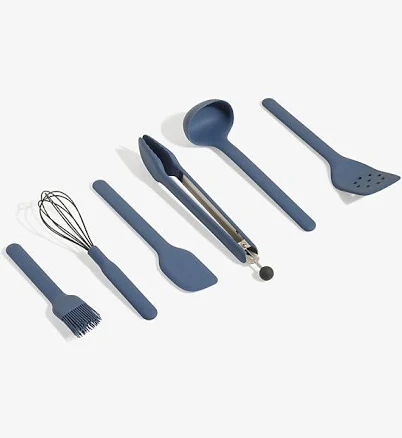
Our Place
Utensil Essentials 6-Piece Silicone Utensil Set
- Silicone utensils, no coating
- The brand calls it PFAS-free, which we have not verified
- Microplastic generation
2 hazards checked on this product. See all of them.
Our Place
Essential Utensil Set
- Stainless steel utensils
- The brand calls it PFAS-free, which we have not verified
- Nickel leaching from stainless steel
2 hazards checked on this product. See all of them.
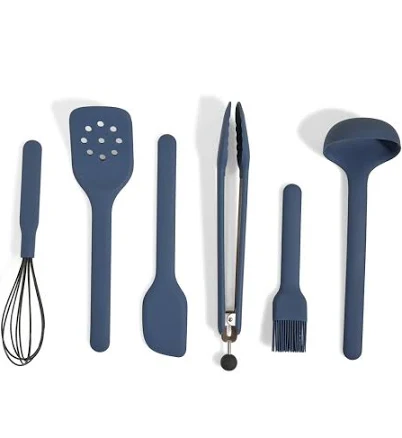
Our Place
Utensil Essentials Set
- Stainless steel utensils, material unclear
- The brand calls it PFAS-free, which we have not verified
- Handle material degradation (if present)
2 hazards checked on this product. See all of them.
More non-stick kitchen gadgets grades
How we score, every product runs through the same public 0-100 rubric based on materials, coatings, brand disclosure, lab findings, and recalls. See the full methodology → Spotted a mistake? Report an error.