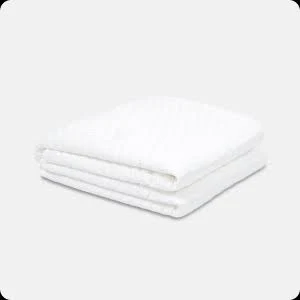
Helix Glaciotex Mattress Protector
Avoid until Helix explains its coating chemistry or gets third-party testing.
This Helix protector repels water with an unidentified coating the brand refuses to describe. Mattress protectors typically use water-repellent coating finishes, which have often contained PFAS.
The better-graded swap

Brooklyn Bedding
Brooklyn Bedding Mattress Encasement, Twin
75/100 safety
Same rubric that flunked this product. The swap earned Excellent.
Still want this one anyway? Check the price on Amazon. We’d swap it.
Material
Polyester with water-resistant coating (unspecified chemistry)
Brand disclosure
Brand is silent on PFAS
Lab data
No public lab test
Is Helix Glaciotex Mattress Protector non-toxic? What it is made of
The Helix Glaciotex Protector is polyester fabric with an unspecified water-resistant coating. Polyester itself is stable and low-risk, but the coating chemistry is the critical unknown. Water-resistant treatments on textiles often use PFAS or PFAS-like compounds to repel liquids; Helix has not disclosed which chemistry they use, making it impossible to assess if the coating contains legacy PFAS, newer fluorine-free alternatives, or other synthetic hydrophobic agents. This opacity is the primary concern.
What’s concerning
Category baseline
The starting point for this type of product, before anything specific to this product is counted.
No PFAS disclosure
No public statement from the brand about PFAS in this product.
Waterproof / stain-resistant treatment
Water-repellent coating treatments have historically used PFAS.
PFAS
Helix has not disclosed coating type; water-resistant finishes commonly use PFAS or PFAS-alternatives. No third-party testing results are available. PFAS can accumulate in household dust and body tissues with repeated skin contact and wash water exposure. The lack of brand transparency elevates risk perception despite no direct contamination evidence for this SKU.
Source, ATSDR ↗Coating degradation and microparticle shedding
Repeated laundering can degrade synthetic coatings, causing small particles or finish flakes to shed into wash water and potentially into homes. Without knowing the coating polymer type (e.g., PU vs. acrylic vs. Teflon-family coating), durability and shedding profile cannot be precisely assessed. Protectors with worn coatings may shed faster.
What’s reassuring
Polyester antimony catalyst residue
Polyester is typically polymerized with antimony catalysts; commercial polyester textiles rarely retain harmful residues if properly processed. No specific recalls or testing data on Helix Glaciotex for antimony leaching. Standard risk for polyester is very low after manufacture and rinsing, though regulatory limits vary by region.
Volatile organic compounds (VOCs) off-gassing
No published reports of off-gassing or odor complaints specific to Helix Glaciotex. Polyester and synthetic coatings are generally low-VOC after manufacture; any early odor (chemical smell) typically dissipates after airing and a cold wash. Not a primary concern for this product class, but unknown coating formulation leaves this unconfirmed.
Formaldehyde / VOCs
Mattress protector coatings typically do not use formaldehyde-based resins (those are more common in wrinkle-resistant apparel). No evidence suggests Helix uses formaldehyde finishes. Risk is low for this product category unless the brand employs non-standard chemistry, which is undisclosed.
Source, ATSDR ↗The full breakdown
The brand's record and disclosure
Helix Sleep has not published materials disclosures, PFAS testing results, or supply-chain certifications for this product. The company maintains silence on mattress protector coating chemistry despite growing industry and consumer scrutiny of PFAS in textiles. No formal recalls or contamination reports are on record for this specific product. The lack of transparency contrasts with competitors (e.g., Saatva, Purple) who have begun specifying fluorine-free or PFAS-tested coatings.
How it compares in its category
Mattress protector coatings range from polyurethane (PU) to polyacrylate to PFAS-laden Teflon-family coating. Many budget and mid-tier brands use unspecified hydrophobic treatments; Helix sits in this murky middle. Premium alternatives (e.g., Avocado, Boll & Branch) offer organic-certified or PFAS-tested protectors at higher cost. Budget protectors often use the same ambiguous coatings. Helix's silence is less defensible now that PFAS testing is becoming standard.
If you buy it
Wash the protector in cool water before first use to reduce potential coating release and dust. Launder every 2-4 weeks in gentle cycles using warm (not hot) water; high heat can degrade synthetic coatings and accelerate any leaching. Replace every 2-3 years or if waterproofing noticeably degrades (water no longer beads). Do not dry-clean or expose to prolonged direct sunlight, as both can stress the coating. Store in a cool, dry place between uses.
What we don’t know
- Basis
- Model estimate, 35% confidence, not a lab result
- Lab test
- None on record for this exact product
- Brand statement
- Helix has made none
Formulations change between production runs, so check the current label. How we grade.
Better-graded alternatives in Mattress Protectors
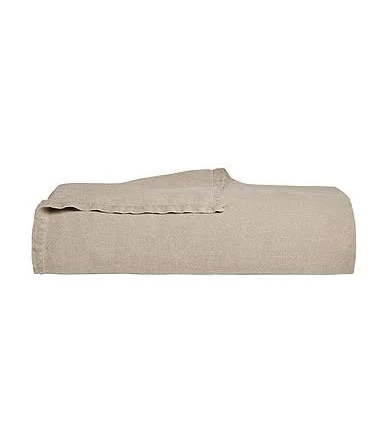
Parachute
Vintage Linen Bed Cover
- 100% linen, no reported coating
- We found no PFAS statement from the brand
- Heavy metals
3 hazards checked on this product. See all of them.
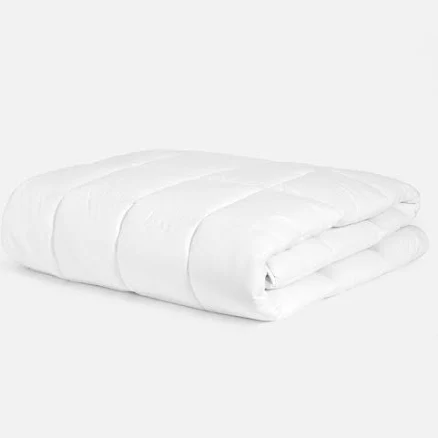
Brooklinen
Down Alternative Mattress Topper
- polyester down-alternative filling
- We found no PFAS statement from the brand
- Azo dyes and colorant migration
4 hazards checked on this product. See all of them.
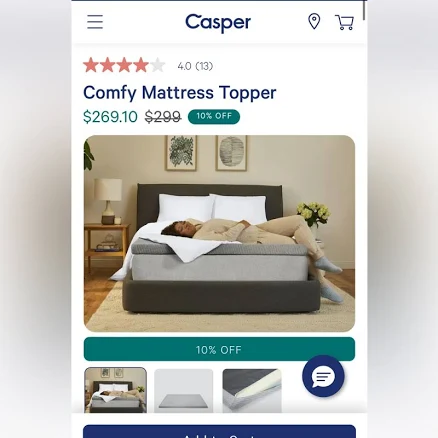
Casper
Sleep Comfy Mattress Topper
- Polyurethane foam, cotton/polyester blend cover
- We found no PFAS statement from the brand
- Volatile Organic Compound (VOC) off-gassing
3 hazards checked on this product. See all of them.
More mattress protectors grades
How we score, every product runs through the same public 0-100 rubric based on materials, coatings, brand disclosure, lab findings, and recalls. See the full methodology → Spotted a mistake? Report an error.