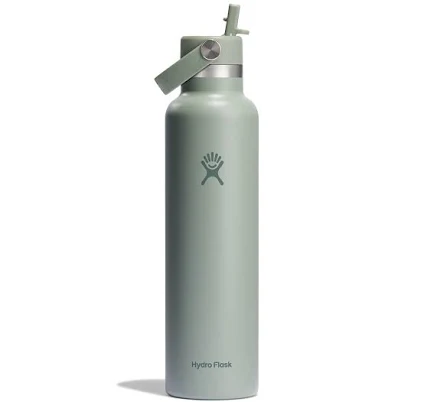
Hydro Flask 24oz Standard Flex Straw Cap
Lower PFAS concern; standard bottle with no known problematic coatings.
The Hydro Flask Standard Flex Straw Cap uses stainless steel with silicone straw components, both with lower PFAS risk. Hydro Flask does not publicize PFAS disclosures, and no independent lab testing or certifications are publicly documented.
We flunk more products than we pass. This one earned its grade. How we grade
Material
Stainless steel bottle, silicone straw cap
Lab data
No public lab test
What Hydro Flask 24oz Standard Flex Straw Cap is made of, ingredients and materials
The bottle body is 18/8 stainless steel, a food-grade alloy resistant to corrosion and leaching under normal use. The Flex Straw Cap uses food-grade silicone for the straw and seal, which is stable at typical drinking temperatures and does not contain BPA or phthalates by design. Stainless steel and silicone are among the most inert materials used in drinkware, with no established mechanism for leaching harmful substances into cold or warm beverages.
What’s concerning
No PFAS disclosure
No public statement from the brand about PFAS in this product.
Silicone degradation over time
Food-grade silicone is stable at normal temperatures but may degrade or develop surface defects if repeatedly exposed to very hot water or mechanical stress, potentially releasing particles or odors.
Microbial growth in cap and straw
The straw channel and cap seals can harbor bacteria or mold if not dried thoroughly or left damp for extended periods; proper maintenance prevents this common issue in reusable bottle systems.
What’s reassuring
Bare uncoated material
Recorded as a bare, uncoated material with no surface coating or treatment.
Stainless steel corrosion or pitting
18/8 stainless steel is highly resistant to corrosion in normal use; no reports of pitting or leaching from this product in acidic beverages, though prolonged contact with salt water is not recommended.
Coating or finish degradation
This bottle uses bare stainless steel or minimal powder coating; no problematic non-stick, ceramic, or enamel layers are applied, eliminating risks associated with coating flaking or breakdown.
Off-gassing or volatile organic compounds (VOCs)
Stainless steel and food-grade silicone do not off-gas; no VOC concerns are documented for this product type or brand.
The full breakdown
The brand's record and disclosure
Hydro Flask does not publicly disclose detailed material sourcing or third-party safety testing results on their website. The brand has not faced recalls or documented safety incidents related to this product line. No formal certifications (e.g.NSF and FDA material compliance statements are prominently communicated, though stainless steel and silicone materials themselves are FDA-listed for food-contact use.
How it compares in its category
This product has lower concern in the drinkware spectrum because it avoids plastic bottles (which may leach BPA or microplastics) and non-stick coatings (which carry Teflon-type coating fume risk). Competitors using similar stainless steel construction (e.g., S'well, Klean Kanteen) offer comparable safety profiles. The silicone straw is a common material choice in this category and carries no identified hazard above peers.
If you buy it
Wash the silicone straw and cap by hand or on the top rack of a dishwasher to prevent degradation; avoid prolonged exposure to very hot water (above 160F/70C) or direct flame. Replace the silicone straw every 12-18 months or if it shows visible cracks, discoloration, or odor, as aged silicone can develop surface microfissures. Store dry and keep the cap loose when not in use to prevent mold growth inside the bottle; rinse thoroughly after acidic beverages (citrus, vinegar) to maintain interior shine.
What we don’t know
- Basis
- Model estimate, 72% confidence, not a lab result
- Lab test
- None on record for this exact product
- Brand statement
- Hydro Flask has made a specific claim
Formulations change between production runs, so check the current label. How we grade.
More water filters grades
How we score, every product runs through the same public 0-100 rubric based on materials, coatings, brand disclosure, lab findings, and recalls. See the full methodology → Spotted a mistake? Report an error.