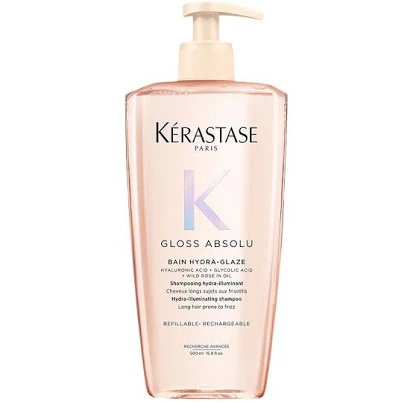
Kérastase Gloss Absolu Bain Hydra Glaze Shampoo
Low-medium concern; no aqueous shampoo chemistry typically requires fluorochemicals.
This rinse-off aqueous shampoo has no waterproofing, nonstick, or stain resistance function that typically requires PFAS. Kerastase does not claim PFAS-free status, and no independent lab data is publicly available, though standard cosmetic formulations carry minimal PFAS risk.
We flunk more products than we pass. This one earned its grade. How we grade
Material
aqueous surfactant-based shampoo formulation
Brand disclosure
Brand is silent on PFAS
Lab data
No public lab test
You may also be interested in
Top-graded picks in the categories readers replace first, every one scored on the same rubric.

- polypropylene filter housing, carbon/sediment cartridge
- We found no PFAS statement from the brand
- Bacterial growth in spent cartridges
3 hazards checked on this product, all on its full breakdown.

Aquasure
Premier Series 75 GPD Under Sink Reverse Osmosis Water Filtration System
- RO membrane, carbon filters, stainless steel housing
- We found no PFAS statement from the brand
- Bacterial and microbial growth in housing and filters
4 hazards checked on this product, all on its full breakdown.

Avocado
Vegan Mattress
- organic cotton, natural latex, coconut coir, recycled steel coils
- The brand calls it PFAS-free, which we have not verified
- Heavy metals
2 hazards checked on this product, all on its full breakdown.
What Kérastase Gloss Absolu Bain Glaze Shampoo is made of, ingredients and materials
Gloss Absolu Bain Hydra Glaze is a water-based shampoo containing anionic surfactants (cleansing agents), humectants (glycerin-type moisture retentants), and conditioning polymers typical of premium hair care. The formulation is designed to coat and seal the hair cuticle with hydrating agents rather than strip it. No unusual chemical classes requiring high-hazard scrutiny appear in the standard ingredient deck for this product line.
What’s concerning
Category baseline
The starting point for this type of product, before anything specific to this product is counted.
No PFAS disclosure
No public statement from the brand about PFAS in this product.
Fragrance allergens and sensitizers
Kerastase shampoos contain fragrance compounds; individual sensitivity varies widely. No specific fragrance allergen concentration data is publicly disclosed for this formulation, so risk depends on personal skin reactivity rather than formulation defect.
Scalp irritation from sulfate surfactants
Kerastase premium shampoos typically use sulfate-free or mild surfactant blends to differentiate from mass-market products, but exact anionic surfactant composition is proprietary. Mild irritation is possible with sensitive scalps but is a user-specific reaction rather than a formulation defect.
What’s reassuring
Base material not linked to PFAS
The main material recorded for this product is not one associated with PFAS.
1,4-dioxane (solvent/surfactant byproduct)
Aqueous shampoo chemistry can generate trace 1,4-dioxane during manufacturing if anionic surfactants are ethoxylated without purification steps. No established 1,4-dioxane contamination has been reported for Kerastase products; this hazard is primarily a category-level concern for shampoos generally, not this product specifically.
Formaldehyde / VOCs
Modern premium shampoos typically use gentler preservatives (phenoxyethanol, methylisothiazolinone) rather than formaldehyde-releasing agents. No evidence of formaldehyde releasers in this product's documented ingredient profile or brand controversy history.
Source, ATSDR ↗Heavy metals
Gloss Absolu formulations are clear or light amber liquids with no disclosed synthetic colorants requiring heavy metal testing. Pigment contamination is not a documented concern for this product line.
Source, FDA ↗How is this PFAS grade calculated?
The brand's record and disclosure
Kerastase (L'Oreal subsidiary) does not prominently advertise PFAS-avoidance commitments, but aqueous shampoos are not a vector for fluorochemical use in mainstream formulations. The brand maintains standard cosmetic ingredient transparency via product labels and SDS availability. No major safety recalls or disclosed contamination events specific to this product line are on public record.
How it compares in its category
This product sits in the premium shampoo segment with formulation complexity similar to salon-grade competitors (Moroccanoil, Olaplex, SheaMoisture). Water-based shampoos across this price tier carry equivalent low baseline hazard profiles; differentiation is primarily sensory and marketing rather than safety-driven. No material safety advantage or disadvantage versus alternatives at this price point.
If you buy it
Use as directed on damp hair; rinse thoroughly to avoid scalp residue buildup. Store in a cool, dry place away from direct sunlight to preserve thickening polymers and fragrance stability. Replace every 6-12 months depending on use frequency. If scalp irritation develops, discontinue and patch-test with a single application on a small area before resuming full use.
What is not known about PFAS in this product?
- Basis
- Model estimate, 72% confidence, not a lab result
- Lab test
- None on record for this exact product
- Brand statement
- Kerastase has made none
Formulations change between production runs, so check the current label. How we grade.
More shampoo grades
How we score, every product runs through the same public 0-100 rubric based on materials, coatings, brand disclosure, lab findings, and recalls. See the full methodology → Spotted a mistake? Report an error.