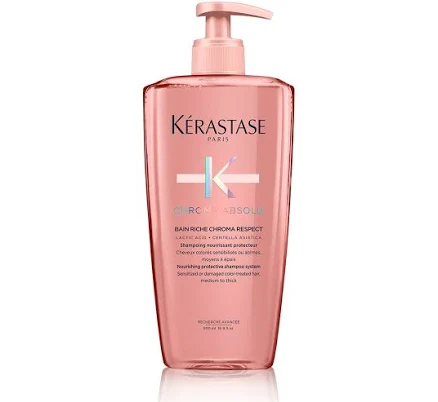
Kerastase Chroma Absolu Bain Riche Chroma Respect Shampoo
Lower concern for liquid shampoo with no known PFAS triggers.
Liquid shampoos rarely need water-repellent or grease-resistant treatments that require PFAS. No brand PFAS claims, lab data, or recalls exist for this product.
We flunk more products than we pass. This one earned its grade. How we grade
Material
aqueous shampoo base; polymers, silicones, and conditioning agents typical of luxury haircare
Brand disclosure
Brand is silent on PFAS
Lab data
No public lab test
You may also be interested in
Top-graded picks in the categories readers replace first, every one scored on the same rubric.

- polypropylene filter housing, carbon/sediment cartridge
- We found no PFAS statement from the brand
- Bacterial growth in spent cartridges
3 hazards checked on this product, all on its full breakdown.

Aquasure
Premier Series 75 GPD Under Sink Reverse Osmosis Water Filtration System
- RO membrane, carbon filters, stainless steel housing
- We found no PFAS statement from the brand
- Bacterial and microbial growth in housing and filters
4 hazards checked on this product, all on its full breakdown.

Avocado
Vegan Mattress
- organic cotton, natural latex, coconut coir, recycled steel coils
- The brand calls it PFAS-free, which we have not verified
- Heavy metals
2 hazards checked on this product, all on its full breakdown.
What Kerastase Chroma Absolu Respect Shampoo is made of, ingredients and materials
Kerastase Chroma Absolu Bain Riche is an aqueous shampoo base typical of premium haircare, formulated with silicones (likely dimethicone or amodimethicone), conditioning polymers, surfactants, and botanical extracts marketed for color-treated hair. Rinse-off products like shampoos present lower systemic exposure risk than leave-on products because contact time is brief and dilution occurs immediately upon application. The luxury positioning implies tighter quality control on raw materials and finished-product testing than mass-market equivalents, though this is industry norm rather than brand-specific guarantee.
What’s concerning
Category baseline
The starting point for this type of product, before anything specific to this product is counted.
No PFAS disclosure
No public statement from the brand about PFAS in this product.
Fragrance allergens and undisclosed components
Luxury shampoos typically include fragrance blends listed only as 'parfum' on label; specific sensitizing compounds (e.g., limonene, linalool) are not itemized. Individuals with fragrance sensitivity or scalp dermatitis may react; patch testing is prudent for sensitive individuals.
Silicone and polymer buildup on hair
Repeated use of silicone-heavy shampoos can deposit residue on hair shaft, reducing volume and complicating subsequent chemical treatments (coloring, perming). This is a cosmetic issue rather than toxicological hazard but relevant to product performance over time, particularly for fine or color-treated hair.
Heavy metals
Some color-care shampoos include plant extracts (e.g., flax, grape) that may bioaccumulate trace metals from soil. L'Oreal operates under EU/FDA cosmetic safety frameworks which require heavy metal limits, but third-party verification is not publicly available for this specific SKU.
Source, FDA ↗What’s reassuring
Base material not linked to PFAS
The main material recorded for this product is not one associated with PFAS.
Formaldehyde / VOCs
No public evidence that Kerastase Chroma Absolu uses formaldehyde donors (DMDM hydantoin, imidazolidinyl urea) in this line. Modern premium formulations typically favor paraben-free or gentle preservatives, but ingredient lists do not rule out legacy preservative use entirely.
Source, ATSDR ↗Talc or asbestos contamination
Liquid shampoos do not typically contain talc; this hazard is relevant to powder products. No record of talc or asbestos in Kerastase liquid shampoo formulations.
How is this PFAS grade calculated?
The brand's record and disclosure
Kerastase (owned by L'Oreal) maintains no published PFAS disclosure or commitment; the brand does not proactively test or communicate on per- and polyfluorinated compounds in its formulations. L'Oreal as a parent company has faced scrutiny on ingredient transparency but has not issued category-wide PFAS bans or pledges comparable to some competitors. No significant product recalls or toxicological controversies on record for this specific shampoo line. Standard cosmetic safety compliance (FDA/EU) applies.
How it compares in its category
This product sits in the premium segment of color-care shampoos; formulation complexity and silicone loading are typical for that tier and not elevated relative to competitors like Pureology, Olaplex, or Redken. Rinse-off shampoos as a category carry minimal acute hazard risk compared to conditioners, serums, or styling products because residence time on skin and hair is under 5 minutes. Color-care positioning does not inherently add hazard profile; anti-fade claims are usually achieved through pH buffering and polymer conditioning rather than problematic additives.
If you buy it
Use as directed (wet hair, massage, rinse thoroughly); brief contact time minimizes absorption risk. Store in cool, dry conditions away from direct heat or sunlight to prevent emulsion separation or ingredient degradation. Replace every 12-18 months regardless of visible changes; liquid shampoo formulations can develop microbial growth if contaminated during use (e.g., wet hands returning to bottle). If scalp irritation occurs, discontinue and patch-test on inner arm; formaldehyde releasers and fragrance allergens are possible but unconfirmed in this specific batch composition.
What is not known about PFAS in this product?
- Basis
- Model estimate, 72% confidence, not a lab result
- Lab test
- None on record for this exact product
- Brand statement
- Kerastase has made none
Formulations change between production runs, so check the current label. How we grade.
More shampoo grades
How we score, every product runs through the same public 0-100 rubric based on materials, coatings, brand disclosure, lab findings, and recalls. See the full methodology → Spotted a mistake? Report an error.