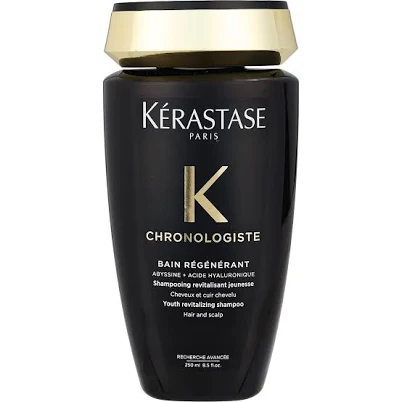
Kerastase Chronologiste Bain Regenerant Shampoo
Lower PFAS concern for rinse-off shampoo, though brand lacks transparency.
This liquid shampoo contains no waterproofing, stain resistance, or nonstick coatings that trigger PFAS use. Rinse-off products carry lower PFAS migration risk than leave-on formulas.
We flunk more products than we pass. This one earned its grade. How we grade
Material
aqueous shampoo base, typical cosmetic actives
Brand disclosure
Brand is silent on PFAS
Lab data
No public lab test
You may also be interested in
Top-graded picks in the categories readers replace first, every one scored on the same rubric.

- polypropylene filter housing, carbon/sediment cartridge
- We found no PFAS statement from the brand
- Bacterial growth in spent cartridges
3 hazards checked on this product, all on its full breakdown.

Aquasure
Premier Series 75 GPD Under Sink Reverse Osmosis Water Filtration System
- RO membrane, carbon filters, stainless steel housing
- We found no PFAS statement from the brand
- Bacterial and microbial growth in housing and filters
4 hazards checked on this product, all on its full breakdown.

Avocado
Vegan Mattress
- organic cotton, natural latex, coconut coir, recycled steel coils
- The brand calls it PFAS-free, which we have not verified
- Heavy metals
2 hazards checked on this product, all on its full breakdown.
What Kerastase Chronologiste Bain Shampoo is made of, ingredients and materials
Kerastase Chronologiste Bain Regenerant is an aqueous shampoo base formulated to target aging hair, containing typical surfactants (likely sodium lauryl sulfate or sulfate-free alternatives), conditioning agents, and antioxidant actives marketed as anti-aging. As a rinse-off product applied briefly to wet hair, systemic absorption is minimal; the primary exposure route is dermal contact during washing. The formulation includes fragrance compounds and preservatives standard to prestige haircare, which carry low residual risk in this leave-on-for-seconds context.
What’s concerning
Category baseline
The starting point for this type of product, before anything specific to this product is counted.
No PFAS disclosure
No public statement from the brand about PFAS in this product.
Fragrance allergens and sensitizers
Kerastase Chronologiste lists 'fragrance' as a declared ingredient. Prestige shampoos often use complex fragrance blends that may contain limonene, linalool, or other botanical compounds known to trigger contact dermatitis or photosensitivity in sensitive individuals. Incidence is low in the general population but higher in those with atopic dermatitis or fragrance sensitivity.
1,4-dioxane (preservation by-product)
Aqueous shampoos may contain trace 1,4-dioxane as a secondary by-product of ethoxylation in surfactant manufacture. Kerastase does not disclose whether the brand uses methods to remove or minimize this contaminant. Rinse-off products pose negligible systemic risk, but the absence of brand commitment to vacuum distillation or similar purification is notable.
What’s reassuring
Base material not linked to PFAS
The main material recorded for this product is not one associated with PFAS.
Preservative system safety
No specific recall or adverse event record exists for Chronologiste preservatives. Standard cosmetic preservatives (methylisothiazolinone, parabens, phenoxyethanol if used) are approved by FDA and ECHA at declared levels. Without ingredient disclosure, specific risk cannot be assessed; brand does not publish detailed preservative strategy.
Heavy metals
No record of lead, cadmium, or arsenic contamination in Kerastase shampoos. Prestige haircare brands are subject to the same regulatory limits as mass-market products; cosmetic-grade pigments are screened. Risk is theoretical unless product is visibly discolored or odorous (sign of contamination or decomposition).
Source, FDA ↗Formaldehyde / VOCs
Chronologiste does not list known formaldehyde-releaser preservatives (DMDM hydantoin, imidazolidinyl urea) in publicly available ingredient information. Modern prestige brands typically avoid these to reduce allergic contact dermatitis; no evidence of their use in this line.
Source, ATSDR ↗How is this PFAS grade calculated?
The brand's record and disclosure
Kerastase (owned by L'Oreal) does not publish detailed chemical disclosure or third-party certifications (such as EWG Verified or Cradle to Cradle) for this product line. The brand has no public record of cosmetic-related recalls or regulatory action for Chronologiste formulas. L'Oreal as a parent company maintains general compliance with EU and US cosmetic regulations but does not voluntarily disclose PFAS-avoidance commitments or ingredient sourcing transparency at the product level.
How it compares in its category
Prestige shampoos at this price point typically share similar formulation profiles with fragrance and preservative systems comparable to Chronologiste. Many drugstore alternatives (e.g., Pantene, Garnier) use identical or near-identical surfactants and actives at lower cost. Brands with explicit natural or clean claims (e.g., Puracy, Acure) may use gentler surfactants but offer no measurable safety advantage for rinse-off use; the main difference is marketing positioning and fragrance intensity.
If you buy it
Use as directed, wet hair, apply, lather, rinse thoroughly within 1-2 minutes. Avoid eye contact; rinse immediately if contact occurs. Store in a cool, dry place away from direct heat to prevent premature separation or preservative breakdown. No special maintenance is required. If scalp irritation, itching, or allergic reaction develops, discontinue and patch-test on inner forearm with diluted product before re-use; contact dermatologist if symptoms persist.
What is not known about PFAS in this product?
- Basis
- Model estimate, 72% confidence, not a lab result
- Lab test
- None on record for this exact product
- Brand statement
- Kerastase has made none
Formulations change between production runs, so check the current label. How we grade.
More shampoo grades
How we score, every product runs through the same public 0-100 rubric based on materials, coatings, brand disclosure, lab findings, and recalls. See the full methodology → Spotted a mistake? Report an error.