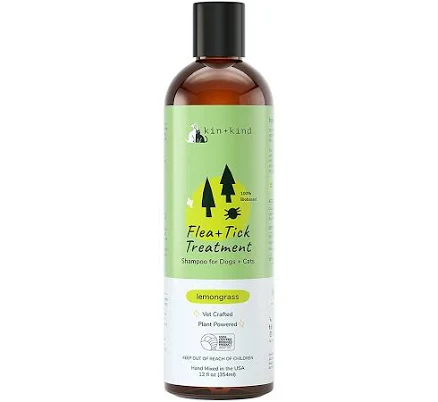
kin+Kind Flea & Tick Shampoo Lemongrass
Lower PFAS concern for liquid pet shampoo with no water-repellent or nonstick claims.
This flea and tick shampoo is a rinse-off liquid with no water-resistant, stain-resistant, or coating technologies that typically introduce PFAS. The brand makes no PFAS claims or offers verification.
We flunk more products than we pass. This one earned its grade. How we grade
Material
aqueous shampoo base with botanical actives (lemongrass)
Brand disclosure
Brand is silent on PFAS
Lab data
No public lab test
You may also be interested in
Top-graded picks in the categories readers replace first, every one scored on the same rubric.

- polypropylene filter housing, carbon/sediment cartridge
- We found no PFAS statement from the brand
- Bacterial growth in spent cartridges
3 hazards checked on this product, all on its full breakdown.

Aquasure
Premier Series 75 GPD Under Sink Reverse Osmosis Water Filtration System
- RO membrane, carbon filters, stainless steel housing
- We found no PFAS statement from the brand
- Bacterial and microbial growth in housing and filters
4 hazards checked on this product, all on its full breakdown.

Avocado
Vegan Mattress
- organic cotton, natural latex, coconut coir, recycled steel coils
- The brand calls it PFAS-free, which we have not verified
- Heavy metals
2 hazards checked on this product, all on its full breakdown.
What kin+Kind Flea & Tick Shampoo Lemongrass is made of, ingredients and materials
Kin+Kind Flea & Tick Shampoo is a water-based liquid formulation built around lemongrass and other botanical extracts as active ingredients, with typical shampoo surfactants and preservatives. Lemongrass has traditional flea-repellent properties and is not a synthetic pesticide, reducing acute toxicity risk compared to chemical acaricides. The aqueous base is the dominant phase, meaning volatile organic compounds (VOCs) and off-gassing hazards associated with solvent-heavy products are minimized. No coating, ceramic, nonstick, or water-repellent technology is involved, eliminating Teflon-type coating and durable fluorinated compound pathways.
What’s concerning
Category baseline
The starting point for this type of product, before anything specific to this product is counted.
No PFAS disclosure
No public statement from the brand about PFAS in this product.
Parabens
Aqueous shampoo formulations require preservatives to prevent microbial growth. Specific preservative choice for this product is not publicly documented; contact manufacturer for ingredient confirmation if paraben avoidance or biocide sensitivity is a concern.
Source, FDA ↗Fragrance allergens (lemongrass extract)
Botanical lemongrass contains limonene and other volatile terpenoids that can trigger contact dermatitis or respiratory sensitivity in sensitive individuals or animals. Risk is lower in aqueous shampoo (applied transiently, rinsed) than in concentrated oils, but animals with known essential oil sensitivities should avoid.
What’s reassuring
Base material not linked to PFAS
The main material recorded for this product is not one associated with PFAS.
1,4-dioxane (solvent contaminant)
Aqueous shampoos may contain trace 1,4-dioxane as a byproduct of ethoxylated surfactants. No testing data for this product is on record; typical aqueous pet shampoos contain minimal or undetectable levels, but independent third-party testing would be needed to confirm.
Heavy metals
Plant-derived actives can accumulate cadmium, lead, or arsenic depending on soil and water source. No testing or sourcing transparency for Kin+Kind lemongrass is publicly available; this risk is not unique to this brand but represents a category-wide gap in disclosure.
Source, FDA ↗Coating or skin barrier disruption
No surfactant-related stripping or barrier damage is documented for this product. Regular use of any shampoo can alter pet coat oils if applied excessively; follow frequency guidance on the label to avoid over-washing.
How is this PFAS grade calculated?
The brand's record and disclosure
Kin+Kind markets itself as a natural/botanical pet care brand and does not make explicit PFAS commitments in public statements, though the product category (liquid shampoo) inherently carries lower PFAS contamination risk than foam or waterproofing products. The brand has no major safety recalls or controversies on record for this line. Third-party certification status (e.g., EWG, Natural & Organic) is not widely documented for this specific product; verification of ingredient sourcing and manufacturing transparency would require direct inquiry.
How it compares in its category
Pet shampoos vary widely in active chemistry, synthetic pyrethroid-based flea treatments carry neurotoxicity concerns, while botanical alternatives trade some efficacy for lower acute toxicity. Kin+Kind sits in the botanical-forward segment, similar to brands like Honest Company Pet or Wondercide, competing on natural positioning rather than pharmaceutical strength. Liquid shampoo formulations are generally lower-concern for user exposure and manufacturing byproducts than powdered or aerosol flea treatments. For water-based liquids in this category, hazard profiles tend to cluster around preservative systems (parabens, methylisothiazolinone) and fragrance allergens rather than structural material toxicity.
If you buy it
Store the shampoo at room temperature away from direct sunlight to preserve botanical active stability and prevent degradation of the aqueous base. Use as directed on the label; lemongrass-based products are generally mild but skin sensitivity varies between individual animals, so patch-test on a small area first if the pet has known sensitivities. No special handling equipment or ventilation is needed for application. Discontinue use if irritation, rash, or allergic response develops and consult a veterinarian; this applies especially to puppies, senior animals, or those on medications.
What is not known about PFAS in this product?
- Basis
- Model estimate, 78% confidence, not a lab result
- Lab test
- None on record for this exact product
- Brand statement
- Kin+Kind has made none
Formulations change between production runs, so check the current label. How we grade.
More shampoo grades
How we score, every product runs through the same public 0-100 rubric based on materials, coatings, brand disclosure, lab findings, and recalls. See the full methodology → Spotted a mistake? Report an error.