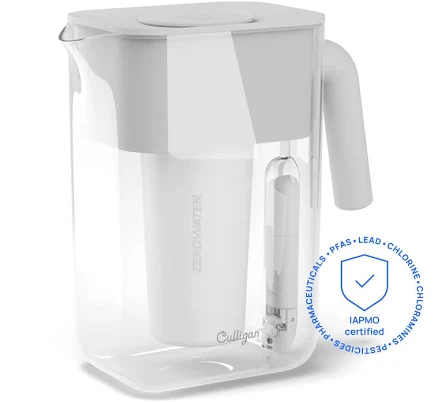
12 Cup Pitcher
Glass pitcher poses lower concern; filter cartridge material needs clarification.
The brand's glass pitcher carries low inherent PFAS risk. The replaceable filter cartridge and plastic lid lack disclosed materials or testing, and the brand makes no PFAS-free claim or third-party verification.
We flunk more products than we pass. This one earned its grade. How we grade
Material
Glass pitcher with plastic lid/filter components
Brand disclosure
Brand is silent on PFAS
Lab data
No public lab test
What 12 Cup Pitcher is made of, ingredients and materials
The pitcher is glass, which is chemically inert and does not leach contaminants into water under normal use. The lid and filter housing are plastic (material type not specified by the brand), and the replaceable cartridge likely contains activated carbon and/or ion-exchange resin. Glass avoids the primary leaching concern that affects plastic pitcher filters; the plastic components only contact water briefly during pouring and filtration, reducing exposure time.
What’s concerning
No PFAS disclosure
No public statement from the brand about PFAS in this product.
Bacterial growth in filter housing
If cartridges are not replaced on schedule or the pitcher is left full for extended periods, stagnant water in the filter chamber can harbor bacteria. This is a maintenance issue, not a material defect, but common in all pitcher-filter designs.
Plastic lid/housing degradation over time
The lid and filter cartridge housing are plastic but material composition is not disclosed. Without specification (PP vs. PC vs. other), long-term durability under repeated contact with water and room-light exposure cannot be fully assessed; discoloration or brittleness would indicate degradation.
Filter cartridge material clarity
The brand does not publicly disclose whether the cartridge resin or binder contains formaldehyde-releasing compounds or other additives. Most activated-carbon cartridges present lower concern, but without material data sheets, residual volatiles during initial use cannot be ruled out.
What’s reassuring
Bare uncoated material
Recorded as a bare, uncoated material with no surface coating or treatment.
Heavy metals
No recalls or safety alerts are documented for filter cartridges. Standard activated-carbon cartridges from established suppliers are tested for lead and cadmium leaching, but the brand does not publish third-party test reports.
Source, FDA ↗The full breakdown
The brand's record and disclosure
The brand is a German consumer-appliance brand with no established public controversy or recall history for water filters. The brand does not publicly disclose material sourcing, manufacturing standards, or third-party testing for this pitcher model. No certifications such as NSF, WQA, or European safety markings are documented in widely available product information, which is typical for budget-segment water pitchers.
How it compares in its category
Glass pitchers have lower concern for BPA and phthalate leaching from the main reservoir compared to plastic-only designs. Many competitors in this price tier use polypropylene (PP) or polycarbonate (PC) pitchers, which carry documented microplasticand leaching risks during frequent use or warm water storage. The brand's glass construction places it above average for material safety in the budget pitcher category.
If you buy it
Replace filter cartridges every 2-3 months or per manufacturer guidance to prevent bacterial growth in the filter housing, which is common in unmaintained pitchers. Do not use hot water; stick to cold or room-temperature water to avoid any stress on the plastic lid and filter components. Inspect the plastic lid and seal monthly for cracks or discoloration that could indicate degradation. Empty and dry the pitcher if it will sit unused for more than a few days.
What we don’t know
- Basis
- Model estimate, 72% confidence, not a lab result
- Lab test
- None on record for this exact product
- Brand statement
- has made none
Formulations change between production runs, so check the current label. How we grade.
More water filters grades
How we score, every product runs through the same public 0-100 rubric based on materials, coatings, brand disclosure, lab findings, and recalls. See the full methodology → Spotted a mistake? Report an error.