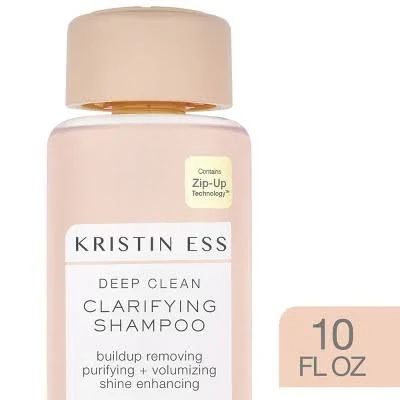
Kristin Ess Deep Clean Clarifying Shampoo
Lower concern; typical rinse-off shampoo with no known PFAS triggers, but brand makes no commitment.
This standard aqueous shampoo has no features requiring PFAS like water-repellency or grease-resistance. The brand doesn't disclose PFAS practices, but as a rinse-off product, exposure risk remains minimal.
We flunk more products than we pass. This one earned its grade. How we grade
Material
aqueous surfactant blend, water-based cleansing system
Brand disclosure
Brand is silent on PFAS
Lab data
No public lab test
You may also be interested in
Top-graded picks in the categories readers replace first, every one scored on the same rubric.

- polypropylene filter housing, carbon/sediment cartridge
- We found no PFAS statement from the brand
- Bacterial growth in spent cartridges
3 hazards checked on this product, all on its full breakdown.

Aquasure
Premier Series 75 GPD Under Sink Reverse Osmosis Water Filtration System
- RO membrane, carbon filters, stainless steel housing
- We found no PFAS statement from the brand
- Bacterial and microbial growth in housing and filters
4 hazards checked on this product, all on its full breakdown.

Avocado
Vegan Mattress
- organic cotton, natural latex, coconut coir, recycled steel coils
- The brand calls it PFAS-free, which we have not verified
- Heavy metals
2 hazards checked on this product, all on its full breakdown.
What Kristin Ess Deep Clean Clarifying Shampoo is made of, ingredients and materials
Kristin Ess Deep Clean Clarifying Shampoo is an aqueous surfactant blend, meaning it uses water-soluble cleansing agents (likely sulfates or sulfate alternatives) to strip buildup and oil from hair and scalp. As a rinse-off product, it spends minimal contact time on skin compared to leave-on products, which reduces absorption risk for any contained ingredients. The 'clarifying' function suggests chelating or sequestering agents that bind minerals and product residue, but these are standard formulation components with established safety histories at rinse-off concentrations.
What’s concerning
Category baseline
The starting point for this type of product, before anything specific to this product is counted.
No PFAS disclosure
No public statement from the brand about PFAS in this product.
Sulfates and scalp irritation risk
If formulation uses sodium lauryl sulfate (SLS) or similar anionic surfactants, prolonged or frequent contact may cause scalp drying, irritation, or dermatitis in sensitive individuals; clarifying formulas typically use higher concentrations than regular shampoos. Rinsing thoroughly and limiting frequency to 1-2 times monthly mitigates this risk.
Fragrance allergens and contact sensitization
Product contains fragrance (listed on bottle), which may include undisclosed component allergens; individuals with fragrance sensitivity or history of scalp dermatitis may experience reaction. Patch testing on a small scalp area before full use is recommended for those with sensitive skin.
Formaldehyde / VOCs
Preservatives that release trace formaldehyde (such as DMDM hydantoin or imidazolidinyl urea) are permitted in rinse-off cosmetics but may be present in some formulations; contact time is brief, lowering dermal absorption risk. Brand does not disclose preservative type publicly.
Source, ATSDR ↗What’s reassuring
Base material not linked to PFAS
The main material recorded for this product is not one associated with PFAS.
1,4-dioxane contamination
No recall or public test data documents 1,4-dioxane in this product. However, 1,4-dioxane is a common contaminant in surfactant-based personal care products when manufactured via ethoxylation; Unilever applies manufacturing controls but does not publicly disclose dioxane-free certification for this line.
Heavy metals
No reported contamination or recall involving heavy metals in Kristin Ess shampoos. Standard preservative and colorant use in mass-market formulations carries minimal documented risk, and rinse-off contact further reduces exposure.
Source, FDA ↗How is this PFAS grade calculated?
The brand's record and disclosure
Kristin Ess (owned by Unilever) does not publish a dedicated ingredient transparency report or PFAS avoidance commitment, though Unilever parent-level safety standards apply. The brand has no recorded product recalls or established safety controversies in public databases. As a mass-market drugstore shampoo line, it follows FDA cosmetic labeling requirements and ingredient disclosure on packaging, but the brand itself does not elevate safety communication above industry baseline.
How it compares in its category
Clarifying shampoos are inherently stronger formulations than daily shampoos because they contain higher surfactant concentrations and sometimes chelating agents to remove mineral and silicone buildup. Kristin Ess positions itself as a mainstream, affordable option in this category; it is less premium than salon-exclusive clarifiers but comparable in formulation intensity to similar drugstore products. The water-based composition is standard for this category; no unusual ingredients or processing elevates or reduces risk relative to peers.
If you buy it
Use clarifying shampoo 1-2 times per month rather than as a daily cleanser, as the higher surfactant load can dry hair and scalp with frequent use. Apply primarily to scalp and mid-lengths, rinsing thoroughly with cool water to minimize scalp irritation. Discontinue immediately if scalp redness, burning, or persistent itch develops, as clarifiers can trigger sensitivity in reactive skin types. Store in a cool, dry location away from direct sunlight; keep bottle sealed to prevent contamination.
What is not known about PFAS in this product?
- Basis
- Model estimate, 72% confidence, not a lab result
- Lab test
- None on record for this exact product
- Brand statement
- Kristin Ess has made none
Formulations change between production runs, so check the current label. How we grade.
More shampoo grades
How we score, every product runs through the same public 0-100 rubric based on materials, coatings, brand disclosure, lab findings, and recalls. See the full methodology → Spotted a mistake? Report an error.