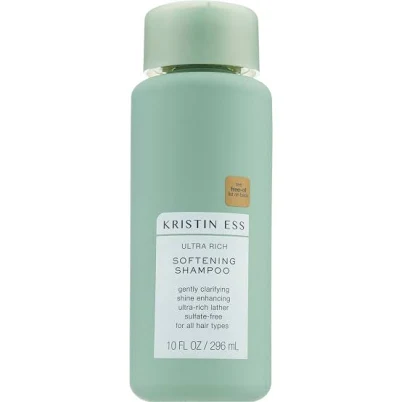
Kristin Ess Hair Softening Shampoo
Lower PFAS concern for standard shampoo; no known risk factors, but brand makes no disclosure.
This water-based shampoo contains no Teflon-family coating coatings, waterproof treatments, or water-repellent finishes that introduce PFAS. No PFAS-free claims or certifications exist; standard shampoos carry lower inherent risk.
We flunk more products than we pass. This one earned its grade. How we grade
Material
aqueous shampoo base (surfactants, water, conditioning agents)
Brand disclosure
Brand is silent on PFAS
Lab data
No public lab test
You may also be interested in
Top-graded picks in the categories readers replace first, every one scored on the same rubric.

- polypropylene filter housing, carbon/sediment cartridge
- We found no PFAS statement from the brand
- Bacterial growth in spent cartridges
3 hazards checked on this product, all on its full breakdown.

Aquasure
Premier Series 75 GPD Under Sink Reverse Osmosis Water Filtration System
- RO membrane, carbon filters, stainless steel housing
- We found no PFAS statement from the brand
- Bacterial and microbial growth in housing and filters
4 hazards checked on this product, all on its full breakdown.

Avocado
Vegan Mattress
- organic cotton, natural latex, coconut coir, recycled steel coils
- The brand calls it PFAS-free, which we have not verified
- Heavy metals
2 hazards checked on this product, all on its full breakdown.
What Kristin Ess Hair Softening Shampoo is made of, ingredients and materials
Kristin Ess Hair Softening Shampoo is a water-based surfactant formulation typical of mainstream conditioning shampoos. The active cleaning agents are synthetic detergents (likely sulfates or sulfate-free alternatives), combined with silicone or polymer conditioning agents and humectants to soften and detangle hair. These ingredients rinse off completely after use, minimizing absorption risk, and the aqueous base means no volatile organic compounds (VOCs) are released during normal application.
What’s concerning
Category baseline
The starting point for this type of product, before anything specific to this product is counted.
No PFAS disclosure
No public statement from the brand about PFAS in this product.
Fragrance allergens
Like most mainstream shampoos, this product likely contains fragrance blends that may trigger contact dermatitis or scalp sensitivity in individuals with fragrance allergies. Ingredient disclosure on the label will list 'fragrance' as a single term per industry regulation, masking specific allergens.
1,4-dioxane (manufacturing contaminant)
Ethoxylated surfactants used in many sulfate-free shampoos can be contaminated with trace 1,4-dioxane during manufacturing. No independent testing of Kristin Ess specifically has been published. Risk is low but not zero if ethoxylated ingredients are present.
Silicone buildup on hair/scalp
Conditioning shampoos in this category typically contain silicones (dimethicone). Repeated use without periodic clarifying shampoo can cause gradual coating and loss of volume; this is a cosmetic concern, not a toxicity hazard, and easily reversible.
What’s reassuring
Base material not linked to PFAS
The main material recorded for this product is not one associated with PFAS.
Formaldehyde / VOCs
No evidence that this shampoo contains formaldehyde-releasing preservatives (DMDM hydantoin, imidazolidinyl urea). Standard aqueous formulas typically use preservative systems with lower concern profiles, but full ingredient list is not independently verified.
Source, ATSDR ↗Heavy metals
This is a clear or translucent shampoo unlikely to contain synthetic colorants requiring heavy metal pigments. No recalls or warnings specific to metal contamination in this product exist.
Source, FDA ↗How is this PFAS grade calculated?
The brand's record and disclosure
Kristin Ess is owned by Unilever and sold primarily through drugstore channels (Target, Walmart). The brand makes no public commitments to ingredient transparency, third-party certifications (like EWG Verified or Leaping Bunny), or PFAS disclosure. No major recalls or safety controversies have been established for this product line. Standard industry practice for a mass-market brand without premium safety positioning.
How it compares in its category
This product sits in the middle tier of drugstore shampoos, formulated for conditioning and softness rather than performance or sustainability. It lacks certifications that differentiate brands like SheaMoisture (Fair Trade) or Acure (vegan/cruelty-free). Functionally equivalent to Pantene, Garnier, or Cantu in ingredient philosophy, though price and marketing positioning differ. No notable safety advantage or disadvantage versus direct competitors.
If you buy it
Use as directed on the label; no special precautions needed. Rinse thoroughly to remove residue. Store in a cool, dry place away from direct heat or sunlight to preserve formula stability. Discontinue if scalp irritation develops. Replace when empty; shampoo has no meaningful shelf-life concerns and requires no special maintenance beyond keeping the cap sealed.
What is not known about PFAS in this product?
- Basis
- Model estimate, 72% confidence, not a lab result
- Lab test
- None on record for this exact product
- Brand statement
- Kristin Ess has made none
Formulations change between production runs, so check the current label. How we grade.
More shampoo grades
How we score, every product runs through the same public 0-100 rubric based on materials, coatings, brand disclosure, lab findings, and recalls. See the full methodology → Spotted a mistake? Report an error.