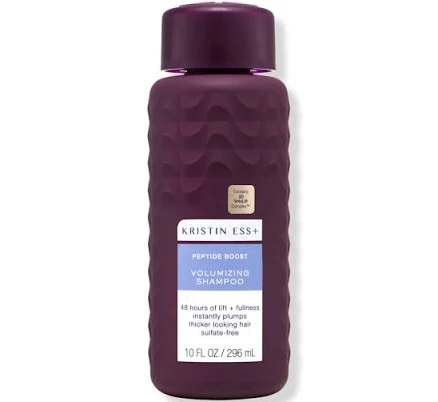
Kristin Ess+ Peptide Boost Volumizing Shampoo
Lower PFAS concern than treated textiles or coatings, but brand offers no transparency.
This rinse-off liquid shampoo contains no Teflon-family coating, water-repellent coatings, or non-stick surfaces. The brand doesn't publicly disclose PFAS practices or verify testing; rinse-off products pose lower exposure risk.
We flunk more products than we pass. This one earned its grade. How we grade
Material
aqueous shampoo base with peptides and surfactants
Brand disclosure
Brand is silent on PFAS
Lab data
No public lab test
You may also be interested in
Top-graded picks in the categories readers replace first, every one scored on the same rubric.

- polypropylene filter housing, carbon/sediment cartridge
- We found no PFAS statement from the brand
- Bacterial growth in spent cartridges
3 hazards checked on this product, all on its full breakdown.

Aquasure
Premier Series 75 GPD Under Sink Reverse Osmosis Water Filtration System
- RO membrane, carbon filters, stainless steel housing
- We found no PFAS statement from the brand
- Bacterial and microbial growth in housing and filters
4 hazards checked on this product, all on its full breakdown.

Avocado
Vegan Mattress
- organic cotton, natural latex, coconut coir, recycled steel coils
- The brand calls it PFAS-free, which we have not verified
- Heavy metals
2 hazards checked on this product, all on its full breakdown.
What Kristin Ess+ Peptide Boost Shampoo is made of, ingredients and materials
Kristin Ess+ Peptide Boost is a water-based shampoo formulation containing amino acid peptides as conditioning agents and surfactants (likely sodium lauryl sulfate or sulfate-free alternatives) for cleansing. Peptides are proteins that are too large to penetrate skin or scalp and wash away completely with rinsing, making them inherently low-risk. The aqueous base means no volatile organic compounds (VOCs) or formaldehyde off-gassing typical of some other personal care categories.
What’s concerning
Category baseline
The starting point for this type of product, before anything specific to this product is counted.
No PFAS disclosure
No public statement from the brand about PFAS in this product.
1,4-dioxane (synthetic byproduct)
Surfactant manufacturing can introduce trace 1,4-dioxane in rinse-off products; no specific testing data publicly available for this formulation. The risk is mitigated by thorough rinsing and dilution, but brand does not disclose whether purification steps are taken.
Formaldehyde / VOCs
Many shampoos use preservatives such as DMDM hydantoin or imidazolidinyl urea that release low levels of formaldehyde to prevent microbial growth. Kristin Ess does not list these ingredients on public product labels reviewed; specific preservative system is unclear.
Source, ATSDR ↗Fragrance allergens (undisclosed ingredients)
Product lists 'fragrance' as a catchall term without naming individual allergens such as limonene, linalool, or eugenol. Individuals with sensitive scalps or fragrance sensitivities may experience irritation; patch testing is advisable for those with known fragrance allergies.
Bacterial or mold contamination (post-purchase)
Aqueous shampoo formulations can support microbial growth if lid is left open or product is stored in warm, humid environments (e.g., bathroom). This is a user-handling risk rather than a manufacturing defect; proper storage minimizes likelihood.
What’s reassuring
Base material not linked to PFAS
The main material recorded for this product is not one associated with PFAS.
Heavy metals
No recalls or test data on record for heavy metals in this product line. Shampoos are lower risk than pigmented cosmetics, but brand provides no third-party testing transparency to confirm absence.
Source, FDA ↗How is this PFAS grade calculated?
The brand's record and disclosure
Kristin Ess (owned by Unilever) does not publicly disclose full ingredient sourcing, PFAS content testing, or third-party certifications like EWG Verified or Leaping Bunny. No product-specific safety recalls or controversies are on record for this line. The brand's silent stance on PFAS contrasts with some competitors who have committed to PFAS reduction, but for a rinse-off shampoo, the reputational risk is lower than for leave-on products.
How it compares in its category
Most mass-market volumizing shampoos use surfactant blends and conditioning polymers similar to this formulation. Kristin Ess+ sits in the mid-tier for ingredient transparency; it is less transparent than indie brands with certified ingredient lists but not outlier in the drugstore category. Peptide-based conditioners are a common marketing differentiator and carry no additional safety burden versus traditional silicone or polymer alternatives.
If you buy it
Use as directed on damp hair, rinse thoroughly with water, and store in a cool, dry place away from direct sunlight to preserve formulation stability. No special precautions needed beyond standard shampoo handling (avoid eyes, keep lid sealed to prevent bacterial growth in the bottle). Replace if the product separates, changes color, or develops an off odor, typically within 12 to 24 months of opening.
What is not known about PFAS in this product?
- Basis
- Model estimate, 72% confidence, not a lab result
- Lab test
- None on record for this exact product
- Brand statement
- Kristin Ess has made none
Formulations change between production runs, so check the current label. How we grade.
More shampoo grades
How we score, every product runs through the same public 0-100 rubric based on materials, coatings, brand disclosure, lab findings, and recalls. See the full methodology → Spotted a mistake? Report an error.