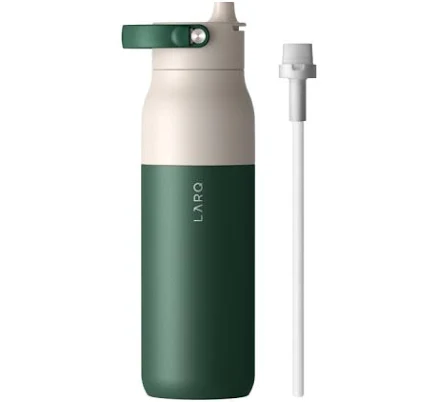
LARQ Filtered Swig Top Water Bottle
Lower concern from construction materials, but LARQ offers no PFAS transparency.
Borosilicate glass, stainless steel, and coconut carbon are lower-PFAS-risk materials versus nonstick or water-repellent treatments. LARQ makes no PFAS claims.
We flunk more products than we pass. This one earned its grade. How we grade
Material
Borosilicate glass body, stainless steel cap, activated coconut-carbon filter
Lab data
No public lab test
You may also be interested in
Top-graded picks in the categories readers replace first, every one scored on the same rubric.

Aqua Pure
3M Aqua-Pure AP802B Whole House Filter Housing
- polypropylene filter housing, carbon/sediment cartridge
- We found no PFAS statement from the brand
- Bacterial growth in spent cartridges
3 hazards checked on this product. See all of them.

Aquasure
Premier Series 75 GPD Under Sink Reverse Osmosis Water Filtration System
- RO membrane, carbon filters, stainless steel housing
- We found no PFAS statement from the brand
- Bacterial and microbial growth in housing and filters
4 hazards checked on this product. See all of them.

Avocado
Vegan Mattress
- organic cotton, natural latex, coconut coir, recycled steel coils
- The brand calls it PFAS-free, which we have not verified
- Heavy metals
2 hazards checked on this product. See all of them.
What LARQ Filtered Swig Top Water Bottle is made of, ingredients and materials
The LARQ Swig Top uses borosilicate glass for the main body, which is chemically inert and does not leach harmful compounds into water under normal use. The stainless steel cap and hardware avoid cadmium or lead risks common in lower-grade metal closures. The activated coconut-carbon filter is the functional weak point, it removes chlorine and some contaminants but requires regular replacement and proper maintenance to avoid becoming a bacterial or mold growth site.
What’s concerning
No PFAS disclosure
No public statement from the brand about PFAS in this product.
Bacterial/mold growth in filter media
Activated carbon filters are porous and retain moisture; if not replaced regularly or stored improperly, they become breeding grounds for bacteria and mold. No recall has been reported, but this is a known maintenance failure mode across all carbon-filter bottles.
Borosilicate glass thermal shock or breakage
Borosilicate glass is heat-resistant but not thermal-shock-proof; rapid temperature changes (e.g., hot water then ice) can cause internal stress and cracking, creating sharp edges and potential silica inhalation. Not a chemical hazard but a physical safety concern.
What’s reassuring
Bare uncoated material
Recorded as a bare, uncoated material with no surface coating or treatment.
Stainless steel corrosion and leaching
High-grade stainless steel caps (typically 304 or 316) do not leach nickel or chromium under normal pH water storage. LARQ does not specify the grade; assuming food-contact-grade is reasonable but unconfirmed.
Activated carbon filter off-gassing or particles
Food-grade activated coconut carbon does not off-gas volatile compounds at room temperature. Shedding of fine carbon particles into water is minimal if the filter is new and properly seated; degraded or damaged filters may shed more particles.
Heavy metals
LARQ does not publish third-party testing or certification (NSF, WQA) for filter media purity. Activated coconut carbon sourcing and processing standards are not disclosed; no recalls or reports of heavy metal contamination in LARQ filters have been documented.
Source, FDA ↗The full breakdown
The brand's record and disclosure
LARQ markets the bottle as a cleaner alternative to single-use plastics and has not disclosed PFAS contamination issues or faced public recalls related to this model. However, the brand makes no explicit statement about PFAS avoidance or third-party testing, leaving PFAS status unverified despite the theoretically low-risk materials. The company has maintained minimal transparency on manufacturing standards and material certifications beyond marketing claims.
How it compares in its category
Glass-and-stainless-steel filtered bottles like this occupy a premium safety tier compared to plastic-bodied alternatives (which risk BPA, phthalates, and leaching under temperature stress). Most competitors in this category are either all-plastic (higher contamination risk) or glass with plastic filters or valves (introduces polymer leaching). The borosilicate glass body is a genuine advantage; the activated carbon filter is standard and not a differentiator for safety.
If you buy it
Replace the coconut-carbon filter every 2 to 3 months or after 150 liters, whichever comes first, to prevent bacterial colonization inside the filter media. Do not use boiling water (>200 degrees F) with the stainless steel cap closure, as seals may degrade. Hand-wash the bottle and cap rather than dishwasher to extend stainless steel finish life. Store the filter in a dry location after removal; a wet, unused filter will support mold growth.
What we don’t know
- Basis
- Model estimate, 72% confidence, not a lab result
- Lab test
- None on record for this exact product
- Brand statement
- LARQ has made a specific claim
Formulations change between production runs, so check the current label. How we grade.
More water filters grades
How we score, every product runs through the same public 0-100 rubric based on materials, coatings, brand disclosure, lab findings, and recalls. See the full methodology → Spotted a mistake? Report an error.