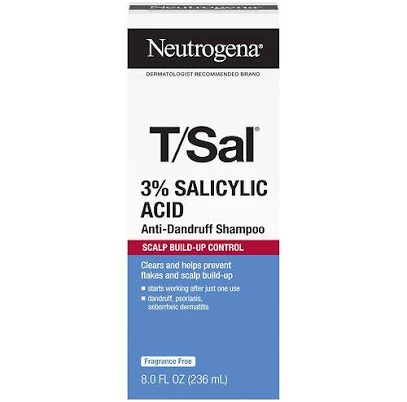
Neutrogena T/ Sal Shampoo
Lower concern; traditional shampoo formulation with no known PFAS-prone ingredients or treatments.
This medicated salicylic acid and sulfur shampoo needs no waterproofing, non-stick, or stain-resistant coatings that require PFAS. Liquid cosmetics of this type carry minimal inherent PFAS risk.
We flunk more products than we pass. This one earned its grade. How we grade
Material
aqueous shampoo base with salicylic acid and sulfur
Lab data
No public lab test
You may also be interested in
Top-graded picks in the categories readers replace first, every one scored on the same rubric.

- polypropylene filter housing, carbon/sediment cartridge
- We found no PFAS statement from the brand
- Bacterial growth in spent cartridges
3 hazards checked on this product, all on its full breakdown.

Aquasure
Premier Series 75 GPD Under Sink Reverse Osmosis Water Filtration System
- RO membrane, carbon filters, stainless steel housing
- We found no PFAS statement from the brand
- Bacterial and microbial growth in housing and filters
4 hazards checked on this product, all on its full breakdown.

Avocado
Vegan Mattress
- organic cotton, natural latex, coconut coir, recycled steel coils
- The brand calls it PFAS-free, which we have not verified
- Heavy metals
2 hazards checked on this product, all on its full breakdown.
What Neutrogena T/ Sal Shampoo is made of, ingredients and materials
Neutrogena T/Sal is an aqueous shampoo base containing salicylic acid (a beta hydroxy acid) and sulfur as active ingredients for treating dandruff and seborrheic dermatitis. These are well-established pharmaceutical actives with decades of topical safety data. The base is typical detergent-surfactant formulation (sodium lauryl sulfate or similar anionic cleaners) with water as the primary solvent, meaning no plastic leaching risk or thermal degradation concerns common to leave-on creams or oils.
What’s concerning
Category baseline
The starting point for this type of product, before anything specific to this product is counted.
No PFAS disclosure
No public statement from the brand about PFAS in this product.
Salicylic acid skin irritation (concentration-dependent)
At typical shampoo concentrations (1.5-2%), salicylic acid is low-risk for brief scalp contact. Risk increases with prolonged contact, broken skin, or sensitivity; irritation is reversible upon discontinuation.
Sulfur odor and contact dermatitis (sulfur sensitivity)
Elemental sulfur is a known allergen in a small subset of the population; contact dermatitis or irritation can occur. This is ingredient-inherent, not a contamination or manufacturing concern.
1,4-dioxane or dioxane precursors in surfactants
Sodium lauryl sulfate and similar anionic surfactants can be contaminated with 1,4-dioxane during ethoxylation if manufacturing controls are lax. Neutrogena's parent company (J&J) has committed to 1,4-dioxane reduction but does not guarantee removal; residual trace levels are plausible but not confirmed for this specific product.
What’s reassuring
Base material not linked to PFAS
The main material recorded for this product is not one associated with PFAS.
Formaldehyde / VOCs
No formaldehyde-releasing preservatives (e.g., DMDM hydantoin, imidazolidinyl urea) are listed in publicly available ingredient disclosures for this product. Standard Neutrogena formulations use preservative alternatives with lower concern regarding PFAS.
Source, ATSDR ↗Heavy metals
This product contains minimal to no pigments or colorants. No recalls or contamination events involving lead, cadmium, or arsenic have been reported for this shampoo line.
Source, FDA ↗How is this PFAS grade calculated?
The brand's record and disclosure
Neutrogena (Johnson & Johnson subsidiary) does not publicly emphasize PFAS avoidance or fluorochemical-free claims for this product line, but the formulation itself contains no known PFAS-prone ingredients or water-repellent treatments typical of premium shampoos. The brand has not faced recalls or safety actions specific to this shampoo. Ingredient disclosure via label and Safety Data Sheets is standard; no significant transparency gaps are documented.
How it compares in its category
Among medicated dandruff shampoos, T/Sal occupies a middle ground, simpler formulation than premium sulfur+tar blends, comparable active-ingredient safety to zinc pyrithione or selenium sulfide alternatives. It avoids coal-tar (potential PAH concern) and ketoconazole (drug-interaction complexity). The straightforward active-ingredient approach makes it a lower-complexity choice in the therapeutic shampoo market.
If you buy it
Use as directed on label, typically twice weekly for 2 weeks, then reduce to maintenance. Rinse thoroughly to minimize scalp irritation from sulfur odor and residual salicylic acid. Do not use on broken skin or if allergic to sulfonamides. Store at room temperature away from heat; shelf life is standard for aqueous products (check expiration). Discontinue if irritation, burning, or allergic reaction occurs and consult a dermatologist.
What is not known about PFAS in this product?
- Basis
- Model estimate, 78% confidence, not a lab result
- Lab test
- None on record for this exact product
- Brand statement
- Neutrogena has made a specific claim
Formulations change between production runs, so check the current label. How we grade.
More shampoo grades
How we score, every product runs through the same public 0-100 rubric based on materials, coatings, brand disclosure, lab findings, and recalls. See the full methodology → Spotted a mistake? Report an error.