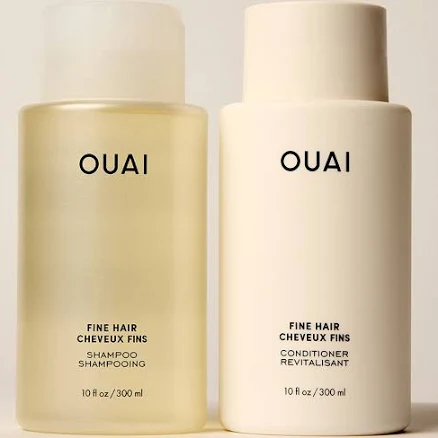
OUAI Fine Hair Shampoo and Conditioner Set
Lower-concern category with no known PFAS triggers.
Liquid hair care products lack the waterproofing and nonstick coatings that drive PFAS use in other products. The brand provides no PFAS safety testing or claims.
We flunk more products than we pass. This one earned its grade. How we grade
Material
aqueous shampoo and conditioner formulations
Brand disclosure
Brand is silent on PFAS
Lab data
No public lab test
You may also be interested in
Top-graded picks in the categories readers replace first, every one scored on the same rubric.

- polypropylene filter housing, carbon/sediment cartridge
- We found no PFAS statement from the brand
- Bacterial growth in spent cartridges
3 hazards checked on this product, all on its full breakdown.

Aquasure
Premier Series 75 GPD Under Sink Reverse Osmosis Water Filtration System
- RO membrane, carbon filters, stainless steel housing
- We found no PFAS statement from the brand
- Bacterial and microbial growth in housing and filters
4 hazards checked on this product, all on its full breakdown.

Avocado
Vegan Mattress
- organic cotton, natural latex, coconut coir, recycled steel coils
- The brand calls it PFAS-free, which we have not verified
- Heavy metals
2 hazards checked on this product, all on its full breakdown.
What OUAI Fine Hair Shampoo and Conditioner Set is made of, ingredients and materials
OUAI Fine Hair Shampoo and Conditioner are water-based formulations designed for lightweight cleansing and conditioning without heaviness. The product contains standard anionic surfactants (likely sodium lauryl sulfate or sodium laureth sulfate), conditioning agents, humectants, and fragrance compounds typical of mass-market shampoos. Unlike rinse-off products that sit on skin, shampoos spend minimal contact time on scalp and are fully rinsed, significantly reducing systemic absorption risk for most ingredients.
What’s concerning
Category baseline
The starting point for this type of product, before anything specific to this product is counted.
No PFAS disclosure
No public statement from the brand about PFAS in this product.
Fragrance allergens and contact dermatitis
OUAI Fine Hair Shampoo contains fragrance (listed as ingredient); common allergens like limonene, geraniol, or linalool may trigger reactions in sensitive scalps. Incidence is individual and not a product defect; rinse-off format limits exposure intensity.
1,4-dioxane (surfactant contaminant)
If sodium laureth sulfate or PEG derivatives are used as surfactants, 1,4-dioxane may be present as a manufacturing byproduct at trace levels (typically <20 ppm in rinse-off products). FDA does not mandate disclosure; no specific testing published for OUAI formulas.
Scalp irritation from sulfates at high concentration
Fine-hair formulas often contain mild surfactant blends to avoid stripping. If sulfate concentration is high or skin barrier is compromised, irritation is possible but reversible upon discontinuation and not a manufacturing hazard.
What’s reassuring
Base material not linked to PFAS
The main material recorded for this product is not one associated with PFAS.
Formaldehyde / VOCs
No public disclosure confirms use of formaldehyde-releasing preservatives (DMDM hydantoin, diazolidinyl urea) in OUAI formulas. Standard rinse-off shampoos typically use gentler preservative systems; no recall or alert on record for this product.
Source, ATSDR ↗Heavy metals
This colorless or lightly tinted shampoo is unlikely to contain synthetic colorants with lead, cadmium, or chromium. Standard cosmetic mineral pigments used in shampoos are mild-risk; no recalls or contamination alerts on record for OUAI.
Source, FDA ↗How is this PFAS grade calculated?
The brand's record and disclosure
OUAI (founded 2014, owned by Unilever as of 2021) does not publicly disclose full ingredient sourcing, safety testing, or PFAS avoidance policies on its website or marketing materials. The brand has no published recalls or safety controversies on record. Unilever parent company has made broad commitments to reduce hazardous chemicals but OUAI-specific transparency remains limited compared to indie or certified clean-beauty brands. No third-party certifications (Leaping Bunny, EWG Verified, etc.) are advertised.
How it compares in its category
This product sits in the mainstream premium shampoo tier, chemically comparable to Bumble and bumble, Olaplex, and Briogeo offerings. OUAI Fine Hair formulas contain no known heavy-metal pigments (not color cosmetics), no flame retardants, and no antimicrobials like triclosan that trigger regulatory scrutiny. Rinsed-off hair-care products carry substantially lower cumulative exposure risk than leave-on skincare or cosmetics, making ingredient concerns here secondary to efficacy.
If you buy it
Use as directed with brief contact time (under 5 minutes) before thorough rinsing. Do not ingest or apply to broken skin. Replace when bottle is empty or shows separation (typically 6-12 months with normal use). Store below 77 F to slow any preservative degradation, though this product's shelf life is not a consumer safety issue. If scalp irritation occurs, rinse thoroughly; sensitivity is ingredient-specific, not a manufacturing defect indicator.
What is not known about PFAS in this product?
- Basis
- Model estimate, 72% confidence, not a lab result
- Lab test
- None on record for this exact product
- Brand statement
- Ouai has made none
Formulations change between production runs, so check the current label. How we grade.
More shampoo grades
How we score, every product runs through the same public 0-100 rubric based on materials, coatings, brand disclosure, lab findings, and recalls. See the full methodology → Spotted a mistake? Report an error.