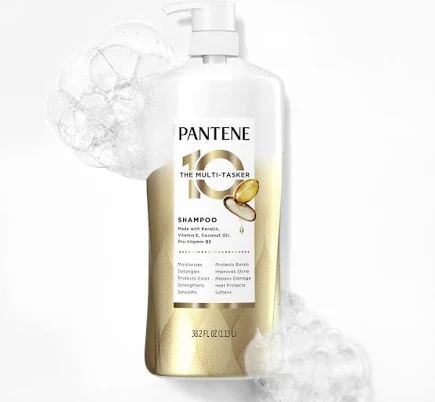
Pantene Multi- Tasker 10 Shampoo
Lower PFAS concern for typical shampoo; Pantene makes no explicit claims but product type carries minimal inherent risk.
This liquid shampoo shows no known Teflon-family coating coatings, water-resistance treatments, or non-stick applications. The brand hasn't disclosed PFAS testing or made PFAS-free claims.
We flunk more products than we pass. This one earned its grade. How we grade
Material
aqueous surfactant-based shampoo formulation
Brand disclosure
Brand is silent on PFAS
Lab data
No public lab test
You may also be interested in
Top-graded picks in the categories readers replace first, every one scored on the same rubric.

- polypropylene filter housing, carbon/sediment cartridge
- We found no PFAS statement from the brand
- Bacterial growth in spent cartridges
3 hazards checked on this product, all on its full breakdown.

Aquasure
Premier Series 75 GPD Under Sink Reverse Osmosis Water Filtration System
- RO membrane, carbon filters, stainless steel housing
- We found no PFAS statement from the brand
- Bacterial and microbial growth in housing and filters
4 hazards checked on this product, all on its full breakdown.

Avocado
Vegan Mattress
- organic cotton, natural latex, coconut coir, recycled steel coils
- The brand calls it PFAS-free, which we have not verified
- Heavy metals
2 hazards checked on this product, all on its full breakdown.
What Pantene Multi- Tasker 10 Shampoo is made of, ingredients and materials
Pantene Multi-Tasker 10 is a water-based shampoo built around surfactants (likely sodium lauryl sulfate or similar anionic detergents) combined with conditioning agents, silicones, and fragrance. The aqueous formulation and absence of ceramic coatings, plastic heating exposure, or talc-prone application means most cookware and mineral-based toxicity routes do not apply. The fragrance component and preservative system are the primary chemical exposure vectors in a shampoo product.
What’s concerning
Category baseline
The starting point for this type of product, before anything specific to this product is counted.
No PFAS disclosure
No public statement from the brand about PFAS in this product.
Fragrance allergens and undisclosed components
Pantene lists 'fragrance' as a single ingredient without specifying the ~50+ chemical components typically blended into shampoo fragrances. Common allergens (limonene, linalool, eugenol) may be present; no disclosure of sensitizer concentration is provided.
Silicone buildup and scalp irritation
The '10-in-1' conditioning promise likely includes dimethicone or cyclopentasiloxane; chronic use without clarification can cause itching, dandruff-like flaking, or product feel, though not a toxicity hazard per se.
Formaldehyde / VOCs
Pantene's preservative blend is not itemized; quaternium-15 or other formaldehyde-releasing agents are used in some mass-market shampoos but are permitted under FDA rules and rinse-off risk is low due to short contact time.
Source, ATSDR ↗What’s reassuring
Base material not linked to PFAS
The main material recorded for this product is not one associated with PFAS.
1,4-dioxane (preservative byproduct)
Aqueous rinse-off shampoos carry theoretical risk of trace 1,4-dioxane if ethoxylated surfactants are used without vacuum stripping; no published testing or recalls for Pantene Multi-Tasker 10 exist, and modern manufacturing typically removes this byproduct.
Heavy metals
This product is not pigmented (transparent or translucent formulation), eliminating the lead or cadmium exposure route common in colored cosmetics; standard risk assessment for shampoos of this type shows no reported concern.
Source, FDA ↗How is this PFAS grade calculated?
The brand's record and disclosure
Pantene (Procter and Gamble subsidiary) does not publish detailed ingredient sourcing, supplier audits, or third-party safety certifications specific to this product. P&G has faced historical scrutiny over palm oil sourcing and fragrance transparency but maintains compliance with FDA and EU cosmetic regulations. No recalls or regulatory warnings are on public record for this specific shampoo formulation. The brand's silence on PFAS and other emerging chemical concerns reflects industry-wide opacity rather than an acknowledged risk.
How it compares in its category
Mass-market shampoos like Pantene Multi-Tasker 10 occupy the middle ground, lower concern formulation profile than some budget or niche brands (fewer heavy metals in pigments, standard preservatives), but less transparent than premium or certified organic alternatives (EWG Verified, Cradle to Cradle, Leaping Bunny). The '10 in 1' claim suggests added silicones and conditioning polymers typical of this segment; these are well-tolerated in rinse-off products but add synthetic load compared to simpler formulations.
If you buy it
Use as directed and rinse thoroughly; residue buildup from silicones may occur with long-term use, manageable by clarifying shampoo use monthly. Store in a cool, dry place away from direct sunlight to minimize preservative degradation. Discontinue use if scalp irritation or rash develops; fragrance sensitivity is the most common trigger. No special equipment maintenance or replacement schedule applies to a rinse-off liquid product.
What is not known about PFAS in this product?
- Basis
- Model estimate, 72% confidence, not a lab result
- Lab test
- None on record for this exact product
- Brand statement
- Pantene has made none
Formulations change between production runs, so check the current label. How we grade.
More shampoo grades
How we score, every product runs through the same public 0-100 rubric based on materials, coatings, brand disclosure, lab findings, and recalls. See the full methodology → Spotted a mistake? Report an error.