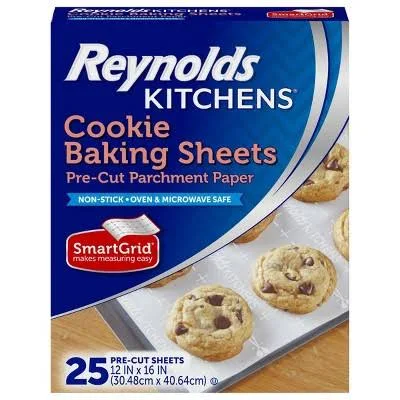
Reynolds · Parchment Paper & Baking Liners
Reynolds Kitchens Cookie Baking Sheets Parchment Paper Non-Stick 22 Sheets
Skip. Non-stick coating identity hidden and PFAS risk unclear.
Parchment paper with non-stick coating but brand doesn't disclose coating chemistry or PFAS status. Grease-resistant food contact coatings often contain PFAS; lack of transparency raises concern.
The better-graded swap
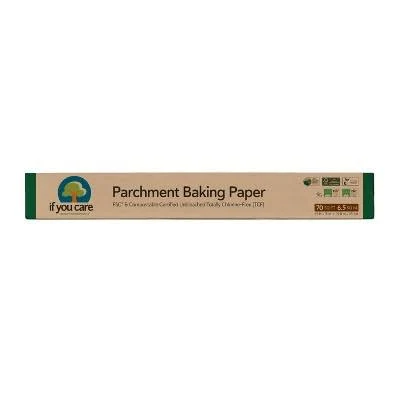
If You Care
If You Care Parchment Baking Paper
90/100 safety
Same rubric that flunked this product. The swap earned Excellent.
Still want this one anyway? Check the price on Amazon. We’d swap it.
Material
Parchment paper with non-stick coating, composition unspecified
Lab data
No public lab test
What Reynolds Kitchens Cookie Baking Sheets is made of, ingredients and materials
Reynolds Kitchens parchment paper consists of kraft paper coated with a proprietary non-stick agent. The coating formulation is not publicly disclosed by Reynolds or Harris Teeter, which is the core issue, non-stick coatings on food-contact paper may contain PFAS (PFAS "forever chemicals") or silicone-based alternatives, each with different safety profiles. Without manufacturer transparency, the actual risk cannot be fully assessed. Parchment paper is designed for temperatures up to approximately 420-450°F depending on the product; exceeding this may degrade the coating.
What’s concerning
Category baseline
The starting point for this type of product, before anything specific to this product is counted.
No PFAS disclosure
No public statement from the brand about PFAS in this product.
Non-stick, chemistry undisclosed
Marketed as non-stick without stating the coating chemistry.
PFAS
The specific non-stick chemistry is undisclosed. If the coating is a Teflon-family coating (Teflon-type coating or related), PFAS exposure at baking temperatures is a concern; if silicone-based, risk is lower but not zero. No public safety data sheet available for this product variant.
Source, ATSDR ↗Coating degradation and microparticle migration
Repeated use, high heat above labeled limits, or mechanical damage may cause the non-stick layer to flake or migrate into food. Reynolds parchment paper is designed for single or limited reuse; degraded sheets should be discarded.
Thermal stability at high temperatures
Standard parchment paper begins to degrade above 420-450°F, producing smoke and potential char. The non-stick coating may break down earlier; use within labeled limits (typically 420°F for this product) to avoid thermal decomposition byproducts.
What’s reassuring
Bleaching residues in kraft paper substrate
Food-grade parchment paper in the US undergoes standard bleaching; residual peroxide or chlorine is not documented as a concern at typical exposure levels. No specific recalls or reports for Reynolds parchment on this hazard.
Chlorine or oxygen-based bleach residues
FDA-approved parchment paper undergoes food-safety testing; no known residual bleach hazard reported for Reynolds or Harris Teeter branded parchment. However, manufacturers do not routinely disclose bleach type or removal processes publicly.
The full breakdown
The brand's record and disclosure
Reynolds Kitchens (Koninklijke Ahold Delhaize subsidiary, Harris Teeter parent) has not publicly released detailed ingredient or coating composition for this product line. No independent third-party certifications (e.g., Green Seal, FDA pre-market approval notices) are listed on retail packaging or official sources consulted. Reynolds has faced no documented major recalls for parchment paper, but the silence on non-stick coating chemistry reflects an industry-wide practice of treating coating formulations as trade secrets. Harris Teeter private-label products generally follow mainstream US FDA compliance but do not exceed it.
How it compares in its category
Standard parchment paper (bleached and unbleached) is among the lowest-risk food-contact liners when used as intended. This non-stick version occupies a middle ground, it reduces sticking and reuse needs (lowering waste), but the undisclosed coating introduces uncertainty absent in uncoated parchment or silicone baking mats. Brands like If You Care and unbleached alternatives disclose silicone use explicitly; Reynolds does not. For consumers prioritizing transparency, silicone-mat or uncoated parchment are more defensible choices.
If you buy it
Use only up to the manufacturer's stated temperature limit (typically 420°F); do not reuse sheets excessively or if the non-stick surface flakes or discolors. Do not use on direct flame or broiler elements. For acidic foods (tomatoes, citrus) or prolonged contact, minimize dwell time to reduce any potential coating migration, though risk is low at normal baking temperatures. Replace the entire box if the paper becomes visibly worn; do not reuse compromised sheets. Store in a cool, dry place away from heat sources.
What we don’t know
- Basis
- Model estimate, 35% confidence, not a lab result
- Lab test
- None on record for this exact product
- Brand statement
- Reynolds has made a specific claim
Formulations change between production runs, so check the current label. How we grade.
Better-graded alternatives in Parchment Paper & Baking Liners
If You Care
Baking Paper, Parchment, 70 Square Feet
- silicone-coated parchment paper
- The brand calls it PFAS-free, which we have not verified
- Paper degradation and particulate shedding
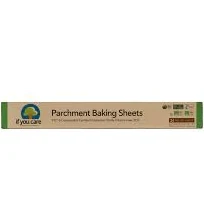
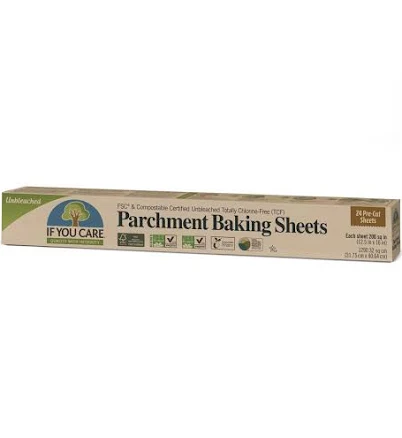
If You Care
Parchment Baking Sheets
- unbleached paper with silicone coating
- The brand calls it PFAS-free, which we have not verified
- Silicone coating degradation at high heat
If You Care
Parchment Baking Sheets
- bleached paper with silicone coating
- The brand calls it PFAS-free, which we have not verified
- Paper degradation and fragmentation
More parchment paper & baking liners grades
How we score, every product runs through the same public 0-100 rubric based on materials, coatings, brand disclosure, lab findings, and recalls. See the full methodology → Spotted a mistake? Report an error.