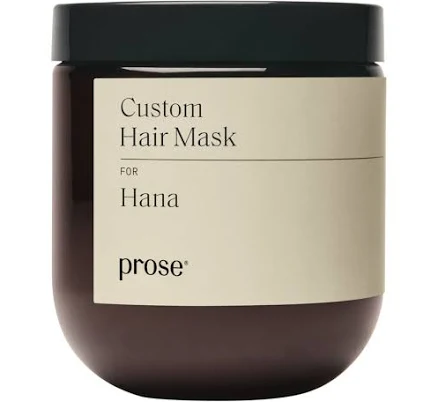
Prose Alcohol-Free Hair Mask
Lower PFAS concern; typical leave-in cosmetic with no known Teflon-family coating use, but no transparency.
This rinse-off cosmetic mask uses standard humectants and emollients without waterproofing, water-repellent coating treatment, or fluorinated coatings. Prose makes no PFAS-free claims or holds third-party certifications.
We flunk more products than we pass. This one earned its grade. How we grade
Material
aqueous cosmetic mask (glycerin, humectants, emollients)
Brand disclosure
Brand is silent on PFAS
Lab data
No public lab test
You may also be interested in
Top-graded picks in the categories readers replace first, every one scored on the same rubric.

- polypropylene filter housing, carbon/sediment cartridge
- We found no PFAS statement from the brand
- Bacterial growth in spent cartridges
3 hazards checked on this product, all on its full breakdown.

Aquasure
Premier Series 75 GPD Under Sink Reverse Osmosis Water Filtration System
- RO membrane, carbon filters, stainless steel housing
- We found no PFAS statement from the brand
- Bacterial and microbial growth in housing and filters
4 hazards checked on this product, all on its full breakdown.

Avocado
Vegan Mattress
- organic cotton, natural latex, coconut coir, recycled steel coils
- The brand calls it PFAS-free, which we have not verified
- Heavy metals
2 hazards checked on this product, all on its full breakdown.
What Prose Alcohol-Free Hair Mask is made of, ingredients and materials
Prose's alcohol-free mask is a water-based emulsion designed to condition hair without drying alcohols. The formulation relies on glycerin (a humectant that draws moisture into hair) and emollients (likely silicones or plant oils) to provide slip and softness. Leave-in masks of this type have no heating requirement and are rinsed out or worn overnight, which eliminates risk of thermal degradation of polymers or volatile organic compound (VOC) release from heat application. The aqueous base and absence of volatile solvents make this a lower-risk category within cosmetics.
What’s concerning
Category baseline
The starting point for this type of product, before anything specific to this product is counted.
No PFAS disclosure
No public statement from the brand about PFAS in this product.
Fragrance allergens (undisclosed components)
Prose does not list fragrance ingredients separately on publicly available packaging or website materials. Fragrance mixtures in cosmetics commonly contain limonene, linalool, or other common contact allergens; individual sensitivity is unpredictable without full ingredient transparency.
1,4-dioxane (solvent contaminant in emulsifiers)
Ethoxylated ingredients (commonly used as emulsifiers in conditioners) can carry trace 1,4-dioxane as a manufacturing byproduct. Prose does not disclose whether suppliers use vacuum stripping to remove this contaminant. Residual levels in rinse-out or leave-in masks are typically below 10 ppm and are not regulated by FDA in cosmetics.
What’s reassuring
Base material not linked to PFAS
The main material recorded for this product is not one associated with PFAS.
Formaldehyde / VOCs
No evidence that Prose uses formaldehyde releasers (such as DMDM hydantoin or imidazolidinyl urea) in this product. Aqueous formulations typically use phenoxyethanol, sodium benzoate, or potassium sorbate, which do not generate formaldehyde. Formula is not publicly detailed enough to rule this out entirely.
Source, ATSDR ↗Heavy metals
No publicly documented recalls or warnings for heavy metals (lead, cadmium, arsenic) in Prose hair masks. Leave-in products applied to hair rather than ingested carry lower absorption risk, and no third-party testing data on file suggests checking brand sourcing if sensitive to metal contamination.
Source, FDA ↗Microplastic particles (in exfoliating or texture variants)
This is a conditioning mask, not a scrub, so intentional microbeads are not expected. Some conditioning masks use silica or polyethylene beads for texture; Prose's formula is not documented to include these, but full ingredient confirmation is unavailable without direct brand contact.
How is this PFAS grade calculated?
The brand's record and disclosure
Prose markets itself as a personalized hair-care brand with direct-to-consumer distribution but offers limited public ingredient sourcing or safety certifications on file. The brand does not advertise third-party testing (dermatological, microbiological, or heavy-metal screening) and maintains a notably quiet stance on PFAS or flame-retardant disclosure. No recalls or safety incidents have been documented for this specific product. Absence of controversy does not equal high transparency; this is a middle-ground position in the personal-care space.
How it compares in its category
Hair masks as a category are lower-hazard than rinse-off products because they have minimal systemic absorption and are used in small quantities on a specific body site. Alcohol-free formulations reduce skin irritation risk versus typical styling sprays or alcohol-based serums. Prose's product sits in the standard commercial cosmetic lane, without claims of organic certification, heavy-metal testing, or PFOA/PFOS avoidance that some premium or clean-beauty brands advertise. Performance and safety profile are likely comparable to mass-market leave-in conditioners from L'Oreal, SheaMoisture, or Cantu.
If you buy it
Apply to damp hair ends and mid-lengths, avoiding the scalp to prevent buildup. No heat requirement, so use as-is or under a shower cap for 10-20 minutes. Replace the jar or container every 6-12 months depending on usage to prevent bacterial or mold colonization in the opened product. If you experience scalp irritation, itching, or contact dermatitis, discontinue and patch-test on your inner arm before resuming; individual sensitivities to fragrances or preservatives can occur but are not predictable from the formula alone.
What is not known about PFAS in this product?
- Basis
- Model estimate, 72% confidence, not a lab result
- Lab test
- None on record for this exact product
- Brand statement
- Prose has made none
Formulations change between production runs, so check the current label. How we grade.
More shampoo grades
How we score, every product runs through the same public 0-100 rubric based on materials, coatings, brand disclosure, lab findings, and recalls. See the full methodology → Spotted a mistake? Report an error.