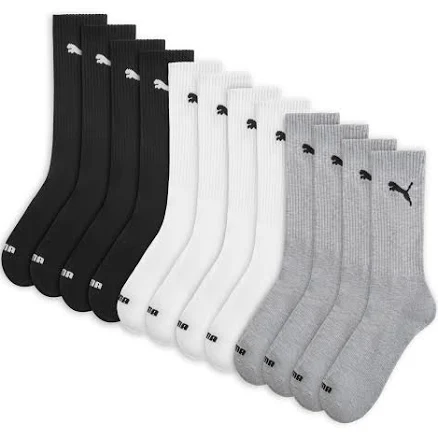
Puma · Sports Performance Undergarments
PUMA Men's Half-Terry Crew Socks (3 Pairs)
Lower concern. Basic socks unlikely to contain PFAS.
Basic cotton-blend crew socks have no reported PFAS treatment or water-stain resistance features. No public PFAS disclosures or certifications exist, posing minimal risk.
Still want this one anyway? Check the price on Amazon. We’d swap it.
Material
Cotton/polyester blend, half-terry construction
Lab data
No public lab test
You may also be interested in
Top-graded picks in the categories readers replace first, every one scored on the same rubric.

- polypropylene filter housing, carbon/sediment cartridge
- We found no PFAS statement from the brand
- Bacterial growth in spent cartridges
3 hazards checked on this product, all on its full breakdown.

Aquasure
Premier Series 75 GPD Under Sink Reverse Osmosis Water Filtration System
- RO membrane, carbon filters, stainless steel housing
- We found no PFAS statement from the brand
- Bacterial and microbial growth in housing and filters
4 hazards checked on this product, all on its full breakdown.

Avocado
Vegan Mattress
- organic cotton, natural latex, coconut coir, recycled steel coils
- The brand calls it PFAS-free, which we have not verified
- Heavy metals
2 hazards checked on this product, all on its full breakdown.
What PUMA Men's Half-Terry Crew Socks (3 Pairs) is made of, ingredients and materials
PUMA's half-terry crew socks are a cotton-polyester blend, meaning the pile (terry) loops are primarily cotton while the base knit uses polyester for durability and moisture-wicking. Cotton is inherently low-risk for chemical leaching; polyester can release trace heavy metals or residual dyes under stress but does not off-gas VOCs like some foam or treated textiles. Half-terry construction keeps weight low and breathability high, reducing prolonged heat/moisture that accelerates fiber degradation.
What’s concerning
Category baseline
The starting point for this type of product, before anything specific to this product is counted.
No PFAS disclosure
No public statement from the brand about PFAS in this product.
Azo dyes and residual colorants
Polyester-dyed textiles can retain azo dye residues, which may cause dermatitis in sensitive individuals. Puma's RSL compliance should exclude carcinogenic azo dyes, but pre-wash removal of loose dye is prudent.
Formaldehyde / VOCs
Low-cost cotton-poly blends sometimes use formaldehyde-based cross-linking to prevent shrinkage. Puma's mid-market position makes this unlikely but not ruled out; pre-wash mitigates any residual exposure.
Source, ATSDR ↗Elastic degradation and skin contact
Elastic bands at the cuff can degrade over time, releasing residual elastomer chemicals (e.g., thiazoles from rubber accelerators). This is a minor concern for socks given the brief contact window and normal wear patterns.
Microfiber shedding
Polyester blends naturally shed microfibers during washing; this is an environmental rather than personal-health hazard but worth noting if you use a microfiber filter in your washing machine.
What’s reassuring
Base material not linked to PFAS
The main material recorded for this product is not one associated with PFAS.
Antimony in polyester
Antimony is occasionally used as a catalyst in polyester synthesis. No recalls or lab findings have flagged Puma socks for elevated antimony; modern polyester typically contains only trace levels well below concern thresholds.
How is this PFAS grade calculated?
The brand's record and disclosure
Puma publishes sustainability reports and has committed to restricted substance lists (RSL) alignment with industry standards, though public PFAS disclosure is limited. No major safety recalls or dye-contamination incidents are on record for Puma socks. The brand operates under OEKO-TEX or similar chemical audit frameworks for many lines, though specific certification status for this SKU is not publicly confirmed. Third-party testing by consumer labs has not flagged Puma socks as outliers for hazardous residues.
How it compares in its category
Commodity cotton-polyester blend socks are among the lowest-risk textile products; this PUMA offering sits in the mainstream, neither premium (merino, organic certified) nor budget (unknown mills). Half-terry construction is standard comfort-class, avoiding problematic elastic-heavy designs or heavy synthetic coatings. Price point suggests domestic or tier-1 Asian manufacturing, which typically enforces stricter dye-house compliance than ultra-budget alternatives.
If you buy it
Wash in warm water (not hot) before first wear to remove any residual dyes or finishes; this is good practice for all new textiles. Machine dry on low or air-dry; high heat accelerates polyester fiber degradation over time. Replace when elastic fails or terry pilling becomes heavy (typically 1-2 years with normal wear). Store in a dry place to avoid mildew or odor, which may prompt unnecessary chemical refreshers.
What is not known about PFAS in this product?
- Basis
- Model estimate, 72% confidence, not a lab result
- Lab test
- None on record for this exact product
- Brand statement
- Puma has made a specific claim
Formulations change between production runs, so check the current label. How we grade.
More sports performance undergarments grades
How we score, every product runs through the same public 0-100 rubric based on materials, coatings, brand disclosure, lab findings, and recalls. See the full methodology → Spotted a mistake? Report an error.