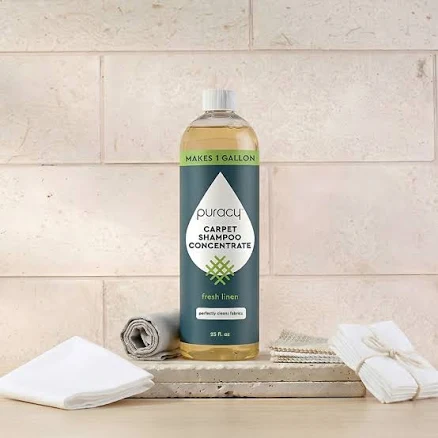
Puracy Carpet & Upholstery Shampoo Fresh Citrus
Lower concern for a water-based surfactant shampoo without coating or treatment.
This water-based surfactant shampoo has no coating or treatment on record. The brand has no PFAS statement on record. Water-based surfactant cleaners do not typically require PFAS additives.
We flunk more products than we pass. This one earned its grade. How we grade
Material
water-based surfactant shampoo, no coating or treatment
Brand disclosure
Brand is silent on PFAS
Lab data
No public lab test
You may also be interested in
Top-graded picks in the categories readers replace first, every one scored on the same rubric.

- polypropylene filter housing, carbon/sediment cartridge
- We found no PFAS statement from the brand
- Bacterial growth in spent cartridges
3 hazards checked on this product, all on its full breakdown.

Aquasure
Premier Series 75 GPD Under Sink Reverse Osmosis Water Filtration System
- RO membrane, carbon filters, stainless steel housing
- We found no PFAS statement from the brand
- Bacterial and microbial growth in housing and filters
4 hazards checked on this product, all on its full breakdown.

Avocado
Vegan Mattress
- organic cotton, natural latex, coconut coir, recycled steel coils
- The brand calls it PFAS-free, which we have not verified
- Heavy metals
2 hazards checked on this product, all on its full breakdown.
What Puracy Carpet & Upholstery Fresh Citrus is made of, ingredients and materials
Puracy Carpet & Upholstery Shampoo is a water-based surfactant formulation designed to lift dirt and stains from fabric without harsh solvents. The 'Fresh Citrus' scent indicates citrus-derived or citrus-type fragrance components, which are common in plant-based cleaning products. As a liquid shampoo without solid coatings, ceramic glazes, or polymer films, it avoids the material-specific hazards (lead, cadmium, Teflon-type coating, aluminum leaching) that apply to cookware or non-stick surfaces.
What’s concerning
Category baseline
The starting point for this type of product, before anything specific to this product is counted.
No PFAS disclosure
No public statement from the brand about PFAS in this product.
Fragrance allergens and sensitizers
Citrus fragrance and unspecified fragrance components may trigger contact dermatitis or respiratory irritation in sensitive individuals; Puracy does not disclose fragrance allergens by component.
Skin and eye irritation from surfactant concentration
Undiluted or improperly rinsed surfactant residue can cause mild dermatitis or ocular irritation; this is user-error dependent and standard to the product category, not a manufacturing defect.
What’s reassuring
Base material not linked to PFAS
The main material recorded for this product is not one associated with PFAS.
1,4-dioxane (surfactant byproduct)
No public test data or recall history indicates 1,4-dioxane contamination in Puracy products; water-based surfactant formulas with quality control typically keep levels below concern thresholds, but full ingredient transparency is absent.
Formaldehyde / VOCs
No evidence of formaldehyde-releasing preservatives in this product; plant-derived brands typically avoid these agents, but ingredient list is not fully disclosed.
Source, ATSDR ↗Heavy metals
No reported contamination or recalls for heavy metals (lead, cadmium, antimony) in Puracy shampoos; risk is lower for water-based formulas without pigmented dyes.
Source, FDA ↗How is this PFAS grade calculated?
The brand's record and disclosure
Puracy markets itself as a plant-derived, non-toxic cleaning brand and holds some third-party certifications (e.g., EPA Safer Choice recognition for certain products). The brand does not publicly disclose detailed chemical ingredient lists beyond marketing claims on pack labels. No recalls or documented safety controversies specific to this product line are on record. Brand transparency on allergens and fragrance components is limited, typical of the consumer cleaning-product market.
How it compares in its category
Water-based carpet shampoos are a lower-hazard category than solvent-based or heavily fragranced alternatives. Puracy's plant-derived positioning places it in the 'natural' segment, which often avoids known problem chemicals (e.g., formaldehyde releasers, heavy azo dyes) but does not guarantee absent risk. Comparable products in this tier (Woolite Delicates, The Laundress) share similar ingredient profiles and lack specific reported safety issues.
If you buy it
Follow label dilution instructions; undiluted surfactants can irritate skin or eyes on contact. Test on a hidden area of fabric first to confirm color-fastness and pile compatibility. Use in well-ventilated spaces to minimize inhalation of fragrance compounds and cleaning aerosols. Store upright, capped, away from heat and children; shelf life is typically 1-2 years if sealed.
What is not known about PFAS in this product?
- Basis
- Model estimate, 78% confidence, not a lab result
- Lab test
- None on record for this exact product
- Brand statement
- Puracy has made none
Formulations change between production runs, so check the current label. How we grade.
More shampoo grades
How we score, every product runs through the same public 0-100 rubric based on materials, coatings, brand disclosure, lab findings, and recalls. See the full methodology → Spotted a mistake? Report an error.