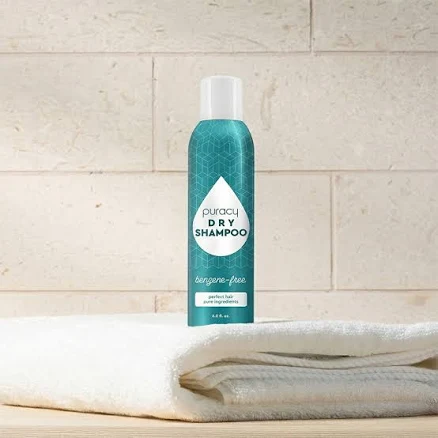
Puracy Dry Shampoo
Lower PFAS concern for a powder cosmetic without brand PFAS disclosure.
This powder-based cosmetic contains no water-resistance coatings, nonstick surfaces, or grease-blocking agents that would require PFAS. Puracy does not publicly disclose PFAS information, which is standard for this category.
We flunk more products than we pass. This one earned its grade. How we grade
Material
talc, starch, and mineral powders (dry shampoo base)
Brand disclosure
Brand is silent on PFAS
Lab data
No public lab test
You may also be interested in
Top-graded picks in the categories readers replace first, every one scored on the same rubric.

- polypropylene filter housing, carbon/sediment cartridge
- We found no PFAS statement from the brand
- Bacterial growth in spent cartridges
3 hazards checked on this product, all on its full breakdown.

Aquasure
Premier Series 75 GPD Under Sink Reverse Osmosis Water Filtration System
- RO membrane, carbon filters, stainless steel housing
- We found no PFAS statement from the brand
- Bacterial and microbial growth in housing and filters
4 hazards checked on this product, all on its full breakdown.

Avocado
Vegan Mattress
- organic cotton, natural latex, coconut coir, recycled steel coils
- The brand calls it PFAS-free, which we have not verified
- Heavy metals
2 hazards checked on this product, all on its full breakdown.
What Puracy Dry Shampoo is made of, ingredients and materials
Puracy Dry Shampoo is a powder formulation using talc as its primary absorbent base, combined with starch and mineral powders. Talc itself is chemically inert when applied to hair and scalp (unlike ingestion or inhalation risks in industrial settings), but the key concern is contamination during mining or processing. Mineral powders like mica, clay, or iron oxides are generally stable cosmetic ingredients with low dermal absorption. The formulation avoids water, which eliminates bacterial growth risk and reduces preservative load.
What’s concerning
Category baseline
The starting point for this type of product, before anything specific to this product is counted.
No PFAS disclosure
No public statement from the brand about PFAS in this product.
Heavy metals
Talc mined in certain regions can contain tremolite asbestos and trace heavy metals. Puracy does not publicly disclose talc sourcing, processing standards, or asbestos testing results. Dermal exposure risk is lower than inhalation, but no independent verification exists for this product.
Source, FDA ↗Inhalation risk from powder particle size
Fine talc or mineral powders inhaled chronically may pose lung irritation; occupational asbestos exposure is well-documented, but cosmetic-level occasional inhalation carries low absolute risk. Talc particle size specifications are not disclosed by Puracy.
Fragrance allergens or undisclosed fragrances
Puracy markets unscented or lightly scented variants, but fragrance composition is not fully disclosed on labels. Fragrance allergens like limonene or linalool may trigger contact dermatitis in sensitive users. The brand does not provide a fragrance allergen list.
What’s reassuring
Base material not linked to PFAS
The main material recorded for this product is not one associated with PFAS.
Heavy metals
Iron oxides, mica, and clay are approved cosmetic colorants with low heavy-metal risk. No recalls or testing data specific to Puracy dry shampoo indicate contamination. FDA does not routinely test cosmetics for lead or cadmium unless contamination is suspected.
Source, FDA ↗Formaldehyde / VOCs
Dry powders do not typically require formaldehyde preservatives; Puracy's lack of water base makes this hazard unlikely. No formaldehyde-donor ingredients (imidazolidinyl urea, DMDM hydantoin) are listed or reported in this product.
Source, ATSDR ↗How is this PFAS grade calculated?
The brand's record and disclosure
Puracy is a smaller, eco-marketing-focused brand with limited third-party certification or detailed ingredient disclosure on heavy metals, formaldehyde, or talc sourcing. The brand does not publicly commit to talc asbestos testing, talc-free alternatives, or regular contaminant screening. No major recalls or regulatory actions against Puracy dry shampoo are on record. The silence on supply-chain transparency and talc testing is a weakness, but does not indicate known contamination.
How it compares in its category
Talc-based dry shampoos remain the market standard, though brands like Batiste, Bumble and bumble, and Dry Bar offer similar formulations with equally opaque talc sourcing. Talc-free alternatives (rice starch, arrowroot, silica) exist but are less common in mass-market dry shampoos. Puracy's positioning as a 'natural' brand suggests lower chemical load than heavily fragranced competitors, but marketing claims are not independently verified. Overall, this product sits in the typical risk band for the category, neither higher nor lower.
If you buy it
Use dry shampoo in well-ventilated areas to minimize inhalation of fine powder particles, particularly important for talc-based products. Apply sparingly to roots and avoid prolonged scalp contact; brush or wash out within 24 hours to prevent buildup and irritation. Do not use on broken skin or open wounds. If you have concerns about talc, request a certificate of analysis from the manufacturer or switch to a talc-free brand; no asbestos testing data is publicly available for this product.
What is not known about PFAS in this product?
- Basis
- Model estimate, 72% confidence, not a lab result
- Lab test
- None on record for this exact product
- Brand statement
- Puracy has made none
Formulations change between production runs, so check the current label. How we grade.
More shampoo grades
How we score, every product runs through the same public 0-100 rubric based on materials, coatings, brand disclosure, lab findings, and recalls. See the full methodology → Spotted a mistake? Report an error.