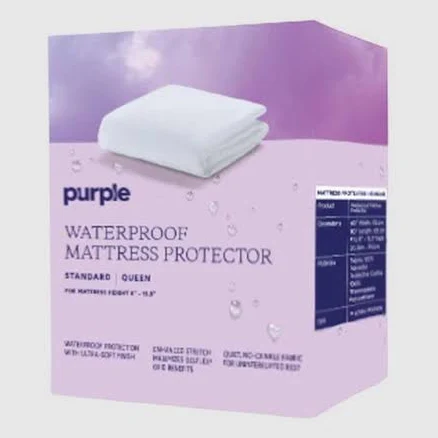
Purple Mattress Protector
Skip until Purple discloses treatment chemistry or provides third-party testing.
Purple's unspecified waterproof and stain-resistant coating likely relies on PFAS-based water-repellent coating treatments standard in the category without confirmation.
The better-graded swap
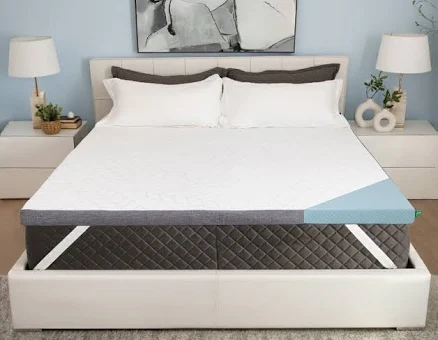
Sleepyhead
Sleepyhead 3 Gel-Infused Memory Foam Mattress Topper with Washable Cover
75/100 safety
Same rubric that flunked this product. The swap earned Excellent.
Still want this one anyway? Check the price on Amazon. We’d swap it.
Material
Polyurethane or polyester blend with waterproof/stain-resistant treatment (composition unspecified)
Brand disclosure
Brand is silent on PFAS
Lab data
No public lab test
Is Purple Mattress Protector non-toxic? What it is made of
Purple's mattress protector is a blend of polyurethane and polyester with an unspecified waterproof and stain-resistant treatment. Polyurethane is a flexible foam plastic that can off-gas volatile organic compounds (VOCs) during manufacturing and early use, especially in warm conditions. The stain-resistant finish is almost certainly PFAS-based (fluorochemicals), though Purple has not disclosed this publicly. The combination of these materials means the protector's chemical safety depends entirely on manufacturing controls and post-production off-gassing time.
What’s concerning
Category baseline
The starting point for this type of product, before anything specific to this product is counted.
No PFAS disclosure
No public statement from the brand about PFAS in this product.
Waterproof / stain-resistant treatment
Water-repellent coating treatments have historically used PFAS.
Volatile Organic Compound (VOC) off-gassing from polyurethane
Polyurethane foam and adhesives in the protector may release VOCs such as toluene and isocyanates, especially in the first weeks after manufacture and in warm sleeping environments. Risk is reduced by adequate ventilation and initial airing before use.
Microplastic shedding from coating degradation
As the waterproof polyurethane or polyester coating wears and cracks over time, fragments may shed into the bed and surrounding air. Frequency and quantity depend on abrasion, heat, and washing cycles; protectors typically last 3-5 years before significant degradation.
Skin sensitization or respiratory irritation from chemical treatment
Unidentified water-repellent treatments (likely PFAS-based fluorochemicals) can irritate sensitive skin or respiratory systems in susceptible individuals during initial off-gassing phase. Risk is individual and generally decreases rapidly with airing and time.
What’s reassuring
Formaldehyde / VOCs
No specific reports of formaldehyde-based finishes in Purple's protector; however, polyester blends sometimes include formaldehyde as a resin binder in wrinkle-resistant or sizing treatments. Purple has not disclosed whether formaldehyde is present or at what levels.
Source, ATSDR ↗Phthalates
Modern polyurethane for textiles typically uses alternative plasticizers, but formulations are proprietary. No recalls or complaints specific to Purple's protector have been documented; however, disclosure of additives would be reassuring.
Source, ATSDR ↗The full breakdown
The brand's record and disclosure
Purple has not published transparent information about the chemical composition of its mattress protector or the type of water-repellent treatment used. The brand does not list certifications like Oeko-Tex or Global Organic Textile Standard (GOTS) for this product. Purple's broader product line lacks detailed PFAS statements, suggesting limited chemical transparency compared to competitors like Helix or Casper, which have made specific commitments to PFAS disclosure or reduction.
How it compares in its category
Most mattress protectors in this price range use either polyurethane or polyester with fluorinated water treatments, so Purple is not an outlier in formulation. However, brands like Saatva and some retailers offer protectors with PFOA/PFOS-free certifications or GOTS certification, which Purple does not advertise. Natural fiber alternatives (cotton or wool blends with mechanical water resistance) exist but are less common and more expensive. Purple's lack of certification or disclosure puts it in the middle-to-lower tier of transparency for this category.
If you buy it
Air the protector in a well-ventilated space or outdoors for 24-48 hours before placing it on your bed to allow initial VOC off-gassing. Wash it before first use if the care label permits, as this can reduce residual chemicals. Avoid high heat drying or direct sun exposure for extended periods, which can accelerate polyurethane degradation and microplastic shedding. Inspect annually for tears, pilling, or peeling of the coating; once the waterproof layer degrades significantly, replace it rather than repair it.
What we don’t know
- Basis
- Model estimate, 45% confidence, not a lab result
- Lab test
- None on record for this exact product
- Brand statement
- Purple has made none
Formulations change between production runs, so check the current label. How we grade.
Better-graded alternatives in Mattress Protectors
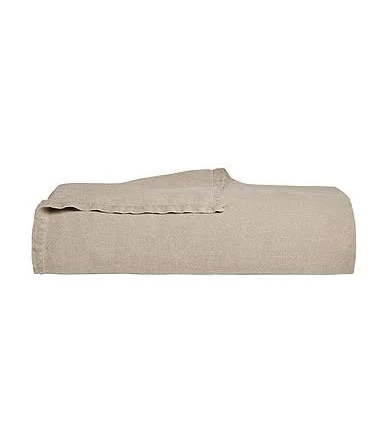
Parachute
Vintage Linen Bed Cover
- 100% linen, no reported coating
- We found no PFAS statement from the brand
- Heavy metals
3 hazards checked on this product. See all of them.
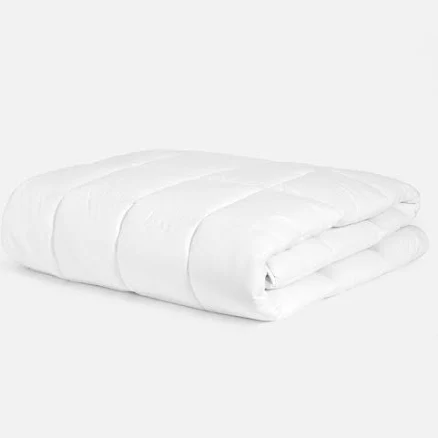
Brooklinen
Down Alternative Mattress Topper
- polyester down-alternative filling
- We found no PFAS statement from the brand
- Azo dyes and colorant migration
4 hazards checked on this product. See all of them.
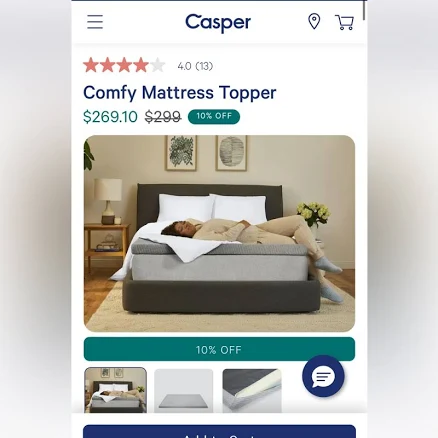
Casper
Sleep Comfy Mattress Topper
- Polyurethane foam, cotton/polyester blend cover
- We found no PFAS statement from the brand
- Volatile Organic Compound (VOC) off-gassing
3 hazards checked on this product. See all of them.
More mattress protectors grades
How we score, every product runs through the same public 0-100 rubric based on materials, coatings, brand disclosure, lab findings, and recalls. See the full methodology → Spotted a mistake? Report an error.