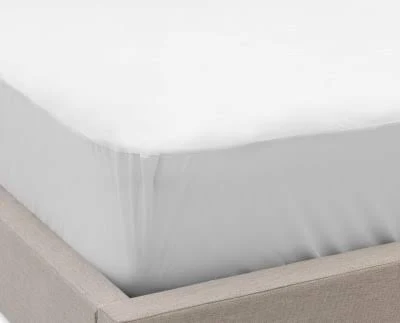
Purple Standard Full Waterproof Mattress Protector
Skip until Purple discloses waterproof treatment chemistry, standard water-repellent coating coatings often contain PFAS.
Standard waterproof protection typically means PFAS-based water-repellent coating coatings, but Purple remains silent on chemistry and holds no third-party certifications.
The better-graded swap
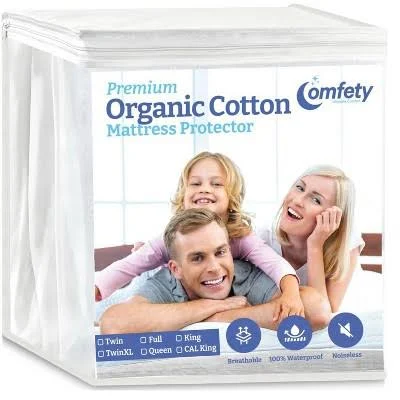
Organic Mattress Protector 2-Pack
75/100 safety
Same rubric that flunked this product. The swap earned Excellent.
Still want this one anyway? Check the price on Amazon. We’d swap it.
Material
Polyurethane or polyester blend with waterproof coating (unspecified)
Brand disclosure
Brand is silent on PFAS
Lab data
No public lab test
Is Purple Standard Full Waterproof Mattress non-toxic? What it is made of
Purple's Standard Waterproof Mattress Protector uses a polyurethane or polyester blend with an undisclosed waterproof coating. The fabric base itself poses low risk, but the waterproof treatment is critical, most water-repellent coating (water-repellent coating) coatings in this category historically rely on fluorinated compounds (PFAS) to achieve water resistance. Purple has not publicly disclosed whether this product uses PFAS-free alternatives like wax or silicone-based coatings, making the actual chemical composition opaque.
What’s concerning
Category baseline
The starting point for this type of product, before anything specific to this product is counted.
No PFAS disclosure
No public statement from the brand about PFAS in this product.
Waterproof / stain-resistant treatment
Water-repellent coating treatments have historically used PFAS.
PFAS
Water-repellent coating treatments on polyurethane/polyester fabrics commonly use PFAS compounds to achieve water repellency. Purple's silence on this chemistry strongly suggests use of conventional (PFAS-containing) treatments, which can leach or off-gas over the product lifetime.
Source, ATSDR ↗Polyurethane off-gassing and VOC release
Polyurethane foam or coated fabrics can release volatile organic compounds (VOCs), particularly when new or exposed to heat. While most off-gassing occurs within the first days to weeks, prolonged heat or humidity exposure may trigger additional release over time.
Coating degradation and microplastic shedding
Waterproof coatings degrade with repeated washing, humidity, and body heat. As the protective layer flakes or breaks down, small particles may shed into laundered water and contribute to microplastic accumulation. The material composition does not appear to explicitly address durability or shed prevention.
Bacterial or mold growth under waterproof barrier
Waterproof coatings prevent moisture escape, creating a microenvironment where moisture can trap if not fully dried before use. Improper drying after washing or high humidity in bedrooms may promote fungal or bacterial colonization between the protector and mattress.
What’s reassuring
Formaldehyde / VOCs
No public reports of formaldehyde-release finishes or problematic flame retardants in Purple mattress protectors. However, low-cost polyester fabrics sometimes use formaldehyde-based resins; Purple's lack of third-party testing makes this unverified.
Source, ATSDR ↗The full breakdown
The brand's record and disclosure
Purple has marketed itself as a premium, innovation-focused mattress brand but has been notably silent on PFAS use or avoidance across its product line. No independent certifications (e.g., GOTS, Oeko-Tex, GREENGUARD) are listed for this protector. The brand's broader mattress products have not faced major recalls related to chemical hazards, but transparency on waterproofing chemistry remains absent, which limits confidence in chemical safety claims.
How it compares in its category
Mattress protectors with waterproof coatings are common, but disclosure varies widely. Some competitors (e.g., Parachute, Avocado) explicitly use PFAS-free or low-chemical alternatives and seek third-party certification. Purple's protector is positioned at mid-to-premium pricing but does not match the transparency or certification standard of higher-end alternatives. Budget options often skip waterproofing entirely, trading protection for chemical simplicity.
If you buy it
Machine-wash in cold water on gentle cycle and air-dry to preserve the waterproof coating; avoid high heat, which can degrade polyurethane layers and potentially trigger volatile organic compound release. Replace every 2-3 years or sooner if the waterproof barrier shows wear (beading water loss). Do not dry-clean or bleach. Ensure your mattress protector is fully dry before returning it to the bed to prevent microbial growth under the barrier.
What we don’t know
- Basis
- Model estimate, 45% confidence, not a lab result
- Lab test
- None on record for this exact product
- Brand statement
- Purple has made none
Formulations change between production runs, so check the current label. How we grade.
Better-graded alternatives in Mattress Protectors
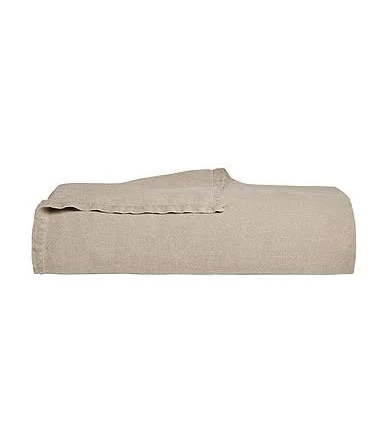
Parachute
Vintage Linen Bed Cover
- 100% linen, no reported coating
- We found no PFAS statement from the brand
- Heavy metals
3 hazards checked on this product. See all of them.
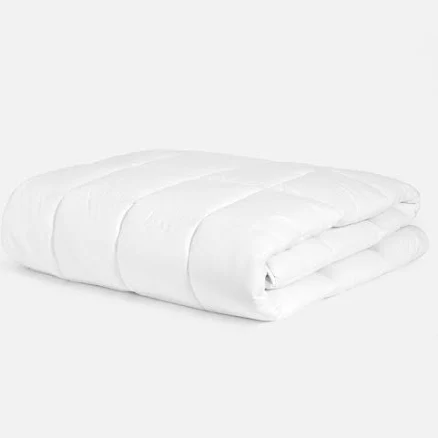
Brooklinen
Down Alternative Mattress Topper
- polyester down-alternative filling
- We found no PFAS statement from the brand
- Azo dyes and colorant migration
4 hazards checked on this product. See all of them.
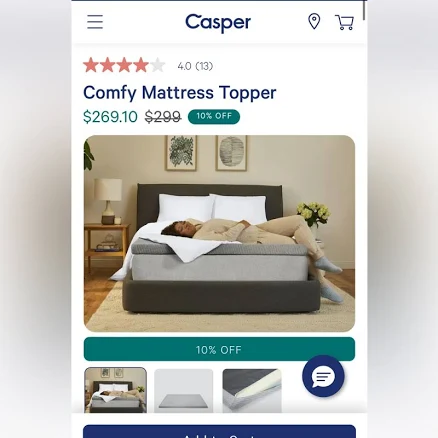
Casper
Sleep Comfy Mattress Topper
- Polyurethane foam, cotton/polyester blend cover
- We found no PFAS statement from the brand
- Volatile Organic Compound (VOC) off-gassing
3 hazards checked on this product. See all of them.
More mattress protectors grades
How we score, every product runs through the same public 0-100 rubric based on materials, coatings, brand disclosure, lab findings, and recalls. See the full methodology → Spotted a mistake? Report an error.