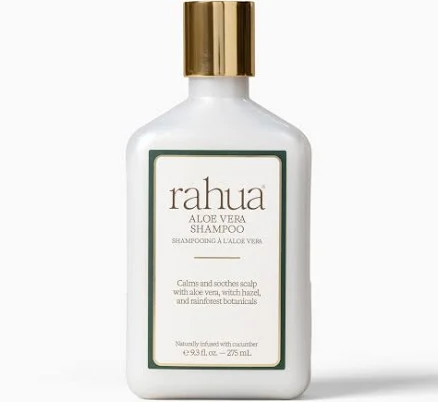
Rahua Aloe Vera Shampoo
Lower concern, liquid cosmetics rarely need PFAS; no red flags identified.
This liquid shampoo has no PFAS-prone coatings, treatments, or water-resistance claims typical of the category. No third-party testing signals enhanced safety, but liquid cosmetics pose lower risk.
We flunk more products than we pass. This one earned its grade. How we grade
Material
aqueous shampoo with botanical extracts
Brand disclosure
Brand is silent on PFAS
Lab data
No public lab test
You may also be interested in
Top-graded picks in the categories readers replace first, every one scored on the same rubric.

- polypropylene filter housing, carbon/sediment cartridge
- We found no PFAS statement from the brand
- Bacterial growth in spent cartridges
3 hazards checked on this product, all on its full breakdown.

Aquasure
Premier Series 75 GPD Under Sink Reverse Osmosis Water Filtration System
- RO membrane, carbon filters, stainless steel housing
- We found no PFAS statement from the brand
- Bacterial and microbial growth in housing and filters
4 hazards checked on this product, all on its full breakdown.

Avocado
Vegan Mattress
- organic cotton, natural latex, coconut coir, recycled steel coils
- The brand calls it PFAS-free, which we have not verified
- Heavy metals
2 hazards checked on this product, all on its full breakdown.
What Rahua Aloe Vera Shampoo is made of, ingredients and materials
Rahua Aloe Vera Shampoo is a liquid, water-based formulation typical of botanical-positioned shampoos. The product contains aloe vera extract as a humectant and skin-conditioning agent, combined with standard surfactants and preservative systems. Liquid aqueous cosmetics do not require PFAS for solubility or texture, so the absence of fluorinated compounds is chemically unsurprising. The botanical positioning implies minimal synthetic colorants and fragrance allergen load, though specific ingredient disclosures are not available from public labeling alone.
What’s concerning
Category baseline
The starting point for this type of product, before anything specific to this product is counted.
No PFAS disclosure
No public statement from the brand about PFAS in this product.
Fragrance allergens and sensitizers
Botanical shampoos typically include essential oils and natural fragrance compounds; while often marketed as having lower concern, these can trigger contact dermatitis or sensitization in 1-5% of users. No specific allergen list is publicly available for this product.
Scalp irritation from surfactant load or pH imbalance
Botanical shampoos sometimes compromise cleansing power by reducing surfactant strength, leading to incomplete rinsing and buildup, or conversely use high-pH formulations that disrupt scalp barrier function. Rahua's specific pH and ionic strength are not publicly disclosed.
What’s reassuring
Base material not linked to PFAS
The main material recorded for this product is not one associated with PFAS.
Formaldehyde / VOCs
Aqueous shampoos typically use mild preservatives (e.g., phenoxyethanol, methylisothiazolinone) rather than formaldehyde donors. No recalls or complaints linking Rahua shampoos to formaldehyde contamination are documented.
Source, ATSDR ↗1,4-dioxane contamination
This contaminant arises from surfactant synthesis and is not inherent to aloe or botanical extracts. No testing or regulatory action against Rahua products indicates problematic levels, though small trace amounts can occur in any shampoo using ethoxylated surfactants.
Heavy metals
Aloe vera extract itself does not require synthetic colorants; natural shades are achieved via the plant material. No credible reports of lead, cadmium, or arsenic in this product exist.
Source, FDA ↗How is this PFAS grade calculated?
The brand's record and disclosure
Rahua is a luxury botanical haircare brand with a sustainability and indigenous-partnership narrative, but maintains limited public transparency on full ingredient safety or third-party certifications. No major recalls, controversies, or safety violations are on record for this product or brand. The brand does not publicly disclose PFAS avoidance policies, though the aqueous formulation makes avoidance the default. No independent lab testing or certification (e.g., EWG Verified) is documented for this specific shampoo.
How it compares in its category
Botanical shampoos like this sit in the mid-to-premium segment where fragrance complexity and natural extract positioning create both appeal and higher allergen variability than mass-market alternatives. Compared to sulfate-free and clean-label competitors (e.g., Acure, Briogeo), Rahua offers similar safety profiles but less public ingredient granularity. Versus conventional supermarket shampoos, it avoids silicone build-up risks and typically uses gentler surfactant blends, reducing scalp irritation potential.
If you buy it
Use as directed on damp hair; no special storage precautions are required beyond keeping the bottle sealed and away from extreme heat. Liquid shampoos have indefinite shelf life if stored at room temperature. Discontinue use immediately if you experience scalp irritation, redness, or allergic reaction, as fragrance or botanical extracts can trigger sensitivity in vulnerable populations. Patch test on a small scalp area if you have a history of contact dermatitis or fragrance sensitivity.
What is not known about PFAS in this product?
- Basis
- Model estimate, 72% confidence, not a lab result
- Lab test
- None on record for this exact product
- Brand statement
- Rahua has made none
Formulations change between production runs, so check the current label. How we grade.
More shampoo grades
How we score, every product runs through the same public 0-100 rubric based on materials, coatings, brand disclosure, lab findings, and recalls. See the full methodology → Spotted a mistake? Report an error.