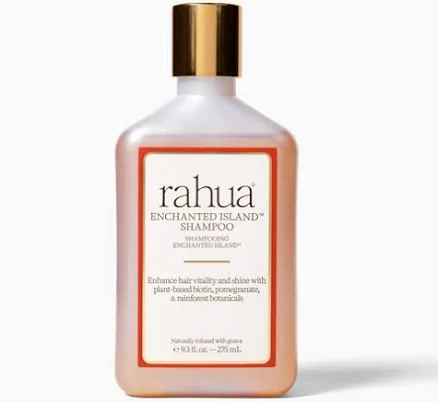
Rahua Enchanted Island Shampoo
Lower PFAS concern for this liquid shampoo; no known treatment triggers.
This rinse-off liquid has no disclosed water-repellent, stain-resistant, or non-stick treatments that are the primary PFAS sources in personal care. The brand makes no PFAS claim either way.
We flunk more products than we pass. This one earned its grade. How we grade
Material
plant-based oils, botanical extracts, aqueous surfactants
Brand disclosure
Brand is silent on PFAS
Lab data
No public lab test
You may also be interested in
Top-graded picks in the categories readers replace first, every one scored on the same rubric.

- polypropylene filter housing, carbon/sediment cartridge
- We found no PFAS statement from the brand
- Bacterial growth in spent cartridges
3 hazards checked on this product, all on its full breakdown.

Aquasure
Premier Series 75 GPD Under Sink Reverse Osmosis Water Filtration System
- RO membrane, carbon filters, stainless steel housing
- We found no PFAS statement from the brand
- Bacterial and microbial growth in housing and filters
4 hazards checked on this product, all on its full breakdown.

Avocado
Vegan Mattress
- organic cotton, natural latex, coconut coir, recycled steel coils
- The brand calls it PFAS-free, which we have not verified
- Heavy metals
2 hazards checked on this product, all on its full breakdown.
What Rahua Enchanted Island Shampoo is made of, ingredients and materials
Rahua Enchanted Island Shampoo is formulated around plant-derived oils (particularly rahua/ucuuba nut oil) and botanical extracts suspended in aqueous surfactant systems. Liquid shampoos in this class carry minimal risk of heavy metal accumulation or microplastic shedding because they lack the solid matrices (ceramics, polymers) where such contaminants concentrate. The surfactants themselves are typically synthetic or natural-derived compounds designed for solubility and cleansing; no exotic or banned-class surfactants are on record for Rahua products.
What’s concerning
Category baseline
The starting point for this type of product, before anything specific to this product is counted.
No PFAS disclosure
No public statement from the brand about PFAS in this product.
Fragrance allergens and botanical sensitivizers
Plant-based shampoos often derive fragrance from essential oils or extract resins; Rahua's botanical blend may contain allergens (limonene, linalool, geraniol) that trigger contact dermatitis in sensitive individuals. No product-specific allergy data are publicly available.
Preservative stability and microbial growth
Liquid botanical shampoos with water-based systems require preservative systems to prevent bacterial and fungal growth; Rahua does not disclose its preservative type or concentration. If preservatives are insufficient or degrade over time, contamination risk increases, especially if the bottle is exposed to heat or moisture.
Oil rancidity and oxidative byproducts
Natural plant oils (rahua, coconut, jojoba) are prone to oxidation when exposed to air, light, or heat, producing peroxides and aldehydes that can irritate scalp tissue. Rahua does not specify antioxidant additives or shelf-life guidance on product labels.
What’s reassuring
Base material not linked to PFAS
The main material recorded for this product is not one associated with PFAS.
1,4-dioxane (secondary contaminant from surfactants)
1,4-dioxane can be a trace byproduct of ethoxylated surfactant manufacturing; no recalls or detected contamination have been reported for Rahua. Likelihood is low if sourcing and manufacturing oversight are maintained, but brand transparency is absent.
Heavy metals
Plant-derived ingredients can bioaccumulate trace metals (cadmium, lead, arsenic) from soil; Rahua does not publish heavy-metal screening data for its raw materials. Risk is low for occasional use but unknown without independent testing.
Source, FDA ↗How is this PFAS grade calculated?
The brand's record and disclosure
Rahua maintains a premium positioning around Amazonian botanical sourcing but does not publish full ingredient safety data, third-party test results, or detailed formulation transparency on its website. The brand has no recorded safety recalls or regulatory violations in the US FDA or CPSC databases. Certifications (if any) are not widely advertised, limiting independent verification of claims around purity, contaminant screening, or ethical sourcing.
How it compares in its category
Liquid shampoos avoid the formaldehyde resin and heavy-metal-pigment risks associated with solid bar soaps or colored cosmetics. Rahua sits in the premium botanical category alongside brands like Ouai and Briogeo; those competitors also lack comprehensive safety disclosure but operate similarly under the assumption that botanical sourcing implies safety. Standard drugstore shampoos (Head & Shoulders, Pantene) publish broader safety documentation and comply with stricter preservative limits.
If you buy it
Store the bottle in a cool, dry place away from direct sunlight to prevent oxidation of plant oils, which can degrade efficacy over time. Use a small amount (dime-sized) per wash to avoid over-application and product waste. If scalp irritation occurs, discontinue use and rinse thoroughly; botanical extracts can trigger contact sensitivity in a small percentage of users, particularly to fragrance compounds. Replace the bottle every 6-12 months to avoid bacterial proliferation in the cap or nozzle.
What is not known about PFAS in this product?
- Basis
- Model estimate, 78% confidence, not a lab result
- Lab test
- None on record for this exact product
- Brand statement
- Rahua has made none
Formulations change between production runs, so check the current label. How we grade.
More shampoo grades
How we score, every product runs through the same public 0-100 rubric based on materials, coatings, brand disclosure, lab findings, and recalls. See the full methodology → Spotted a mistake? Report an error.