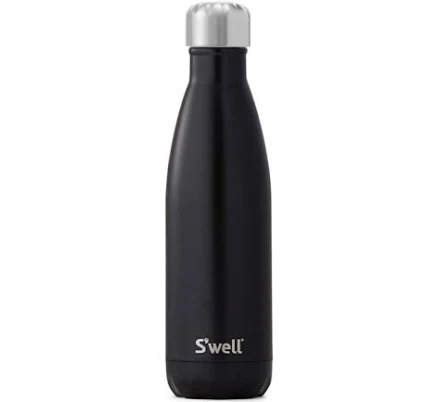
S'well London Chimney Water Bottle
Lower concern; classic double-wall stainless bottle with no known PFAS risk from materials, though brand doesn't explicitly address it.
18/8 stainless steel has no reported nonstick, waterproof, or grease-resistant coatings. S'well hasn't disclosed PFAS information, and no third-party lab data exists.
We flunk more products than we pass. This one earned its grade. How we grade
Material
Double-wall stainless steel (18/8)
Lab data
No public lab test
What S'well London Chimney Water Bottle is made of, ingredients and materials
The S'well London Chimney bottle uses 18/8 stainless steel (304-grade), which is food-safe and chemically inert across normal temperature ranges. Double-wall construction traps air as insulation, eliminating the need for foam or plastic liners that could leach chemicals. Stainless steel does not degrade, pit, or release heavy metals under typical beverage use (cold to warm water), making it one of the lowest-risk bottle materials available.
What’s concerning
No PFAS disclosure
No public statement from the brand about PFAS in this product.
Lid gasket and seal degradation
Rubber seals in the cap can accumulate mold or crack over time if not dried between uses or stored damp. Inspect for visible deterioration before each use, particularly in the threads.
Bacterial or mold growth in narrow openings
Double-wall bottles can trap moisture in hard-to-reach areas near the lid. Regular hand-washing and air-drying with the cap off minimizes risk; do not store with water inside for extended periods.
BPA & bisphenols
The lid includes plastic or silicone components not publicly specified by the brand. S'well does not disclose the type of plastic used in the cap gasket or closure mechanism, so BPA/BPS status is unconfirmed, though this is not typical for high-end drinkware brands.
Source, FDA ↗What’s reassuring
Bare uncoated material
Recorded as a bare, uncoated material with no surface coating or treatment.
Heavy metals
S'well's colored exterior finishes have not been independently tested or reported to contain heavy metals in public records. Standard powder-coat processes used on stainless bottles do not typically leach into beverages, as the coating does not contact liquid.
Source, FDA ↗Leaching from stainless steel itself
18/8 stainless steel is highly resistant to corrosion and does not leach iron, chromium, or nickel at detectable levels into cold or warm beverages under normal use. No credible studies document clinically significant release from this material.
The full breakdown
The brand's record and disclosure
S'well does not publicly disclose third-party safety testing results or PFAS-related statements; this silence is typical among boutique drinkware brands and does not indicate a problem specific to stainless construction. The brand has no documented recalls, safety complaints, or independent test failures on record. S'well markets sustainability and durability rather than chemical safety, which is appropriate for a non-treated metal product.
How it compares in its category
Stainless steel double-wall bottles have lower concern in the filtered-water-bottle category because they avoid plastic seals, gaskets, and internal coatings that are common contamination vectors. Alternatives (plastic bottles with filters, aluminum-lined bottles) carry higher leaching or degradation risks. The main trade-off is that S'well bottles do not filter water; they are insulated containers, not filtration devices, so comparison to actual filtered bottles is limited.
If you buy it
Hand-wash in warm soapy water; avoid prolonged dishwasher cycles that may degrade the exterior finish. Do not expose to prolonged boiling water or steam, as this can damage the lid seal and reduce insulation. Inspect the rubber gasket annually for cracking or mold growth, especially if stored with residual liquid. The stainless steel body itself will last decades; plan to replace the lid gasket every 2-3 years if heavily used.
What we don’t know
- Basis
- Model estimate, 72% confidence, not a lab result
- Lab test
- None on record for this exact product
- Brand statement
- S'well has made a specific claim
Formulations change between production runs, so check the current label. How we grade.
More water filters grades
How we score, every product runs through the same public 0-100 rubric based on materials, coatings, brand disclosure, lab findings, and recalls. See the full methodology → Spotted a mistake? Report an error.