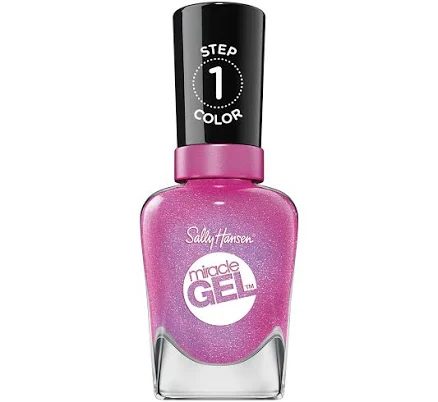
Sally Hansen · Nail Polish & Top Coat
Sally Hansen Miracle Gel Nail Color Quartz & Kisses, Are They Non-Toxic?
Low public data; gel formulas occasionally contain fluorinated compounds.
This gel lacquer lacks public PFAS disclosures or third-party testing. Gel nail products sometimes use fluorinated resins for durability, but Sally Hansen provides no confirmation or denial.
The better-graded swap
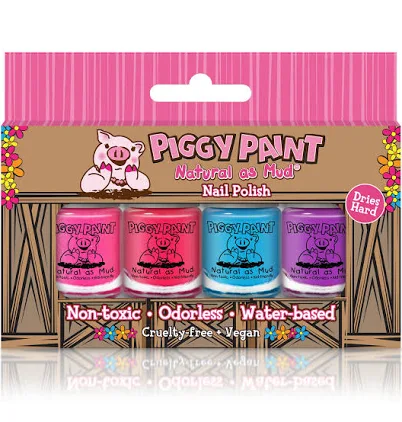
Piggy Paint
Piggy Paint 4-Piece Nail Polish Set
100/100 safety
Same rubric that flunked this product. The swap earned Excellent.
Still want this one anyway? Check the price on Amazon. We’d swap it.
Material
nitrocellulose-based gel nail lacquer
Brand disclosure
Brand is silent on PFAS
Lab data
No public lab test
You may also be interested in
Top-graded picks in the categories readers replace first, every one scored on the same rubric.

- polypropylene filter housing, carbon/sediment cartridge
- We found no PFAS statement from the brand
- Bacterial growth in spent cartridges
3 hazards checked on this product, all on its full breakdown.

Aquasure
Premier Series 75 GPD Under Sink Reverse Osmosis Water Filtration System
- RO membrane, carbon filters, stainless steel housing
- We found no PFAS statement from the brand
- Bacterial and microbial growth in housing and filters
4 hazards checked on this product, all on its full breakdown.

Avocado
Vegan Mattress
- organic cotton, natural latex, coconut coir, recycled steel coils
- The brand calls it PFAS-free, which we have not verified
- Heavy metals
2 hazards checked on this product, all on its full breakdown.
Are Sally Hansen Miracle Gel Nail Color Kisses non-toxic? What it is made of
Sally Hansen Miracle Gel is a nitrocellulose-based gel-hybrid polish, not true UV gel. Nitrocellulose is the film-forming agent derived from cellulose; it has been used in nail lacquers for decades and carries no established systemic toxicity concern at consumer exposure levels. The formula includes organic solvents (typically dibutyl phthalate/DBP or alternatives, resins, and plasticizers) to achieve color and flexibility. Gel-hybrid formulas cure under LED/UV rather than air-dry, which reduces solvent volatility during application compared to traditional polish.
What’s concerning
Category baseline
The starting point for this type of product, before anything specific to this product is counted.
No PFAS disclosure
No public statement from the brand about PFAS in this product.
Phthalates
DBP is a common plasticizer in nitrocellulose nail lacquers; it is banned in the EU but remains legal in the US for nail polish. Sally Hansen does not explicitly state phthalate-free status for this line. Dermal absorption from nail polish is low, but inhalation during application and hand-to-mouth transfer are minor exposure routes.
Source, ATSDR ↗Solvent volatility and inhalation exposure
Gel-hybrid formulas contain acetone, toluene, and other organic solvents that off-gas during curing. While brief exposure during a 30-60 second cure is low-risk, chronic nail salon workers face accumulated exposure. Home users with poor ventilation may experience headache or dizziness; no acute toxicity is documented for single-use consumer exposure.
LED/UV lamp exposure
The curing lamp emits UVA radiation. Exposure is brief (30-60 seconds per manicure) and occurs on fingertips only. Dermatologists note that cumulative nail salon UV exposure is minimal compared to sunbed use, but regular users may experience slight photodamage to nail beds over years of repeated exposure.
What’s reassuring
Base material not linked to PFAS
The main material recorded for this product is not one associated with PFAS.
Heavy metals
Sally Hansen does not disclose specific pigment sourcing or trace metal testing for Miracle Gel shades. Common colorants in nail lacquer (iron oxides, mica, titanium dioxide) are generally recognized as low concern for nail application. No recalls or contamination events have been reported for this brand.
Source, FDA ↗Formaldehyde / VOCs
Modern gel lacquers no longer rely on formaldehyde as a hardening agent, having been replaced by crosslinking resins. Sally Hansen Miracle Gel does not list formaldehyde in its published ingredient list. This is typical for the gel-hybrid category.
Source, ATSDR ↗How is this PFAS grade calculated?
The brand's record and disclosure
Sally Hansen publishes ingredient lists for most Miracle Gel shades but does not provide detailed safety certifications or third-party testing data on their website. The brand has no major nail polish recalls from the FDA or safety agencies in recent public records. Sally Hansen's parent company (Coty Inc.) has faced scrutiny on fragrance allergen transparency in other product lines, but nail polish is a lower-exposure category. No specific PFAS disclosure statements have been found for this line; PFAS in gel formulas is not yet regulated or widely screened by mainstream brands.
How it compares in its category
Miracle Gel occupies the mid-market gel-hybrid segment, competing with Essie Gel Couture and OPI Gelcolor. All three are nitrocellulose-based and similarly formulated; Sally Hansen's Miracle Gel has no documented advantage or disadvantage in toxicity over direct competitors. Traditional air-dry polishes (e.g., Sally Hansen Complete Salon Manicure) have lower solvent exposure but may contain the same hazardous compounds at slightly different concentrations. True LED/UV-cured systems (e.g., CND Shellac) operate on the same curing mechanism but often cost more.
If you buy it
Apply in a well-ventilated space or near an open window; solvent inhalation is the primary exposure route. Avoid skin contact and eye exposure; wash hands immediately after application. Cure according to label instructions (typically 30-60 seconds under a gel lamp); undercuring can leave uncrosslinked monomers on the nail surface. Remove with acetone or manufacturer-provided remover to minimize contact time; prolonged acetone exposure can dry skin and nails, so moisturize afterward. Replace polish if separated, thickened, or older than 3 years to avoid consistency issues and potential microbial growth in the bottle.
What is not known about PFAS in this product?
- Basis
- Model estimate, 45% confidence, not a lab result
- Lab test
- None on record for this exact product
- Brand statement
- Sally Hansen has made none
Formulations change between production runs, so check the current label. How we grade.
What are the PFAS-free alternatives to Sally Hansen Miracle Gel Nail Color Quartz & Kisses?
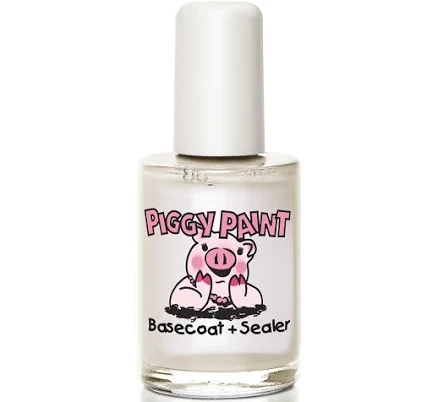
- Water-based organic pigments and plant-derived resins
- The brand calls it PFAS-free, which we have not verified
- Heavy metals
3 hazards checked on this product, all on its full breakdown.
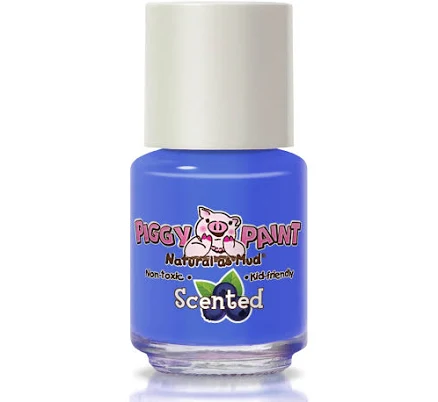
- water-based pigmented lacquer
- The brand calls it PFAS-free, which we have not verified
- Volatile organic compounds (VOCs) from resins and solvents
3 hazards checked on this product, all on its full breakdown.
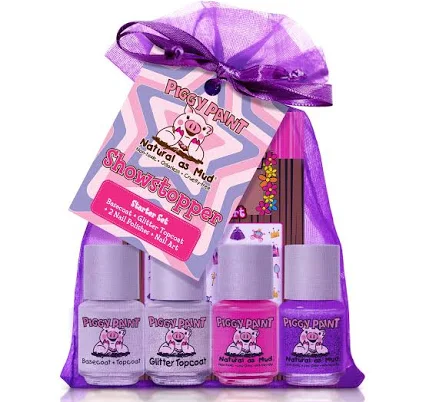
Piggy Paint
Showstopper Nail Polish Set
- organic pigments, plant-based resins, water-based lacquer
- The brand calls it PFAS-free, which we have not verified
- Volatile organic compounds (VOCs)
2 hazards checked on this product, all on its full breakdown.
More nail polish & top coat grades
How we score, every product runs through the same public 0-100 rubric based on materials, coatings, brand disclosure, lab findings, and recalls. See the full methodology → Spotted a mistake? Report an error.