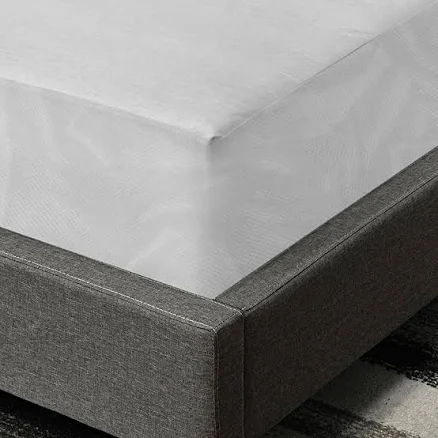
Sealy Cool Touch Mattress Protector
Skip until Sealy discloses treatment chemistry; protectors commonly use PFAS water barriers.
Cool Touch waterproofing and stain resistance come from unspecified PFAS-risk treatments that Sealy refuses to name or verify.
The better-graded swap
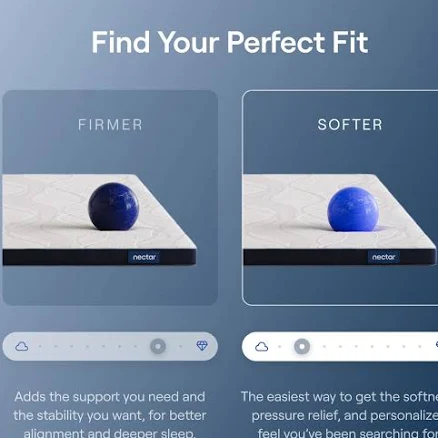
Nectar
Nectar Firmer Mattress Topper
75/100 safety
Same rubric that flunked this product. The swap earned Excellent.
Still want this one anyway? Check the price on Amazon. We’d swap it.
Material
polyester/poly blend with waterproof/stain-resistant treatment (unspecified)
Brand disclosure
Brand is silent on PFAS
Lab data
No public lab test
Is Sealy Cool Touch Mattress Protector non-toxic? What it is made of
The Sealy Cool Touch uses a polyester or polyester-blend fabric face with an unspecified waterproof and stain-resistant backing treatment. The waterproofing layer is almost certainly a fluorinated compound (PFAS-based) or silicone polymer; Sealy does not publicly identify which. Polyester itself is chemically stable and low-risk under normal use, but the barrier coating is where chemical concern concentrates. The 'Cool Touch' feature typically indicates a synthetic fiber blend designed for moisture-wicking, not a chemical additive.
What’s concerning
Category baseline
The starting point for this type of product, before anything specific to this product is counted.
No PFAS disclosure
No public statement from the brand about PFAS in this product.
Waterproof / stain-resistant treatment
Water-repellent coating treatments have historically used PFAS.
PFAS
The unspecified stain-resistant and waterproof treatment in mattress protectors of this type typically uses long-chain or short-chain fluorinated compounds. Sealy's refusal to disclose chemistry strongly suggests industry-standard PFAS application; contact exposure is low but indoor air and dust accumulation over years are documented exposure routes.
Source, ATSDR ↗Polyester microfiber shedding or degradation
Polyester blends can shed microfibers when abraded or washed; 'Cool Touch' synthetic fabrics are particularly prone to pilling and fiber breakage. Shed fibers accumulate in household dust and may be inhaled; risk is proportional to washing frequency and mattress friction.
Polyurethane or synthetic backing off-gassing
If the waterproof layer uses polyurethane or other polymers beneath the PFAS treatment, volatile organic compounds (VOCs) may off-gas, especially in the first weeks and during warm storage. Off-gassing is typically mild and resolves within days to weeks but may trigger sensitivity in chemically sensitive individuals.
Coating degradation and leachate migration
Over time, polyester-backed protectors experience cracking and peeling of the waterproof layer, particularly at seams and corners. Degraded coating fragments and leachate from the backing polymer may contact skin or be absorbed by the mattress; no acute toxicity is documented for polyester-PFAS combinations, but long-term exposure data is sparse.
What’s reassuring
Azo dyes in synthetic fabrics
Sealy does not disclose dye chemistry for the polyester face fabric. Azo dyes are common in polyester textiles and can release aromatic amines under certain conditions; no recalls or complaints specific to this product are on record, but typical textile industry standards do not exclude them.
The full breakdown
The brand's record and disclosure
Sealy, owned by Tempur Sealy International, has not published ingredient transparency or PFAS phase-out commitments as of available records. The company does not list certifications like GOTS (organic) or STANDARD 100 by Oeko-Tex on this product line. Sealy's silence on water-barrier chemistry is standard for the mattress protector category but represents a disclosure gap that makes independent verification impossible. No major recalls or chemical complaints are on record for this specific model.
How it compares in its category
Mattress protectors with waterproof backing nearly universally rely on PFAS or non-fluorinated alternative coatings; Sealy's approach is typical for mid-market brands. Premium alternatives (e.g., certified organic or PFAS-free brands) exist but cost 40-80% more and are harder to source. Budget protectors often use thicker polyurethane or PVC backing, which may off-gas VOCs during manufacturing but avoid PFAS entirely. Sealy's combination of affordability and established brand name comes at the cost of opacity on chemical treatment.
If you buy it
Air out the protector for 24-48 hours before placing on the mattress to release any volatile off-gases from the backing coating. Machine wash in cool water only; hot water can degrade polyester and may accelerate coating breakdown, potentially increasing leachate. Inspect the backing annually for cracks, peeling, or degradation; replace if waterproofing visibly fails. Do not dry-clean; use gentle cycle and avoid fabric softeners, which can clog the waterproof layer.
What we don’t know
- Basis
- Model estimate, 35% confidence, not a lab result
- Lab test
- None on record for this exact product
- Brand statement
- Sealy has made none
Formulations change between production runs, so check the current label. How we grade.
Better-graded alternatives in Mattress Protectors
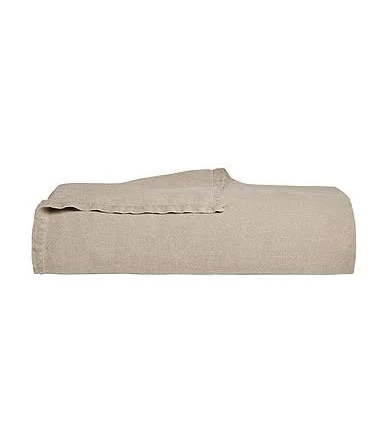
Parachute
Vintage Linen Bed Cover
- 100% linen, no reported coating
- We found no PFAS statement from the brand
- Heavy metals
3 hazards checked on this product. See all of them.
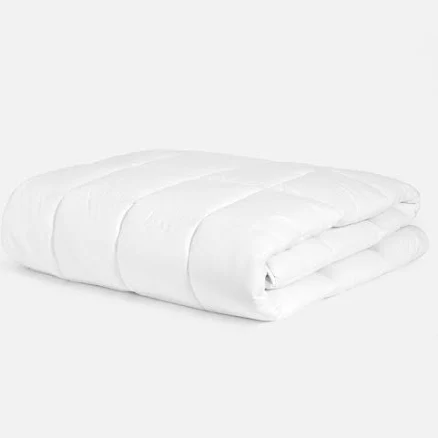
Brooklinen
Down Alternative Mattress Topper
- polyester down-alternative filling
- We found no PFAS statement from the brand
- Azo dyes and colorant migration
4 hazards checked on this product. See all of them.
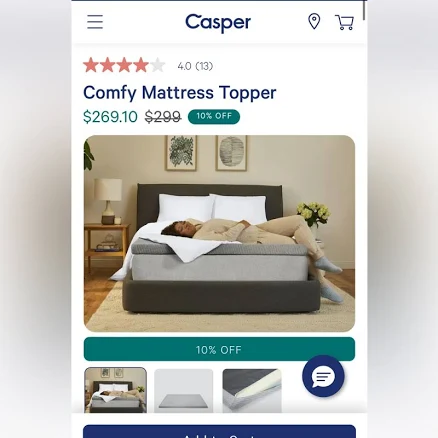
Casper
Sleep Comfy Mattress Topper
- Polyurethane foam, cotton/polyester blend cover
- We found no PFAS statement from the brand
- Volatile Organic Compound (VOC) off-gassing
3 hazards checked on this product. See all of them.
More mattress protectors grades
How we score, every product runs through the same public 0-100 rubric based on materials, coatings, brand disclosure, lab findings, and recalls. See the full methodology → Spotted a mistake? Report an error.