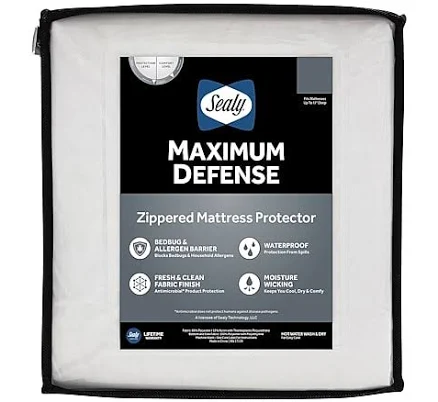
Sealy Maximum Defense Mattress Protector
Skip until Sealy discloses coating chemistry or obtains third-party verification.
Maximum Defense uses an undisclosed waterproof and stain-resistant coating; Sealy provides no chemistry details or testing data to assess PFAS risk.
The better-graded swap
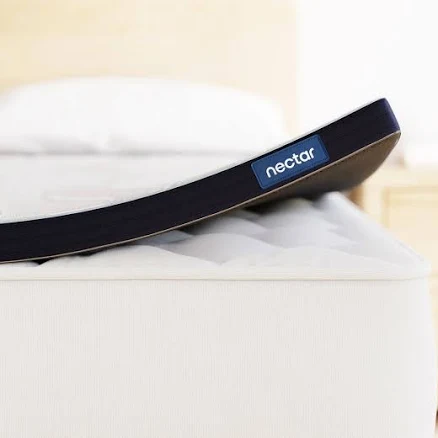
Nectar
Nectar Softer Mattress Topper
75/100 safety
Same rubric that flunked this product. The swap earned Excellent.
Still want this one anyway? Check the price on Amazon. We’d swap it.
Material
polyester fabric with waterproof/stain-resistant coating (unspecified)
Brand disclosure
Brand is silent on PFAS
Lab data
No public lab test
Is Sealy Maximum Defense Mattress Protector non-toxic? What it is made of
The Sealy Maximum Defense uses a polyester fabric layer bonded to an unspecified waterproof and stain-resistant coating. Polyester itself is stable, but the coating chemistry is the concern, waterproof finishes on mattress protectors commonly use fluorinated compounds (PFAS-based) or other durable water repellents to achieve liquid barrier performance. Without Sealy's disclosure of the coating type, the specific chemical hazard cannot be ruled out. Over time, repeated washing and flex cycling can degrade coatings and potentially release particles or volatile compounds.
What’s concerning
Category baseline
The starting point for this type of product, before anything specific to this product is counted.
No PFAS disclosure
No public statement from the brand about PFAS in this product.
Waterproof / stain-resistant treatment
Water-repellent coating treatments have historically used PFAS.
PFAS
Sealy does not publicly state whether the coating contains PFAS, paraffin wax, or other durable water repellents. Most polyester mattress protectors in this price and performance tier use fluorinated coatings; without disclosure, PFAS presence cannot be ruled out.
Source, ATSDR ↗Coating degradation and microparticle release
Repeated laundering and flexing of the protector can cause the waterproof layer to crack, peel, or shed microparticles. Released particles may be inhaled or ingested, particularly if the coating contains fluorinated compounds or antimony catalysts.
Volatile organic compound (VOC) off-gassing from coating
Unspecified waterproof coatings may release VOCs (solvents, monomers, or residual chemicals) during initial use or when exposed to heat or humidity. While typically mild in mattress protectors, off-gassing can cause respiratory irritation in sensitive individuals.
Polyester microfiber shedding
Polyester fabrics, especially when coated, can shed microfibers during washing or use. These synthetic fibers accumulate in wastewater and the environment; inhaled fibers may cause minor respiratory irritation in susceptible users.
What’s reassuring
Formaldehyde / VOCs
Polyester itself does not typically contain formaldehyde, but durable-press or wrinkle-resistant finishes sometimes do. Sealy does not advertise such treatments for this model, and no testing data is available to confirm their presence or absence.
Source, ATSDR ↗The full breakdown
The brand's record and disclosure
Sealy has not publicly disclosed the specific chemistry of its waterproof coatings or provided third-party testing data for PFAS content or other coating components. The brand does not advertise PFAS-free status or hold certifications such as OEKO-TEX Standard 100 or Cradle to Cradle, which would independently verify chemical safety. No major recalls specific to this model have been published by CPSC or Sealy in recent years, but silence on coating chemistry is a red flag for a water-resistant textile product.
How it compares in its category
Mattress protectors fall into two camps, waterproof coated (Sealy, most mainstream brands) and uncoated or organic alternatives (Helix, Naturepedic, some private-label options). Coated protectors offer superior liquid barrier performance but carry coating-chemistry uncertainty unless the brand discloses. Uncoated or certified-organic protectors eliminate the coating hazard but sacrifice stain resistance. Sealy's positioning is mainstream convenience without transparency, making it riskier than competitors with PFAS-free certifications or full disclosure.
If you buy it
Wash according to Sealy's care label (typically cool water, gentle cycle, air dry) to minimize coating degradation and avoid releasing microparticles or volatile compounds. Do not machine-dry on heat, as high temperature can accelerate coating breakdown. Replace the protector every 2 to 3 years or sooner if the coating shows visible cracking, peeling, or loss of water resistance. Store in a cool, dry place to slow aging. Monitor for any odors during the first few weeks of use, which may indicate off-gassing from the coating.
What we don’t know
- Basis
- Model estimate, 35% confidence, not a lab result
- Lab test
- None on record for this exact product
- Brand statement
- Sealy has made none
Formulations change between production runs, so check the current label. How we grade.
Better-graded alternatives in Mattress Protectors
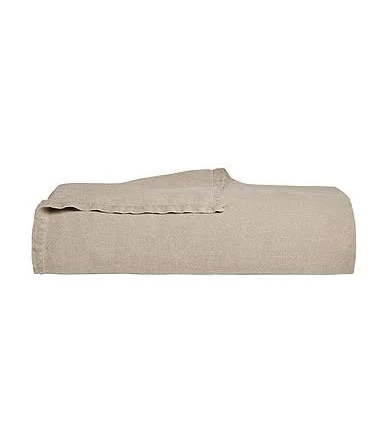
Parachute
Vintage Linen Bed Cover
- 100% linen, no reported coating
- We found no PFAS statement from the brand
- Heavy metals
3 hazards checked on this product. See all of them.
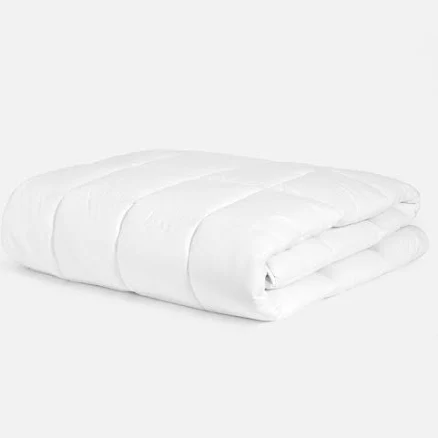
Brooklinen
Down Alternative Mattress Topper
- polyester down-alternative filling
- We found no PFAS statement from the brand
- Azo dyes and colorant migration
4 hazards checked on this product. See all of them.
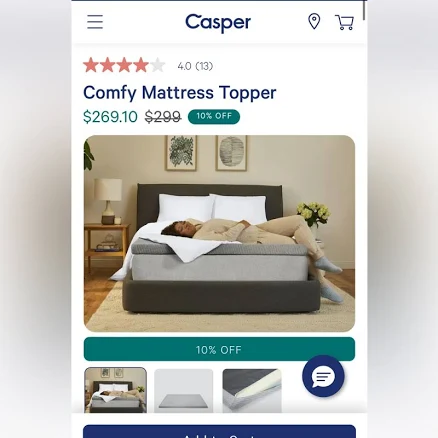
Casper
Sleep Comfy Mattress Topper
- Polyurethane foam, cotton/polyester blend cover
- We found no PFAS statement from the brand
- Volatile Organic Compound (VOC) off-gassing
3 hazards checked on this product. See all of them.
More mattress protectors grades
How we score, every product runs through the same public 0-100 rubric based on materials, coatings, brand disclosure, lab findings, and recalls. See the full methodology → Spotted a mistake? Report an error.