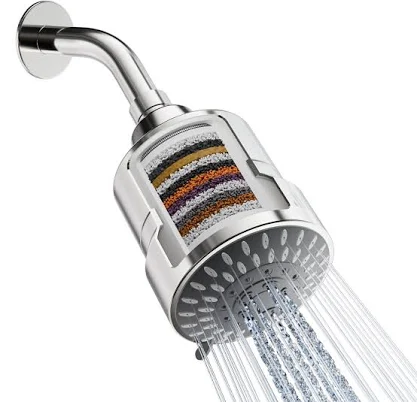
Mist 5-Mode High Pressure Filtered Shower Head
Lower concern, but no PFAS transparency; standard shower filter with no red flags or assurances.
This shower filter uses carbon media and standard plastics without inherent PFAS risk. The brand provides no disclosure about materials, coatings, or PFAS avoidance.
We flunk more products than we pass. This one earned its grade. How we grade
Material
ABS plastic head, stainless steel or brass internals, activated carbon filter media
Brand disclosure
Brand is silent on PFAS
Lab data
No public lab test
You may also be interested in
Top-graded picks in the categories readers replace first, every one scored on the same rubric.

- polypropylene filter housing, carbon/sediment cartridge
- We found no PFAS statement from the brand
- Bacterial growth in spent cartridges
3 hazards checked on this product, all on its full breakdown.

Aquasure
Premier Series 75 GPD Under Sink Reverse Osmosis Water Filtration System
- RO membrane, carbon filters, stainless steel housing
- We found no PFAS statement from the brand
- Bacterial and microbial growth in housing and filters
4 hazards checked on this product, all on its full breakdown.

Avocado
Vegan Mattress
- organic cotton, natural latex, coconut coir, recycled steel coils
- The brand calls it PFAS-free, which we have not verified
- Heavy metals
2 hazards checked on this product, all on its full breakdown.
What Mist 5-Mode High Pressure Shower Head is made of, ingredients and materials
The head is ABS plastic, a rigid thermoplastic common in plumbing fixtures that resists hot water and mechanical stress. Internals use stainless steel or brass, both materials with lower corrosion concerns and approval for food contact applications. The filter media is activated carbon, which binds chlorine and some dissolved compounds but does not filter microbes or all dissolved solids. ABS itself does not leach BPA or phthalates under typical shower conditions (40-45°C water temperature); the real concern is filter saturation and maintenance.
What’s concerning
No PFAS disclosure
No public statement from the brand about PFAS in this product.
ABS plastic thermal degradation
ABS softens above 80°C and can warp or release small amounts of volatile organics if exposed to sustained high temperature. Shower use rarely reaches this threshold, but hard-water lime removal with boiling water or prolonged storage in hot bathrooms could theoretically trigger minor off-gassing.
Bacterial/fungal growth in filter media
Activated carbon is an excellent substrate for biofilm if the filter sits unused or saturated. Improper storage (damp conditions) or infrequent replacement (beyond 12 months) can permit Legionella or mold colonization, especially in warm climates.
Brass/copper leaching (if brass internals used)
Brass fittings can leach small amounts of copper and zinc in acidic or very soft water. Shower exposure is brief and dilution is high, so risk is low, but households with pH below 6.5 may see elevated copper over time.
Filter media particulate shedding
Activated carbon can shed fine black particles if the cartridge is damaged, torn, or improperly seated. This is cosmetic but may stain skin or clothes and indicates filter failure; replacement is warranted.
What’s reassuring
Bare uncoated material
Recorded as a bare, uncoated material with no surface coating or treatment.
No microbial or mineral filtration
Activated carbon does not remove bacteria, viruses, or hardness minerals. If source water is microbiologically unsafe, this filter does not provide protection; it removes only chlorine taste/odor and some organic compounds.
How is this PFAS grade calculated?
The brand's record and disclosure
The brand has no major recalls or safety disclosures on public record for this product line. The brand does not publish third-party certifications (NSF, WQA) or detailed PFAS testing results. No established controversies or pattern of customer complaints about material degradation or contamination are documented in available sources. Lack of transparency on PFAS is typical for the shower filter category but not a red flag specific to this brand.
How it compares in its category
Most shower filters use ABS or polycarbonate heads with carbon or KDF-55 media; this design is conventional. Filters without third-party certification are the norm in this price tier; certification (NSF 42) is rare and adds cost. Five-mode spray patterns are standard marketing but do not affect safety. This product sits in the middle of the market for material safety, no better, no worse than typical unbranded alternatives.
If you buy it
Replace the filter cartridge every 6-12 months depending on water hardness and chlorine levels; exhausted carbon stops binding chlorine effectively and can harbor bacterial biofilm. Do not expose the plastic head to temperatures above 60°C (140°F) or direct sunlight for prolonged periods, which may degrade ABS. Store replacement filters in a dry place to prevent mold on unused media. Rinse the filter housing monthly to reduce sediment buildup that can restrict flow.
What is not known about PFAS in this product?
- Basis
- Model estimate, 62% confidence, not a lab result
- Lab test
- None on record for this exact product
- Brand statement
- has made none
Formulations change between production runs, so check the current label. How we grade.
More shower filters grades
How we score, every product runs through the same public 0-100 rubric based on materials, coatings, brand disclosure, lab findings, and recalls. See the full methodology → Spotted a mistake? Report an error.