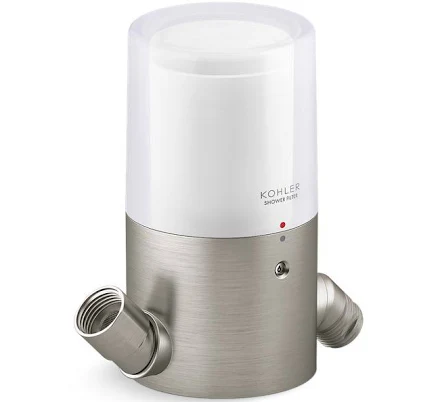
Kohler Aquifer Shower Filter 22321-CP
Lower concern; standard carbon and KDF filter with no known PFAS risks, brand offers no transparency.
This filter uses activated carbon and KDF-55, materials not typically associated with PFAS contamination. Kohler makes no PFAS disclosure, though independent testing is unavailable.
We flunk more products than we pass. This one earned its grade. How we grade
Material
Activated carbon & KDF-55 cartridge filter; brass/plastic housing
Brand disclosure
Brand is silent on PFAS
Lab data
No public lab test
You may also be interested in
Top-graded picks in the categories readers replace first, every one scored on the same rubric.

- polypropylene filter housing, carbon/sediment cartridge
- We found no PFAS statement from the brand
- Bacterial growth in spent cartridges
3 hazards checked on this product, all on its full breakdown.

Aquasure
Premier Series 75 GPD Under Sink Reverse Osmosis Water Filtration System
- RO membrane, carbon filters, stainless steel housing
- We found no PFAS statement from the brand
- Bacterial and microbial growth in housing and filters
4 hazards checked on this product, all on its full breakdown.

Avocado
Vegan Mattress
- organic cotton, natural latex, coconut coir, recycled steel coils
- The brand calls it PFAS-free, which we have not verified
- Heavy metals
2 hazards checked on this product, all on its full breakdown.
What Kohler Aquifer Shower Filter 22321-CP is made of, ingredients and materials
The Kohler Aquifer 22321-CP uses a dual-media cartridge combining activated carbon and KDF-55 (a copper-zinc alloy). Activated carbon adsorbs chlorine, odor, and some organic contaminants; KDF-55 is designed to reduce chlorine and heavy metals through oxidation-reduction. Both materials have long histories in water filtration and are widely used in commercial applications. The housing is brass and plastic, brass can leach small amounts of copper into standing water, but this is negligible in a shower filter due to continuous flow and short contact time.
What’s concerning
No PFAS disclosure
No public statement from the brand about PFAS in this product.
Copper leaching from brass housing
Brass fittings can leach copper into standing water, but shower filters see constant flow and minimal dwell time, making exposure negligible in normal use. Risk is only relevant if water sits in the filter for extended periods (e.g., days without use).
Bacterial or mold growth in saturated cartridge
Activated carbon is porous and, once saturated with chlorine, can become a substrate for microbial growth if not replaced regularly. This is a maintenance issue, not a product defect, and is mitigated by following Kohler's 6-12 month replacement schedule.
Cartridge integrity failure over time
Activated carbon is friable; if a cartridge cracks or degrades, fines can shed into shower water. This is rare but can occur if pressure spikes or if the cartridge is mishandled during installation. Use caution when inserting and removing cartridges.
Unverified filtration claims
Kohler does not provide third-party certified data on what this filter removes or to what degree. Marketing claims (e.g., chlorine reduction) are common in the shower-filter category but often unsubstantiated by NSF or EPA testing; buyer should not rely on it as a substitute for whole-home or point-of-use tap filters.
What’s reassuring
Base material not linked to PFAS
The main material recorded for this product is not one associated with PFAS.
KDF-55 copper-zinc discharge
KDF-55 is approved for potable water contact and does not leach zinc or copper into water in ways that exceed EPA secondary drinking water standards. No adverse health events have been linked to KDF-55 in shower filters, and the contact time in a shower application is too brief for significant ion exchange.
How is this PFAS grade calculated?
The brand's record and disclosure
Kohler is a major plumbing manufacturer with no public water-filter-specific recalls or safety warnings on file. The company does not publish transparency statements about PFAS screening, testing, or removal claims for this filter, typical of many shower-filter makers, which is a gap rather than a red flag. Kohler maintains general product safety certifications (UPC, NSF listings for some product lines) but the Aquifer line's filtration claims are not independently NSF-certified for specific contaminants.
How it compares in its category
Shower filters with activated carbon and KDF are mainstream; this design is neither premium nor bare-bones. Competitors like AquaBliss and Culligan use similar dual-media cartridges. Kohler's advantage is brand reliability and wide retail availability; the tradeoff is that it offers no third-party certification of filtration performance, whereas some competitors (e.g., CQ) carry NSF-42 certification for chlorine reduction. Price-point wise, it is mid-market for this category.
If you buy it
Replace the cartridge every 6 to 12 months depending on water hardness and chlorine levels; Kohler recommends every 6 months in high-chlorine areas. Store the filter in a cool, dry place when not in use to prevent mold growth inside the cartridge. Do not disassemble the housing or attempt to reuse spent cartridges. If water pressure drops noticeably or you smell sulfur, replace immediately, both suggest cartridge saturation or bacterial colonization.
What is not known about PFAS in this product?
- Basis
- Model estimate, 72% confidence, not a lab result
- Lab test
- None on record for this exact product
- Brand statement
- Kohler has made none
Formulations change between production runs, so check the current label. How we grade.
What are the PFAS-free alternatives to Kohler Aquifer Shower Filter 22321-CP?
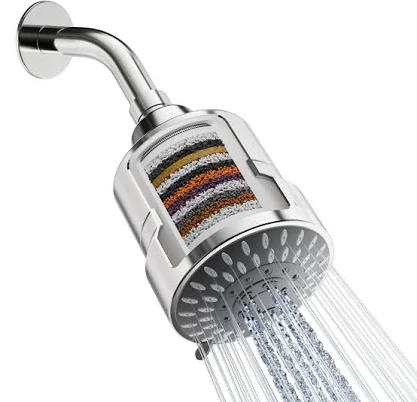
Mist 5-Mode High Pressure Filtered Shower Head
- ABS plastic head, stainless steel or brass internals, activated carbon filter media
- We found no PFAS statement from the brand
- ABS plastic thermal degradation
4 hazards checked on this product, all on its full breakdown.
More shower filters grades
How we score, every product runs through the same public 0-100 rubric based on materials, coatings, brand disclosure, lab findings, and recalls. See the full methodology → Spotted a mistake? Report an error.