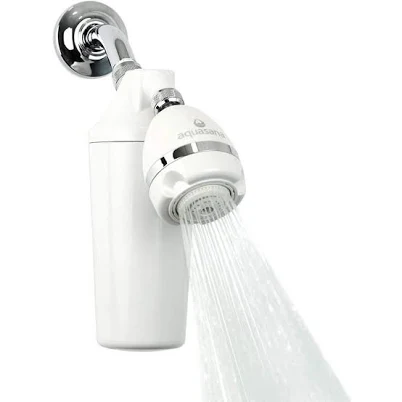
Aquasana AQ-4100-E Filtered Shower Head
Lower-risk category but no PFAS transparency; carbon filtration itself is inherently low-concern.
This shower filter uses activated carbon filtration without inherent PFAS concern. Aquasana makes no public PFAS disclosures, and third-party testing is unavailable.
We flunk more products than we pass. This one earned its grade. How we grade
Material
Activated carbon filter media, ABS plastic housing
Brand disclosure
Brand is silent on PFAS
Lab data
No public lab test
You may also be interested in
Top-graded picks in the categories readers replace first, every one scored on the same rubric.

- polypropylene filter housing, carbon/sediment cartridge
- We found no PFAS statement from the brand
- Bacterial growth in spent cartridges
3 hazards checked on this product, all on its full breakdown.

Aquasure
Premier Series 75 GPD Under Sink Reverse Osmosis Water Filtration System
- RO membrane, carbon filters, stainless steel housing
- We found no PFAS statement from the brand
- Bacterial and microbial growth in housing and filters
4 hazards checked on this product, all on its full breakdown.

Avocado
Vegan Mattress
- organic cotton, natural latex, coconut coir, recycled steel coils
- The brand calls it PFAS-free, which we have not verified
- Heavy metals
2 hazards checked on this product, all on its full breakdown.
What Aquasana AQ-4100-E Filtered Shower Head is made of, ingredients and materials
The AQ-4100-E uses activated carbon as its primary filtration medium, a material that absorbs chlorine and some volatile organic compounds through physical adsorption rather than chemical reaction. The housing is ABS plastic (acrylonitrile-butadiene-styrene), a rigid thermoplastic commonly used in shower fixtures because it withstands warm water temperatures. Neither activated carbon nor ABS are known to leach harmful chemicals under typical shower conditions (water temperature 95-105 degrees F), making this a chemically stable product design.
What’s concerning
No PFAS disclosure
No public statement from the brand about PFAS in this product.
Activated carbon dust or particle shedding
New or poorly rinsed carbon cartridges may shed fine black particles into water. Pre-flush cartridges before first use to minimize cosmetic discoloration and reduce inhalation risk if particles aerosolize in steam.
Bacterial biofilm growth in filter media
Activated carbon provides surface area where bacteria can colonize if cartridges are left unrinsed or stored in warm, humid conditions. Risk is mitigated by timely replacement every 6 months and proper cartridge storage.
Cartridge cartridge material composition (unknown)
Aquasana does not publicly disclose whether replacement cartridge plastic housings or binding materials contain BPA, phthalates, or other endocrine disruptors. The company's silence on cartridge composition warrants caution if you have sensitivities.
No standardized testing for volatile organic compound removal efficacy
While activated carbon theoretically adsorbs some VOCs, the AQ-4100-E lacks published third-party verification of how many classes of VOCs (e.g., trichloroethylene, benzene) it actually removes from your specific water supply. Effectiveness is supply-dependent and unverified by the brand.
What’s reassuring
Base material not linked to PFAS
The main material recorded for this product is not one associated with PFAS.
ABS plastic leaching
ABS is thermochemically stable in cool-to-warm water (below 113 F) typical of shower use. No documented leaching of BPA, styrene, or acrylonitrile occurs at these temperatures in published product safety data.
How is this PFAS grade calculated?
The brand's record and disclosure
Aquasana has built its reputation on water filtration but maintains silence on PFAS testing and source transparency, which is standard for smaller filtration brands. The company holds NSF certification for certain products in its line, signaling third-party testing for claims like chlorine reduction, though the AQ-4100-E's specific certification status should be verified on product packaging. No recalls or documented safety violations are on record for this model. The brand does not publicly disclose whether activated carbon cartridges are tested for PFAS removal efficacy.
How it compares in its category
Shower filters are among the lowest-risk water treatment products because water contact is brief, temperature-limited, and external use avoids ingestion pathways. The AQ-4100-E's activated carbon approach is standard and shows lower concern than salt-based or chemical cartridge systems. Competitors like Kohler and Sprite also use ABS housings and carbon media, so this product occupies the middle-of-market safety profile for the category with no significant differentiation in hazard exposure.
If you buy it
Replace the filter cartridge every 10,000 gallons or every 6 months as recommended; exhausted carbon loses adsorption capacity and may harbor bacterial biofilm. Do not expose the unit to water temperatures above 113 degrees F (45 C), as ABS can soften slightly at higher sustained heat. Store replacement cartridges in a cool, dry place away from direct sunlight to prevent carbon degradation. Rinse the housing periodically and inspect for cracks or discoloration, which may indicate filter exhaustion or housing stress.
What is not known about PFAS in this product?
- Basis
- Model estimate, 68% confidence, not a lab result
- Lab test
- None on record for this exact product
- Brand statement
- Aquasana has made none
Formulations change between production runs, so check the current label. How we grade.
What are the PFAS-free alternatives to Aquasana AQ-4100-E Filtered Shower Head?
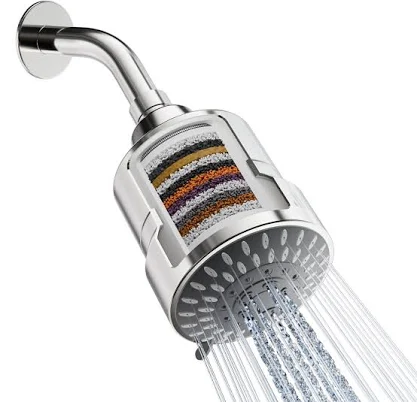
Mist 5-Mode High Pressure Filtered Shower Head
- ABS plastic head, stainless steel or brass internals, activated carbon filter media
- We found no PFAS statement from the brand
- ABS plastic thermal degradation
4 hazards checked on this product, all on its full breakdown.
More shower filters grades
How we score, every product runs through the same public 0-100 rubric based on materials, coatings, brand disclosure, lab findings, and recalls. See the full methodology → Spotted a mistake? Report an error.