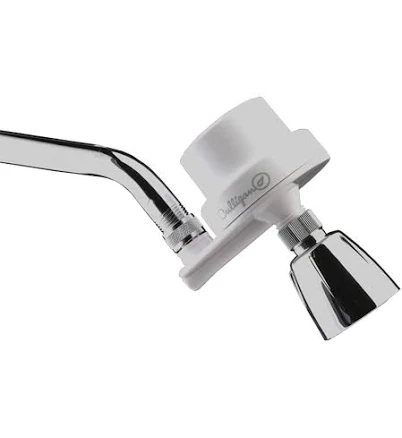
Culligan ISH-100 Inline Shower Filter
Lower-risk design, but Culligan's silence on PFAS in filters leaves residual uncertainty.
This filter uses activated carbon, a standard, PFAS-concern-free filtration medium in a polypropylene housing. Culligan makes no public PFAS disclosure, manufacturing transparency, or third-party certifications.
We flunk more products than we pass. This one earned its grade. How we grade
Material
Activated carbon filter with polypropylene housing
Lab data
No public lab test
You may also be interested in
Top-graded picks in the categories readers replace first, every one scored on the same rubric.

- polypropylene filter housing, carbon/sediment cartridge
- We found no PFAS statement from the brand
- Bacterial growth in spent cartridges
3 hazards checked on this product, all on its full breakdown.

Aquasure
Premier Series 75 GPD Under Sink Reverse Osmosis Water Filtration System
- RO membrane, carbon filters, stainless steel housing
- We found no PFAS statement from the brand
- Bacterial and microbial growth in housing and filters
4 hazards checked on this product, all on its full breakdown.

Avocado
Vegan Mattress
- organic cotton, natural latex, coconut coir, recycled steel coils
- The brand calls it PFAS-free, which we have not verified
- Heavy metals
2 hazards checked on this product, all on its full breakdown.
What Culligan ISH-100 Inline Shower Filter is made of, ingredients and materials
The ISH-100 uses activated carbon as its primary filtration media, a well-established, chemically inert material that does not leach harmful compounds into water under normal pressure conditions. The housing is polypropylene (PP), a thermoplastic with low migration risk at room temperature and typical water pressures in shower lines. Activated carbon has no known dose-dependent toxicity when contacted by water and is widely used in food-grade filtration without safety incidents tied to the carbon itself.
What’s concerning
No PFAS disclosure
No public statement from the brand about PFAS in this product.
Activated carbon dust or particle shedding
Fine carbon particles may be released during initial use or from cartridge degradation if the internal filter media shifts or tears. This is cosmetic (black water) rather than a health hazard, but flushing before first use mitigates it. Long-term particle shedding into drinking water is not a documented concern for intact carbon cartridges.
Bacterial or biofilm growth in filter housing
Any stagnant water filter can accumulate bacteria or mold if not maintained regularly or if left unused for weeks. The ISH-100's internal design is not publicly detailed, so colonization risk cannot be quantified, but good maintenance (timely replacement, periodic flushing) minimizes this. This is a use-related hazard, not a manufacturing defect.
PFAS
Culligan does not claim PFAS removal for this model, and standard activated carbon alone has variable efficacy against PFOA/PFOS depending on carbon type and contact time. If PFAS in source water is a concern, this product offers no documented assurance of reduction. This is a functional gap, not a contamination risk from the product itself.
Source, ATSDR ↗What’s reassuring
Base material not linked to PFAS
The main material recorded for this product is not one associated with PFAS.
Polypropylene housing leaching
Polypropylene is stable at room temperature and low pressure; no established risk of BPA, BPS, or phthalate migration from PP under typical shower-use conditions. Culligan does not report any leaching incidents for this housing type.
Chlorine byproduct (THM) or chlorine residue
Activated carbon is effective at reducing chlorine and some chlorination byproducts; no evidence that the ISH-100 releases chlorine or THMs. Performance claims are not independently verified in public disclosures, so efficacy is not guaranteed but chemistry is sound.
How is this PFAS grade calculated?
The brand's record and disclosure
Culligan is a legacy water-treatment company with established certifications (NSF/WQA) for many products, though specific third-party testing claims for the ISH-100 are not prominent in public documentation. The brand has not published explicit statements on PFAS screening or removal performance for this inline shower filter model, creating an information gap for consumers seeking that assurance. No major recalls or contamination incidents specific to this model appear in public records. The silence on PFAS is notable given industry awareness of PFAS in municipal water, though it does not indicate the product contains PFAS.
How it compares in its category
Shower filters typically rely on either activated carbon or KDF-55 (copper-zinc alloy), both of which are low-leach designs. The ISH-100's carbon-only approach is simpler and poses fewer trace-metal concerns than KDF models. However, many competitors (both budget and premium) now explicitly claim PFAS removal or publish third-party test results; Culligan's lack of such claims is a competitive transparency weakness, not necessarily a safety failure. Priced mid-range, it sits in the mainstream tier where performance claims are often understated relative to niche premium brands.
If you buy it
Replace the cartridge every 6 months or per manufacturer guidance, as activated carbon's adsorption capacity degrades over time and exhausted filters can lose efficacy or harbor biofilm. Store unused cartridges in a cool, dry place; activated carbon is not heat-sensitive but can absorb odors if exposed to strong environmental sources. Flush the filter housing with water before installation to remove any residual carbon dust. Monitor water flow rate; a significant drop signals saturation and need for replacement. Do not attempt to regenerate or reuse cartridges.
What is not known about PFAS in this product?
- Basis
- Model estimate, 62% confidence, not a lab result
- Lab test
- None on record for this exact product
- Brand statement
- Culligan has made a specific claim
Formulations change between production runs, so check the current label. How we grade.
What are the PFAS-free alternatives to Culligan ISH-100 Inline Shower Filter?
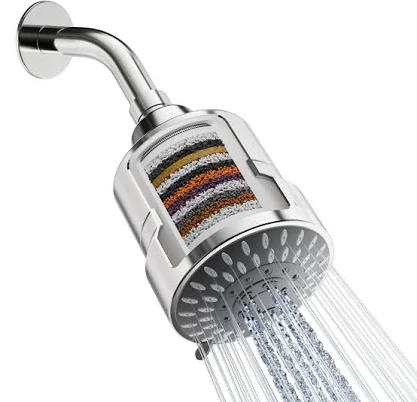
Mist 5-Mode High Pressure Filtered Shower Head
- ABS plastic head, stainless steel or brass internals, activated carbon filter media
- We found no PFAS statement from the brand
- ABS plastic thermal degradation
4 hazards checked on this product, all on its full breakdown.
More shower filters grades
How we score, every product runs through the same public 0-100 rubric based on materials, coatings, brand disclosure, lab findings, and recalls. See the full methodology → Spotted a mistake? Report an error.