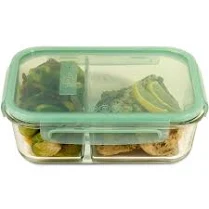
Snapware Meal Box Glass
Low PFAS risk. Glass meal box has no known PFAS concern.
Snapware Meal Box Glass is made of borosilicate glass, a bare material without coatings or treatments. Glass containers are lower concern for PFAS exposure in food storage.
We flunk more products than we pass. This one earned its grade. How we grade
Material
borosilicate glass
Brand disclosure
Brand is silent on PFAS
Lab data
No public lab test
What Snapware Meal Box Glass is made of, ingredients and materials
Snapware Meal Box Glass is constructed from borosilicate glass, a silica-based material engineered to withstand thermal shock and resist chemical leaching. Unlike soda-lime glass or ceramics with glazes, borosilicate has no added lead, cadmium, or decorative coatings that contact food. The rigid glass matrix is chemically stable across typical microwave, oven, and refrigerator temperatures, with no known risk of aluminum or lead migration into stored food.
What’s concerning
Category baseline
The starting point for this type of product, before anything specific to this product is counted.
No PFAS disclosure
No public statement from the brand about PFAS in this product.
Leaching from glass matrix or lid seals
The glass itself is chemically inert, but the lid and seal materials (plastic or rubber) are not specified in available product information. Seals may contact food and could theoretically leach plasticizers or residues if made from conventional polymers; verification of lid material composition is not publicly available.
Thermal breakage or edge hazard
Glass meal boxes can fracture under thermal stress or impact, creating sharp edges and potential ingestion of glass particles. This is a mechanical hazard rather than a chemical one, but is inherent to the material and requires careful handling and inspection.
What’s reassuring
Bare uncoated material
Recorded as a bare, uncoated material with no surface coating or treatment.
Lead
Borosilicate glass formulations do not typically contain lead or cadmium as functional ingredients. No decorative glaze, enamel, or paint is on record for this product, eliminating the main source of these metals in food containers.
Source, ATSDR ↗Microplastics
Borosilicate glass does not shed microplastics or degrade into particles during normal use, heating, or storage, distinguishing it from plastic containers.
Source, EPA ↗Formaldehyde / VOCs
Glass does not off-gas formaldehyde or volatile organic compounds. No adhesives, resins, or surface treatments known to release VOCs are part of this product's construction.
Source, ATSDR ↗The full breakdown
The brand's record and disclosure
Snapware (owned by Newell Brands) does not publish detailed material safety or third-party testing disclosures for this product. No recalls or established safety controversies are on record for this meal box line. The brand has not made public statements on PFAS avoidance or chemical sourcing; absence of communication does not indicate a problem, only that independent verification of manufacturing claims is limited.
How it compares in its category
Glass meal boxes are among the lowest-concern food storage options. Unlike polycarbonate or polypropylene containers, borosilicate glass does not leach BPA, BPS, or phthalates when heated or over time. Compared to ceramic containers with glazed or decorated surfaces, glass avoids the risk of lead in colorants. The trade-off is breakability and weight, but chemical safety profile is notably lower-concern than plastic alternatives.
If you buy it
Borosilicate glass tolerates oven use up to around 500F (check product labeling); avoid direct flame or stovetop heating. Inspect for chips or cracks regularly, as damage can create sharp edges and compromise structural integrity. Wash by hand or on gentle cycles to minimize thermal stress. Glass does not degrade over years of use and has no shelf-life or replacement interval based on material breakdown.
What we don’t know
- Basis
- Model estimate, 92% confidence, not a lab result
- Lab test
- None on record for this exact product
- Brand statement
- Snapware has made none
Formulations change between production runs, so check the current label. How we grade.
Better-graded alternatives in Lunch Boxes
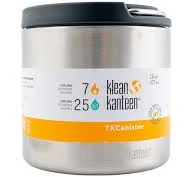
Klean Kanteen
Double Wall Vacuum Insulated Stainless Steel Food Canister Container with Leak Proof Lid
- Stainless steel body, silicone gasket lid seal
- The brand calls it PFAS-free, which we have not verified
- Silicone gasket degradation
3 hazards checked on this product. See all of them.
More lunch boxes grades
How we score, every product runs through the same public 0-100 rubric based on materials, coatings, brand disclosure, lab findings, and recalls. See the full methodology → Spotted a mistake? Report an error.