Spyder · Ski & Snowboard Jackets
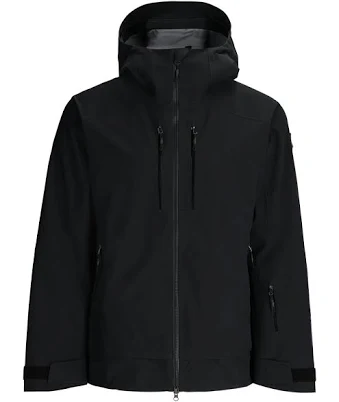
Spyder Men's Sanction Shell Jacket
Skip until Spyder discloses or certifies water-repellent coating chemistry. Standard shells often use PFAS.
Sanction is a polyester ski shell treated with water-repellent coating. Spyder makes no public statement about PFAS in their water-repellent coatings.
Still want this one anyway? Check the price on Amazon. We’d swap it.
Material
Polyester shell with water-repellent coating (water-repellent coating) coating
Brand disclosure
Brand is silent on PFAS
Lab data
No public lab test
What Spyder Men's Sanction Shell Jacket is made of, ingredients and materials
The Sanction Shell is a polyester outer layer treated with a water-repellent coating (water-repellent coating) coating. water-repellent coating formulations are the primary chemical concern in modern ski jackets, they repel water but the specific chemistry (PFAS vs. non-PFAS alternatives) is rarely disclosed by brands. Polyester itself is stable and does not leach under normal wear, but the coating is the variable element that determines chemical safety.
What’s concerning
Category baseline
The starting point for this type of product, before anything specific to this product is counted.
No PFAS disclosure
No public statement from the brand about PFAS in this product.
Waterproof / stain-resistant treatment
Water-repellent coating treatments have historically used PFAS.
PFAS
Water-repellent coating formulation is undisclosed; standard polyester coatings often contain PFAS (perfluorooctanoic acid derivatives). Spyder has not committed to using non-PFAS alternatives, so the presence and concentration are unknown. Direct skin contact is minimal during wear, but coating shedding during washing and wear could introduce trace exposure.
Source, ATSDR ↗Coating degradation and particle shedding
Polyester water-repellent coating coatings degrade over time, especially with heat exposure, washing, and UV light. Degraded coating can shed microparticles into wash water and onto skin. No testing on the Sanction Shell specifically is publicly available, but this is a material-class risk in all treated textiles.
What’s reassuring
Formaldehyde / VOCs
No recalls or public testing data indicate formaldehyde-releasing finishes on Spyder jackets. Polyester apparel in this price range is generally not treated with formaldehyde-based wrinkle resistance, but dyes and adhesives in construction may contain trace formaldehyde.
Source, ATSDR ↗Heavy metals
Spyder does not disclose dyeing practices or dye restrictions. Polyester is conventionally dyed with a wide range of azo dyes; some carry carcinogenic aromatic amine risk, though direct skin exposure to dyed fabric is low. No confirmed contamination has been reported for Spyder products.
Source, FDA ↗Flame retardants
Ski jackets are not typically treated with added flame retardants unless marketed for that feature. No evidence suggests the Sanction Shell contains brominated or chlorinated flame retardants; polyester itself is inherently less flammable than natural fibers.
Source, EPA ↗The full breakdown
The brand's record and disclosure
Spyder has not published a public commitment to phasing out PFAS-based water-repellent coating or supply-chain transparency regarding water-repellent treatments. No major product recalls or chemical hazard controversies are on record for Spyder apparel. The brand's silence on water-repellent coating chemistry is common in the ski jacket market but leaves buyers without assurance of whether conventional (often PFAS-containing) or alternative formulations are used.
How it compares in its category
Spyder is a mid-to-premium ski brand; the Sanction Shell is a standard insulated or shell-only jacket typical of the category. Most competitors (Arc'teryx, Patagonia, The North Face) similarly do not routinely disclose water-repellent coating chemistry, though Patagonia has committed to reducing PFAS exposure. Spyder's lack of public stance places it in the undifferentiated majority, offering no competitive advantage on chemical transparency.
If you buy it
Wash separately in cool water with minimal agitation to preserve the water-repellent coating and reduce any potential leaching from degraded coating particles. Do not dry-clean, as solvents can break down synthetic fibers and coatings. Avoid heat sources (direct sun, high-temperature drying) that accelerate coating breakdown. Replace the jacket if the water-repellent coating visibly degrades (water no longer beads) or if seams separate, as coating particles may then shed into wash water and skin contact increases.
What we don’t know
- Basis
- Model estimate, 38% confidence, not a lab result
- Lab test
- None on record for this exact product
- Brand statement
- Spyder has made none
Formulations change between production runs, so check the current label. How we grade.
Better-graded alternatives in Ski & Snowboard Jackets
Allbirds
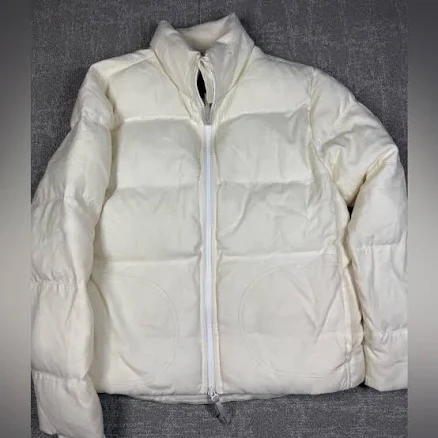
Jackets & Coats Allbirds Full Zip Wool Blend Puffer Jacket Women Size Small
- Wool blend with synthetic fill (likely polyester)
- We found no PFAS statement from the brand
- water-repellent coating (water-repellent coating) coating composition
3 hazards checked on this product. See all of them.
Allbirds
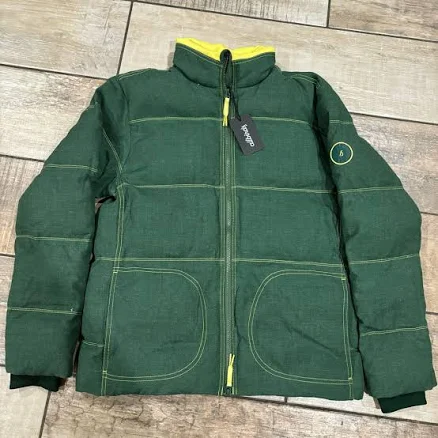
Jackets & Coats Allbirds Men's Trino Puffer Jacket Full Zip Wool Blend Forest Green Coat Size Sm
- wool blend (natural fiber dominant)
- We found no PFAS statement from the brand
- water-repellent coating (water-repellent coating) treatment - undisclosed chemistry
2 hazards checked on this product. See all of them.
Allbirds
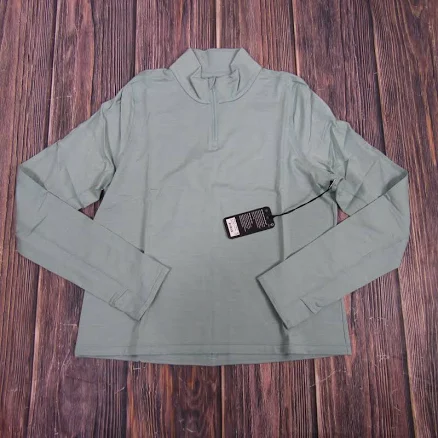
NWT Womens Medium Green Natural Run Mid Layer 1/4 Zip Jacket
- Merino wool blend (natural fiber)
- We found no PFAS statement from the brand
- Azo dyes and synthetic dye residue
3 hazards checked on this product. See all of them.
More ski & snowboard jackets grades
How we score, every product runs through the same public 0-100 rubric based on materials, coatings, brand disclosure, lab findings, and recalls. See the full methodology → Spotted a mistake? Report an error.