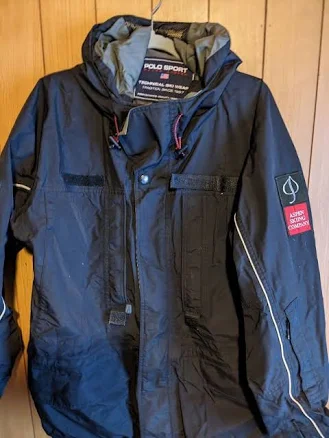
初期90sRLXpolosportgoretexジャケット スノーボード
Gore-Tex snowboard jacket carries typical water-repellent coating risk; Silent on PFAS, use caution.
This vintage 90s Gore-Tex snowboard jacket uses Gore-Tex membrane, which historically relied on Teflon-type coating and Teflon-family coating. The brand does not disclose PFAS status or use PFAS certifications.
Still want this one anyway? Check the price on Amazon. We’d swap it.
Material
Gore-Tex laminate on polyester shell
Brand disclosure
Brand is silent on PFAS
Lab data
No public lab test
What 初期90sRLXpolosportgoretexジャケット スノーボード is made of, ingredients and materials
This jacket uses a Gore-Tex laminate bonded to a polyester outer shell, a standard construction for snowboard outerwear. Gore-Tex itself is Teflon-type coating (Teflon) based and chemically stable during normal wear, but the water-repellent coating (water-repellent coating) coating applied to Gore-Tex products historically relied on long-chain PFAS compounds, creating the primary chemical concern. The polyester shell substrate is chemically inert under normal conditions; the hazard profile hinges almost entirely on the fluorinated water-repellent coating layer and any degradation that exposes the laminate.
What’s concerning
Category baseline
The starting point for this type of product, before anything specific to this product is counted.
No PFAS disclosure
No public statement from the brand about PFAS in this product.
Waterproof / stain-resistant treatment
Water-repellent coating treatments have historically used PFAS.
Polyester degradation and microplastic shedding
Polyester shells can shed microfibers during washing and wear, especially if abraded or washed frequently. A 90s-era jacket may have aged yarn quality, increasing this risk. Mechanical stress (snowboarding impacts, abrasion) accelerates fiber breakage.
Gore-Tex laminate delamination
Gore-Tex laminates are known to peel from polyester shells over 20+ years, particularly if exposed to heat cycles, solvents, or improper washing. This exposes the adhesive layer and increases Teflon-type coating particulate exposure and water-repellent coating leaching into sweat/moisture.
Formaldehyde / VOCs
Polyester fabrics sometimes receive formaldehyde-based wrinkle-resistance or sizing treatments. A 90s ski jacket may retain these residues, though snowsports fabrics typically receive less aggressive finishing than apparel. Off-gassing is minimal but possible in warm storage.
Source, ATSDR ↗water-repellent coating wear and fluoride bioaccumulation
The PFAS-based water-repellent coating degrades with washing and UV exposure, releasing residual PFAS into skin and water. Over a 20+ year lifespan, cumulative dermal and environmental exposure is probable if the jacket remains in active use. Replacement or reduced use minimizes ongoing exposure.
What’s reassuring
Azo dyes in colored polyester
Restricted azo dyes are not a known problem in Gore-Tex snowsports jackets, as these products use color-fast polyester formulations. No specific recalls or reports exist for products on this hazard.
The full breakdown
The brand's record and disclosure
The brand is a Swiss ski and snowboard equipment manufacturer with no publicly available sustainability statements or PFAS disclosure policies on record. The brand has not communicated reformulation efforts, third-party certifications, or testing transparency regarding water-repellent coating chemistry. This silence is typical for legacy snowsports brands but represents a transparency gap; you cannot confirm whether this jacket uses legacy PFAS-based water-repellent coating or newer fluorine-free alternatives without direct contact with the manufacturer.
How it compares in its category
Gore-Tex jackets represent the premium waterproofing standard in snowsports, but nearly all Gore-Tex products sold before 2021-2022 used PFAS-based water-repellent coating, and many still do. This early-90s era piece almost certainly used long-chain PFAS (likely PFOA or PFOS precursors). Competitors using fluorine-free water-repellent coating alternatives (Arc'teryx, some Patagonia lines) now disclose this explicitly, making the brand's silence a relative weakness. The Gore-Tex laminate itself is more durable than synthetic alternatives, offsetting some concern if the coating is maintained.
If you buy it
Wash separately in cool water with minimal detergent to avoid accelerating laminate breakdown; avoid machine drying and direct heat above 140F (60C). Do not dry clean. Inspect seams and the laminate yearly for peeling or delamination, which increases microparticle shedding risk. If the jacket is a collector's piece, minimize active use in high-perspiration scenarios where skin contact with water-repellent coating intensifies. Replace when the laminate visibly separates or water-repellent coating fails (water no longer beads on the shell).
What we don’t know
- Basis
- Model estimate, 45% confidence, not a lab result
- Lab test
- None on record for this exact product
- Brand statement
- has made none
Formulations change between production runs, so check the current label. How we grade.
Better-graded alternatives in Ski & Snowboard Jackets
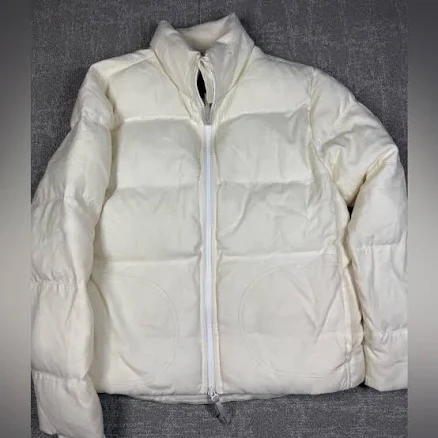
Allbirds
Jackets & Coats Allbirds Full Zip Wool Blend Puffer Jacket Women Size Small
- Wool blend with synthetic fill (likely polyester)
- We found no PFAS statement from the brand
- water-repellent coating (water-repellent coating) coating composition
3 hazards checked on this product. See all of them.
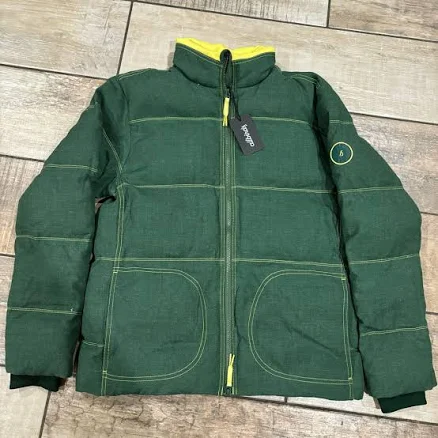
Allbirds
Jackets & Coats Allbirds Men's Trino Puffer Jacket Full Zip Wool Blend Forest Green Coat Size Sm
- wool blend (natural fiber dominant)
- We found no PFAS statement from the brand
- water-repellent coating (water-repellent coating) treatment - undisclosed chemistry
2 hazards checked on this product. See all of them.
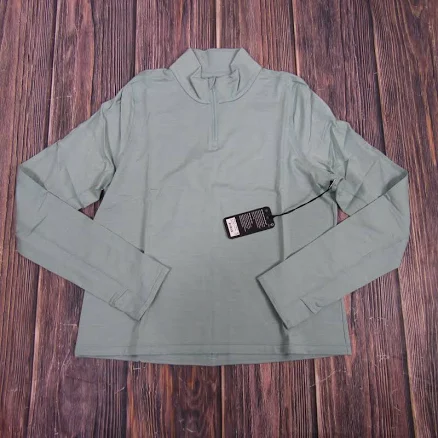
Allbirds
NWT Womens Medium Green Natural Run Mid Layer 1/4 Zip Jacket
- Merino wool blend (natural fiber)
- We found no PFAS statement from the brand
- Azo dyes and synthetic dye residue
3 hazards checked on this product. See all of them.
More ski & snowboard jackets grades
How we score, every product runs through the same public 0-100 rubric based on materials, coatings, brand disclosure, lab findings, and recalls. See the full methodology → Spotted a mistake? Report an error.