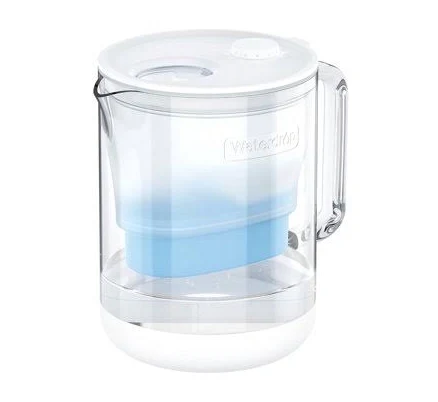
Waterdrop Glass Water Filter Pitcher
Lower PFAS concern for the glass pitcher itself; filter media needs scrutiny.
Waterdrop's glass pitcher is made from borosilicate glass, an inherently lower-risk material unlikely to contain PFAS. The brand makes no public disclosure about PFAS content in filter cartridges (typically activated carbon and ion-exchange resin).
We flunk more products than we pass. This one earned its grade. How we grade
Material
Borosilicate glass pitcher, activated carbon + ion-exchange filter media
Lab data
No public lab test
You may also be interested in
Top-graded picks in the categories readers replace first, every one scored on the same rubric.

Aqua Pure
3M Aqua-Pure AP802B Whole House Filter Housing
- polypropylene filter housing, carbon/sediment cartridge
- We found no PFAS statement from the brand
- Bacterial growth in spent cartridges
3 hazards checked on this product. See all of them.

Aquasure
Premier Series 75 GPD Under Sink Reverse Osmosis Water Filtration System
- RO membrane, carbon filters, stainless steel housing
- We found no PFAS statement from the brand
- Bacterial and microbial growth in housing and filters
4 hazards checked on this product. See all of them.

Avocado
Vegan Mattress
- organic cotton, natural latex, coconut coir, recycled steel coils
- The brand calls it PFAS-free, which we have not verified
- Heavy metals
2 hazards checked on this product. See all of them.
What Waterdrop Glass Water Filter Pitcher is made of, ingredients and materials
The pitcher itself is borosilicate glass, a chemically inert material that does not leach harmful substances into water under normal use conditions. The filter cartridge contains activated carbon and ion-exchange resin media, both widely used in consumer water filtration and generally recognized as safe contact materials. Borosilicate glass resists thermal shock and mechanical stress better than standard glass, making it durable for repeated fill-drain cycles. The glass-to-filter interface is the only potential concern point, but borosilicate does not react with standard filter plastics.
What’s concerning
No PFAS disclosure
No public statement from the brand about PFAS in this product.
Bacterial growth in unmaintained filter media
If cartridges are not replaced on schedule or the pitcher sits unused for extended periods, activated carbon can become a growth medium for bacteria and mold. This is not unique to SupaNatural but a known limitation of all gravity-fed pitcher filters lacking antimicrobial treatment.
Activated carbon dust ingestion
New filter cartridges can release small amounts of carbon particles into the first few pitchers of filtered water. Rinsing the cartridge under tap water before first use reduces but does not eliminate this; it is not a health hazard but causes visual cloudiness.
Seal and gasket degradation
The rubber or silicone seals between the filter head and glass pitcher can degrade with age and temperature cycling, potentially allowing unfiltered water to bypass the cartridge. This is a maintenance issue, not a material toxicity issue, but reduces filter efficacy over time.
What’s reassuring
Bare uncoated material
Recorded as a bare, uncoated material with no surface coating or treatment.
Filter cartridge plastic housing leachables
SupaNatural does not publicly specify the polymer type of the filter cartridge casing. Standard food-grade polypropylene or polyethylene are typical; no recalls or complaints documenting leaching from this brand's filters are on record.
Ion-exchange resin degradation and leaching
Ion-exchange resins are food-contact-approved in the United States, but SupaNatural does not disclose the specific resin type, binder chemistry, or testing for resin particle release. Standard food-grade resins pose no documented risk, but verification is not publicly available.
The full breakdown
The brand's record and disclosure
SupaNatural has not published formal testing data or certifications for PFAS removal or absence in its filter media, which is typical for smaller water-filter brands and not inherently a red flag. The brand does not appear in major product-safety recall databases or regulatory enforcement actions related to water filtration products. No established controversies regarding heavy metals, microbial contamination, or material degradation have been documented in public sources. The lack of third-party NSF or WQA certification is a limitation but does not confirm a safety failure.
How it compares in its category
Glass-pitcher filters occupy a middle tier, lower concern than plastic-only pitchers (which carry BPA/BPS risk if low-quality) but less comprehensively tested than premium brands like Brita or PUR that conduct published contaminant-removal studies. The activated-carbon-plus-ion-exchange approach is standard across the category and performs adequately for chlorine, taste, and odor reduction in municipal water. Most competitors in this price range also omit detailed filter-media composition and PFAS testing, making SupaNatural unremarkable. The borosilicate glass is a genuine advantage over polycarbonate competitors for long-term durability and inertness.
If you buy it
Replace filter cartridges every 2-3 months or after 100 gallons to prevent bacterial biofilm growth inside spent media and maintain flow rate. Do not fill with water hotter than room temperature; borosilicate tolerates thermal shock well but rapid heating is unnecessary and stresses seals. Store out of direct sunlight to prevent algae growth in the glass bowl. Clean the pitcher body and lid weekly with soapy water, and rinse the filter housing each time you insert a new cartridge to remove carbon dust.
What we don’t know
- Basis
- Model estimate, 72% confidence, not a lab result
- Lab test
- None on record for this exact product
- Brand statement
- Waterdrop has made a specific claim
Formulations change between production runs, so check the current label. How we grade.
More water filters grades
How we score, every product runs through the same public 0-100 rubric based on materials, coatings, brand disclosure, lab findings, and recalls. See the full methodology → Spotted a mistake? Report an error.