Silpat · Parchment Paper & Baking Liners
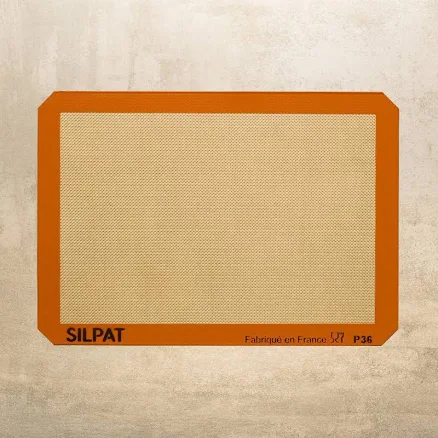
Silpat 3/4 Size Baking Mat
Silicone with no coating described, and no PFAS statement from the brand.
The product information we reviewed describes silicone baking mat with fiberglass core, with no applied coating named. Silicone releases food on its own, so a non-stick claim on a silicone product describes the material rather than a coating. The brand has published no PFAS statement for it.
We flunk more products than we pass. This one earned its grade. How we grade
Material
Silicone baking mat with fiberglass core
Brand disclosure
Brand is silent on PFAS
Lab data
No public lab test
What Silpat 3/4 Size Baking Mat is made of, ingredients and materials
Silpat mats are constructed from food-grade silicone bonded to a fiberglass mesh core. Silicone is an inert polymer that does not leach into food under normal baking conditions (up to the product's rated temperature limit, typically 480F/250C). The fiberglass reinforcement provides structural integrity and prevents the mat from warping or tearing during repeated use. This material combination has been in widespread commercial and home use for over 20 years with no documented migration of hazardous substances into food.
What’s concerning
Category baseline
The starting point for this type of product, before anything specific to this product is counted.
No PFAS disclosure
No public statement from the brand about PFAS in this product.
Fiberglass particle shedding
If the silicone coating is punctured or peels at edges, fiberglass mesh may be exposed. Visible damage should trigger replacement to avoid fiber ingestion, though intact mats do not shed fibers into food.
Heat degradation of silicone
Silicone softens above 480F but does not degrade into food or release volatile compounds. Exceeding the rated temperature may shorten mat lifespan or cause warping, not acute hazard.
Coating adhesion failure over time
Repeated washing and heat cycling can occasionally cause silicone to separate from fiberglass at edges or corners after heavy use. This is a durability issue rather than a safety risk unless fiberglass is exposed.
What’s reassuring
Base material not linked to PFAS
The main material recorded for this product is not one associated with PFAS.
Silicone leaching
Food-grade silicone does not leach oligomers or other compounds at baking temperatures in published testing. No migration incidents reported for Silpat or similar commercial mats.
Cross-contamination from food residue
Silicone surface is smooth and non-porous, making it easy to clean thoroughly. No buildup or bacterial growth hazard documented if washed between uses and dried completely.
The full breakdown
The brand's record and disclosure
Silpat is owned by Groupe SEB (a major cookware conglomerate) and has maintained a consistent product design since its introduction in the 1970s. The brand does not publicly disclose PFAS testing or make PFAS-free claims, which is typical for silicone-based products from this era. No major product recalls, coating failures, or contamination incidents are on record for Silpat baking mats. The company markets the product for food contact in the US and EU without restriction.
How it compares in its category
Silicone baking mats like Silpat are considered lower concern alternatives to parchment paper and non-stick cookware in the non-stick category. Unlike coated pans (which rely on Teflon-type coating or ceramic coatings that degrade), this mat's silicone surface is chemically stable and does not shed particles. Reusable silicone mats eliminate the waste and potential contaminants of disposable parchment; they also outperform silicone-free fabric mats in durability and consistency. Price is higher than parchment paper but competitive with premium alternatives.
If you buy it
Hand wash with warm soapy water and allow to air dry; do not use abrasive scrubbers or dishwashers, which can degrade the fiberglass bonding over time. Do not exceed the stated temperature limit (typically 480F); higher heat can cause silicone to soften, though it will not degrade into food. Replace the mat if you notice visible tears, peeling edges, or loss of non-stick function (typically after 5-7 years of regular use). Store flat or loosely rolled to avoid creasing, which can compromise the fiberglass core.
What we don’t know
- Basis
- Model estimate, 72% confidence, not a lab result
- Lab test
- None on record for this exact product
- Brand statement
- Silpat has made none
Formulations change between production runs, so check the current label. How we grade.
Better-graded alternatives in Parchment Paper & Baking Liners
If You Care
Baking Paper, Parchment, 70 Square Feet
- silicone-coated parchment paper
- The brand calls it PFAS-free, which we have not verified
- Paper degradation and particulate shedding
If You Care
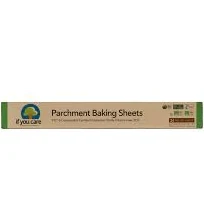
Parchment Baking Sheets
- unbleached paper with silicone coating
- The brand calls it PFAS-free, which we have not verified
- Silicone coating degradation at high heat
If You Care
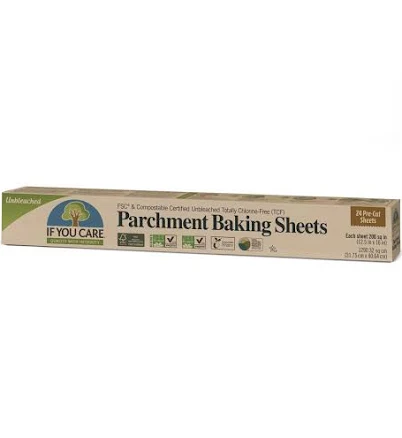
Parchment Baking Sheets
- bleached paper with silicone coating
- The brand calls it PFAS-free, which we have not verified
- Paper degradation and fragmentation
More parchment paper & baking liners grades
How we score, every product runs through the same public 0-100 rubric based on materials, coatings, brand disclosure, lab findings, and recalls. See the full methodology → Spotted a mistake? Report an error.