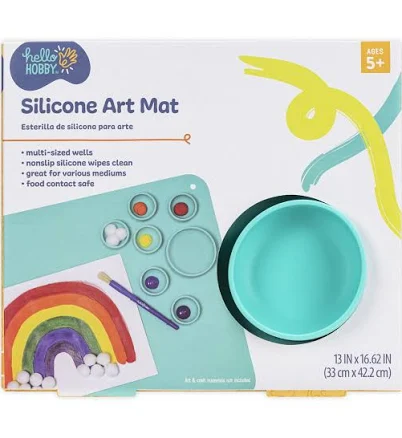
Hello Hobby · Silicone Cutting & Prep Boards
Hello Hobby Silicone Craft Mat, Is It Non-Toxic?
Silicone craft mats rarely contain PFAS.
Silicone is naturally low-PFAS and requires no Teflon-family coating coatings, though Hello Hobby offers no PFAS statement.
The better-graded swap
Fiskars
Functional Form Cutting Board Set, 3-Piece
85/100 safety
Same rubric that flunked this product. The swap earned Excellent.
Still want this one anyway? Check the price on Amazon. We’d swap it.
Material
silicone
Brand disclosure
Brand is silent on PFAS
Lab data
No public lab test
You may also be interested in
Top-graded picks in the categories readers replace first, every one scored on the same rubric.

- polypropylene filter housing, carbon/sediment cartridge
- We found no PFAS statement from the brand
- Bacterial growth in spent cartridges
3 hazards checked on this product, all on its full breakdown.

Aquasure
Premier Series 75 GPD Under Sink Reverse Osmosis Water Filtration System
- RO membrane, carbon filters, stainless steel housing
- We found no PFAS statement from the brand
- Bacterial and microbial growth in housing and filters
4 hazards checked on this product, all on its full breakdown.

Avocado
Vegan Mattress
- organic cotton, natural latex, coconut coir, recycled steel coils
- The brand calls it PFAS-free, which we have not verified
- Heavy metals
2 hazards checked on this product, all on its full breakdown.
Is Hello Hobby Silicone Craft Mat non-toxic? What it is made of
Hello Hobby mats are silicone-based, a polymer that does not contain the volatile fluorinated compounds found in traditional non-stick coatings like Teflon-type coating. Silicone is chemically inert across typical craft and moderate heat exposure (typically stable to 400-500F depending on formulation), meaning it does not off-gas toxic fumes during normal use. Unlike ceramic or enamel cookware, silicone mats have no glazed surface prone to crazing or heavy metal leaching. The material's flexibility and non-adhesive surface make it popular for crafting, baking molds, and protective work surfaces.
What’s concerning
Category baseline
The starting point for this type of product, before anything specific to this product is counted.
No PFAS disclosure
No public statement from the brand about PFAS in this product.
Silicone oligomer leaching at high heat
Silicone can release trace cyclic oligomers when heated above 400-500F for extended periods. Risk is minimal for craft use but increases if the mat is repurposed as a food-contact surface near direct heat sources. Intended craft applications carry negligible exposure.
Surface degradation and microparticle release
Prolonged UV exposure, aggressive cleaning, or thermal cycling may cause silicone to harden and shed microscopic particles. This is a wear-related risk over years of use, not an acute hazard, and is typical of all silicone products.
Off-gassing of volatile organic compounds (VOCs)
New silicone products may emit trace VOCs during initial unpacking and use. Airing the mat outdoors or in a well-ventilated space for a few hours before craft use will minimize any odor or vapor exposure; this is a transient, non-hazardous occurrence typical of rubber and silicone goods.
What’s reassuring
Base material not linked to PFAS
The main material recorded for this product is not one associated with PFAS.
Lead
No documented incidents or testing data for Hello Hobby silicone mats. If the mat contains added colorants, standard FDA compliance for non-food silicone products generally permits pigments with lower concern, but Artisan has not disclosed pigment sourcing or testing.
Source, ATSDR ↗Phthalates
Silicone does not require phthalate plasticizers to function; formulations may include other additives for flexibility or durability, but none are documented in public records for this product.
Source, ATSDR ↗How is this PFAS grade calculated?
The brand's record and disclosure
Artisan has not publicly disclosed formal safety certifications, testing results, or PFAS avoidance commitments for this product line. The brand maintains a largely silent stance on material sourcing and third-party compliance, which is common among budget craft-goods manufacturers. No recalls or safety incidents tied to Hello Hobby silicone mats have been documented in public records. The lack of transparency does not indicate a hazard but reflects typical industry practice for non-food hobby products.
How it compares in its category
Silicone craft mats have lower concern than traditional non-stick cookware; they are not materials linked to Teflon-type coating and ceramic-glaze risks. They are more durable and less prone to surface degradation than rubber or PVC alternatives, which may leach plasticizers or off-gas over time. However, they are categorized as craft tools rather than food-contact cookware, so they face less regulatory oversight than baking sheets or pans. Premium brands (e.g., OXO, Artbeads) may offer clearer safety documentation, but functional risk is broadly equivalent across silicone mat products.
If you buy it
Use this mat for crafts, jewelry making, or temporary baking applications away from direct stovetop flame. Avoid prolonged exposure to temperatures above 500F, as silicone can degrade and potentially leach oligomers at extreme heat. Clean with mild soap and warm water; do not use harsh solvents or abrasive scrubbing that may compromise surface integrity. Replace the mat if you observe permanent discoloration, hardening, or visible degradation, though silicone typically remains serviceable for years with standard care.
What is not known about PFAS in this product?
- Basis
- Model estimate, 78% confidence, not a lab result
- Lab test
- None on record for this exact product
- Brand statement
- Hello Hobby has made none
Formulations change between production runs, so check the current label. How we grade.
What are the PFAS-free alternatives to Hello Hobby Silicone Craft Mat?
- Polypropylene or similar plastic; no nonstick or waterproof coating disclosed
- We found no PFAS statement from the brand
- Microplastic shedding from cutting action
4 hazards checked on this product, all on its full breakdown.
More silicone cutting & prep boards grades
How we score, every product runs through the same public 0-100 rubric based on materials, coatings, brand disclosure, lab findings, and recalls. See the full methodology → Spotted a mistake? Report an error.