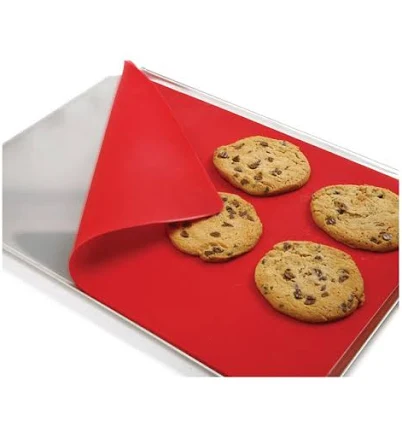
Norpro · Silicone Cutting & Prep Boards
Norpro Silicone Baking Mat, Is It Non-Toxic?
Lower concern. Food-grade silicone material is not linked to PFAS.
This baking mat is made from food-grade silicone, a material not associated with PFAS. Norpro has no PFAS statement on record for this product.
The better-graded swap
Fiskars
Functional Form Cutting Board Set, 3-Piece
85/100 safety
Same rubric that flunked this product. The swap earned Excellent.
Still want this one anyway? Check the price on Amazon. We’d swap it.
Material
Food-grade silicone
Brand disclosure
Brand is silent on PFAS
Lab data
No public lab test
You may also be interested in
Top-graded picks in the categories readers replace first, every one scored on the same rubric.

- polypropylene filter housing, carbon/sediment cartridge
- We found no PFAS statement from the brand
- Bacterial growth in spent cartridges
3 hazards checked on this product, all on its full breakdown.

Aquasure
Premier Series 75 GPD Under Sink Reverse Osmosis Water Filtration System
- RO membrane, carbon filters, stainless steel housing
- We found no PFAS statement from the brand
- Bacterial and microbial growth in housing and filters
4 hazards checked on this product, all on its full breakdown.

Avocado
Vegan Mattress
- organic cotton, natural latex, coconut coir, recycled steel coils
- The brand calls it PFAS-free, which we have not verified
- Heavy metals
2 hazards checked on this product, all on its full breakdown.
Is Norpro Silicone Baking Mat non-toxic? What it is made of
Norpro silicone baking mats are made from food-grade silicone, a synthetic rubber polymer that does not contain the ceramic, enamel, or metal coatings present in traditional bakeware. Silicone is chemically inert at typical baking temperatures (up to 500°F for most commercial mats) and does not leach toxic metals like lead or cadmium. Unlike Teflon-type coating-coated (Teflon) cookware, silicone baking mats do not generate hazardous fumes when overheated because the material itself is not a Teflon-family coating.
What’s concerning
No PFAS disclosure
No public statement from the brand about PFAS in this product.
Category baseline
The starting point for this type of product, before anything specific to this product is counted.
Silicone degradation and microparticle leaching
Over many years of repeated heating and mechanical wear, silicone can lose integrity and shed microscopic particles into food. This is not widely documented as a clinical hazard, but prolonged use at temperature extremes may increase risk.
Thermal tolerance limits
Most food-grade silicone mats are rated for 400-500°F; use above stated limits may cause the material to soften, off-gas, or degrade faster. Individual products vary; exceeding manufacturer specs carries unknown chemical release risks.
What’s reassuring
Base material not linked to PFAS
The main material recorded for this product is not one associated with PFAS.
Manufacturing residue or uncrosslinked oligomers
Food-grade silicone from reputable suppliers is generally low in leachable oligomers, but Norpro does not publish third-party testing data. If sourcing controls are weak, minor quantities of uncrosslinked silicone compounds could migrate to food, particularly in fatty or acidic foods at high heat.
Heavy metals
Norpro silicone mats are typically white or off-white. If pigments are added for color, FDA-cleared colorants are standard, but independent testing on this specific product is not publicly available. Risk is very low if the mat is plain or contains only FDA-approved dyes.
Source, FDA ↗Non-stick coating or surface treatment hazards
Unlike Teflon-type coating bakeware, silicone mats are not coated with a separate non-stick layer. The non-stick property is inherent to silicone itself, so there is no risk of coating flaking or Teflon-type coating fume release.
How is this PFAS grade calculated?
The brand's record and disclosure
Norpro is a long-established cookware and baking accessories brand but maintains minimal public transparency on material sourcing or third-party testing. The company makes no formal PFAS or heavy-metals certification claims for this product line. No recalls or safety incidents involving Norpro silicone baking mats have been widely reported in consumer safety databases, suggesting either a lower concern product history or lack of systematic monitoring.
How it compares in its category
Silicone baking mats show lower concern for non-stick bakeware options, with a lower hazard profile than traditional Teflon-coated sheet pans or ceramic-glazed cookware that may contain lead. They avoid the coating-degradation and metal-leaching risks of enameled cast iron or older non-stick surfaces. Parchment paper is a comparable alternative but generates more waste; silicone mats are reusable and durable, making them a practical choice for frequent bakers.
If you buy it
Use the mat on a stable oven rack to prevent shifting, and stay within the manufacturer's stated heat limit (typically 500°F). Hand wash with warm soapy water rather than dishwashing machine to extend lifespan; harsh detergents and high heat may degrade the silicone over years of use. Inspect annually for cracks, stickiness loss, or discoloration; replace if the surface becomes tacky or tears develop. Store flat or loosely rolled to prevent permanent creasing.
What is not known about PFAS in this product?
- Basis
- Model estimate, 82% confidence, not a lab result
- Lab test
- None on record for this exact product
- Brand statement
- Norpro has made none
Formulations change between production runs, so check the current label. How we grade.
What are the PFAS-free alternatives to Norpro Silicone Baking Mat?
- Polypropylene or similar plastic; no nonstick or waterproof coating disclosed
- We found no PFAS statement from the brand
- Microplastic shedding from cutting action
4 hazards checked on this product, all on its full breakdown.
More silicone cutting & prep boards grades
How we score, every product runs through the same public 0-100 rubric based on materials, coatings, brand disclosure, lab findings, and recalls. See the full methodology → Spotted a mistake? Report an error.