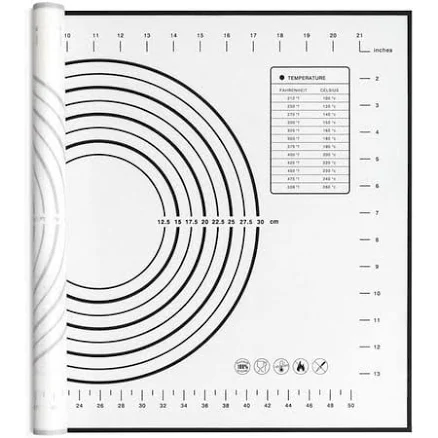
· Silicone Cutting & Prep Boards
Silicone Cutting and Prep Board, Is It Non-Toxic?
Lower concern. Material as recorded is borosilicate glass, not linked to PFAS.
Material as recorded is borosilicate glass. No coating on record. The brand has no PFAS statement on record.
The better-graded swap
Fiskars
Functional Form Cutting Board Set, 3-Piece
85/100 safety
Same rubric that flunked this product. The swap earned Excellent.
Still want this one anyway? Check the price on Amazon. We’d swap it.
Material
borosilicate glass
Lab data
No public lab test
You may also be interested in
Top-graded picks in the categories readers replace first, every one scored on the same rubric.

- polypropylene filter housing, carbon/sediment cartridge
- We found no PFAS statement from the brand
- Bacterial growth in spent cartridges
3 hazards checked on this product, all on its full breakdown.

Aquasure
Premier Series 75 GPD Under Sink Reverse Osmosis Water Filtration System
- RO membrane, carbon filters, stainless steel housing
- We found no PFAS statement from the brand
- Bacterial and microbial growth in housing and filters
4 hazards checked on this product, all on its full breakdown.

Avocado
Vegan Mattress
- organic cotton, natural latex, coconut coir, recycled steel coils
- The brand calls it PFAS-free, which we have not verified
- Heavy metals
2 hazards checked on this product, all on its full breakdown.
Is Silicone Cutting and Prep Board non-toxic? What it is made of
This product is borosilicate glass, a silica-based material engineered to withstand thermal shock and resist chemical leaching. Borosilicate's atomic structure is inherently stable and does not leach lead, cadmium, aluminum, or other metals into food under normal cooking conditions. The material has been used in laboratory equipment and food service for over a century precisely because of this chemical inertness.
What’s concerning
No PFAS disclosure
No public statement from the brand about PFAS in this product.
Category baseline
The starting point for this type of product, before anything specific to this product is counted.
Thermal shock fracture and cutting hazard
Borosilicate cookware has experienced sporadic reports of spontaneous cracking or explosive fracturing when subjected to rapid temperature changes or thermal stress. While the glass itself is not toxic, breakage creates sharp edges and potential food contamination; this is a physical safety hazard, not chemical.
Lid or handle coating hazards
Cookware often ships with plastic lids or metal handles with coatings or plastic components. Coatings on lids or handles may contain phthalates, BPA, or other compounds not explicitly disclosed; material composition of lids should be verified separately from the glass vessel itself.
What’s reassuring
Base material not linked to PFAS
The main material recorded for this product is not one associated with PFAS.
Lead
Borosilicate glass formulations used in cookware do not contain intentionally added lead or cadmium, and no recalls or published test data document leaching from intact vessels. Risk applies mainly to vintage the brand and hand-painted or gold-rimmed variants, not modern smooth cookware.
Source, ATSDR ↗Aluminum leaching from cookware base or reactor layer
Pure borosilicate glass cookware does not contain embedded aluminum. However, some the brand or the brand-style products feature aluminum or steel bases for heat distribution; if present, aluminum does not leach significantly in normal cooking conditions at typical pH levels.
Teflon-type coating or non-stick coating fume hazard
Borosilicate glass cookware is not coated with Teflon-type coating or other non-stick surfaces. This product category avoids Teflon-type coating entirely by design.
How is this PFAS grade calculated?
The brand's record and disclosure
The brand does not publish detailed PFAS or materials certifications on consumer product pages, which reflects industry-wide silence rather than a red flag specific to this brand. The brand has no documented recalls for chemical leaching from borosilicate cookware. However, the brand has faced scrutiny over marketing tempered-glass lids (which may contain other additives) alongside the glass vessels themselves; check lid material separately if included.
How it compares in its category
Borosilicate glass is lower concern cookware material for chemical inertness. It avoids all coating-based hazards (Teflon-type coating off-gassing, ceramic enamel lead risk, non-stick degradation) that affect metal cookware. The main trade-off is thermal fragility, borosilicate can shatter from rapid temperature changes or impact, unlike metal or ceramic alternatives, but this is a physical rather than chemical safety issue.
If you buy it
Avoid rapid temperature transitions (do not move hot glass directly to cold surfaces or ice water). Hand-wash when possible to extend lifespan; dishwashers can cause micro-scratches over years. Inspect regularly for chips or cracks and retire the vessel immediately if found, as structural integrity affects performance in use. Borosilicate can be used from stovetop to oven up to stated temperature limits (typically 200-250°C), but always confirm for your specific product model.
What is not known about PFAS in this product?
- Basis
- Model estimate, 88% confidence, not a lab result
- Lab test
- None on record for this exact product
- Brand statement
- has made a specific claim
Formulations change between production runs, so check the current label. How we grade.
What are the PFAS-free alternatives to Silicone Cutting and Prep Board?
- Polypropylene or similar plastic; no nonstick or waterproof coating disclosed
- We found no PFAS statement from the brand
- Microplastic shedding from cutting action
4 hazards checked on this product, all on its full breakdown.
More silicone cutting & prep boards grades
How we score, every product runs through the same public 0-100 rubric based on materials, coatings, brand disclosure, lab findings, and recalls. See the full methodology → Spotted a mistake? Report an error.