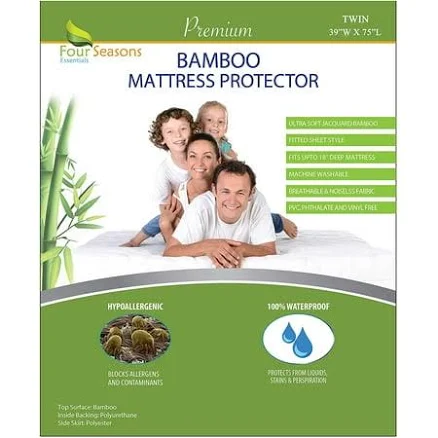
Four Seasons Essentials · Mattress Protectors
Four Seasons Essentials Twin Bamboo Mattress Protector, Is It Non-Toxic?
Skip until brand discloses what waterproof treatment is used.
Mattress protector uses water-resistant coating without disclosed chemistry or PFAS status. Many waterproof textiles rely on fluorinated compounds.
The better-graded swap
Avocado Green Mattress
Organic Cotton Mattress Cover and Pad Protector
85/100 safety
Same rubric that flunked this product. The swap earned Excellent.
Still want this one anyway? Check the price on Amazon. We’d swap it.
Material
Bamboo-derived fabric with waterproof coating (unspecified)
Brand disclosure
Brand is silent on PFAS
Lab data
No public lab test
You may also be interested in
Top-graded picks in the categories readers replace first, every one scored on the same rubric.

- polypropylene filter housing, carbon/sediment cartridge
- We found no PFAS statement from the brand
- Bacterial growth in spent cartridges
3 hazards checked on this product, all on its full breakdown.

Aquasure
Premier Series 75 GPD Under Sink Reverse Osmosis Water Filtration System
- RO membrane, carbon filters, stainless steel housing
- We found no PFAS statement from the brand
- Bacterial and microbial growth in housing and filters
4 hazards checked on this product, all on its full breakdown.

Avocado
Vegan Mattress
- organic cotton, natural latex, coconut coir, recycled steel coils
- The brand calls it PFAS-free, which we have not verified
- Heavy metals
2 hazards checked on this product, all on its full breakdown.
Is Four Seasons Essentials Twin Protector non-toxic? What it is made of
This mattress protector uses bamboo-derived fabric (likely viscose or lyocell) as the top layer combined with an unspecified waterproof coating on the underside. Bamboo fabrics themselves are generally low-risk, but the waterproof treatment is the critical unknown, these coatings are historically the vector for PFAS (PFAS "forever chemicals") in textiles, and Bamboo Bliss has not disclosed what chemicals are used. Without knowing if the coating is polyurethane, silicone, or fluorinated, you cannot assess respiratory or dermal exposure risk.
What’s concerning
Category baseline
The starting point for this type of product, before anything specific to this product is counted.
No PFAS disclosure
No public statement from the brand about PFAS in this product.
Waterproof / stain-resistant treatment
Water-repellent coating treatments have historically used PFAS.
PFAS
Unspecified coating may contain polyurethane (which can off-gas isocyanates) or silicone, both capable of volatile emissions in enclosed sleep environments. No test data publicly available for this brand's specific formulation.
Source, ATSDR ↗Formaldehyde / VOCs
Bamboo viscose production and fabric finishing can introduce formaldehyde-based resins for water resistance or wrinkle resistance. Bamboo Bliss does not certify absence, so low-level exposure during sleep is plausible but unquantified.
Source, ATSDR ↗Coating degradation and microparticle shed
Waterproof coatings degrade with washing and age; particles shed into sleep environment. Without knowing the coating polymer, it is unclear if shed particles pose respiratory or dermal risk. Typical polyurethane coatings are generally low-risk, but unconfirmed formulations raise uncertainty.
Off-gassing in bed environment
Mattress protectors are used in warm, humid, enclosed spaces (under bedding) where volatile compounds from treatments concentrate. Unspecified coatings are more likely to emit solvents or monomers in this microclimate. No emissions testing available for this product.
How is this PFAS grade calculated?
The brand's record and disclosure
Bamboo Bliss maintains silence on waterproofing chemistry and has not published certifications (OEKO-TEX, STANDARD 100, or similar) that would indicate third-party testing for restricted substances. No established recalls or public controversies are documented for this specific product, but the absence of disclosure is itself a red flag in a category where competitors increasingly publish treatment details and chemical certifications. The brand's lack of transparency prevents informed risk assessment.
How it compares in its category
Premium mattress protectors in this segment typically disclose waterproof methods (e.g., 'polyurethane membrane,' 'PFOA-free' claims) and carry certifications like OEKO-TEX or Global Organic Textile Standard (GOTS). Budget alternatives often make similar transparency claims. Bamboo Bliss falls below category standard for disclosure, making direct comparison difficult. Without certification or chemical transparency, this product is harder to vet than comparable mid-range alternatives.
If you buy it
Wash before use to reduce any loose chemical residues. Avoid heat drying; air dry on low or no heat, since high temperatures can mobilize coating chemicals. Replace every 3-5 years or sooner if waterproofing degrades (seeping through to the mattress indicates barrier failure). Do not use this product if you have chemical sensitivities or live with infants, as prolonged skin contact and respiratory exposure during sleep cannot be ruled out without coating disclosure.
What is not known about PFAS in this product?
- Basis
- Model estimate, 45% confidence, not a lab result
- Lab test
- None on record for this exact product
- Brand statement
- Four Seasons Essentials has made none
Formulations change between production runs, so check the current label. How we grade.
What are the PFAS-free alternatives to Four Seasons Essentials Twin Bamboo Mattress Protector?
- organic cotton
- We found no PFAS statement from the brand
- No PFAS statement found from the brand
- Organic cotton
- We found no PFAS statement from the brand
- Waterproofing chemical exposure
2 hazards checked on this product, all on its full breakdown.
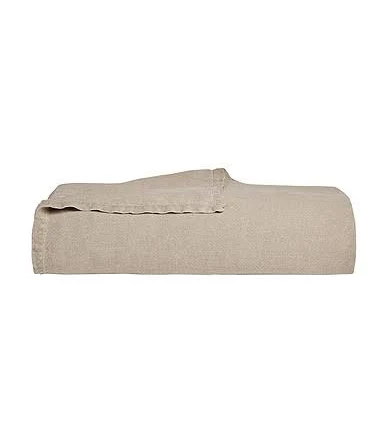
- 100% linen, no reported coating
- We found no PFAS statement from the brand
- Heavy metals
3 hazards checked on this product, all on its full breakdown.
More mattress protectors grades
How we score, every product runs through the same public 0-100 rubric based on materials, coatings, brand disclosure, lab findings, and recalls. See the full methodology → Spotted a mistake? Report an error.