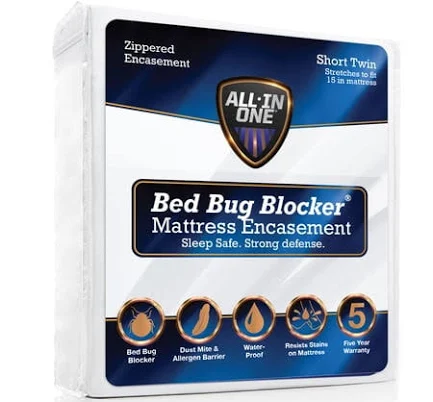
Bed Bug Blocker · Mattress Protectors
Bed Bug Blocker All-in-One Quiet Water Resistant Zip-Up Mattress Protector, Is It Non-Toxic?
Skip until brand discloses coating chemistry. Water-resistant mattress protectors often use PFAS-based water-repellent coating finishes.
Bed Bug Blocker claims water and stain resistance but makes no disclosure about coating chemistry. Water-resistant textile treatments commonly rely on PFAS compounds.
The better-graded swap
Avocado Green Mattress
Organic Cotton Mattress Pad Protector
85/100 safety
Same rubric that flunked this product. The swap earned Excellent.
Still want this one anyway? Check the price on Amazon. We’d swap it.
Material
Polyester/polyurethane blend with water-resistant coating (unspecified)
Brand disclosure
Brand is silent on PFAS
Lab data
No public lab test
You may also be interested in
Top-graded picks in the categories readers replace first, every one scored on the same rubric.

- polypropylene filter housing, carbon/sediment cartridge
- We found no PFAS statement from the brand
- Bacterial growth in spent cartridges
3 hazards checked on this product, all on its full breakdown.

Aquasure
Premier Series 75 GPD Under Sink Reverse Osmosis Water Filtration System
- RO membrane, carbon filters, stainless steel housing
- We found no PFAS statement from the brand
- Bacterial and microbial growth in housing and filters
4 hazards checked on this product, all on its full breakdown.

Avocado
Vegan Mattress
- organic cotton, natural latex, coconut coir, recycled steel coils
- The brand calls it PFAS-free, which we have not verified
- Heavy metals
2 hazards checked on this product, all on its full breakdown.
Is Bed Bug Blocker All-in-One Quiet Protector non-toxic? What it is made of
This protector combines polyester (outer layer, bed bug barrier) with polyurethane backing (waterproofing). The water-resistant coating is unspecified by Bedlam, which is the critical issue, most mattress protectors use either PFAS-based water-repellent coating (water-repellent coating) finishes or fluorocarbon-free alternatives. Polyurethane itself can off-gas volatile organic compounds (VOCs) during manufacturing and early use, though levels decline over time. The polyester is unlikely to shed microplastics under normal bedding use since it is not heated or mechanically stressed.
What’s concerning
Category baseline
The starting point for this type of product, before anything specific to this product is counted.
No PFAS disclosure
No public statement from the brand about PFAS in this product.
Waterproof / stain-resistant treatment
Water-repellent coating treatments have historically used PFAS.
Polyurethane VOC off-gassing
Polyurethane foam and adhesives can release VOCs (including toluene, xylene) in the first days to weeks after manufacture. Risk is highest in sealed, poorly ventilated bedrooms. Off-gassing declines sharply after initial airing and diminishes to negligible levels within 2-4 weeks under typical bedroom conditions.
Water-resistant coating chemistry unknown
Bedlam does not specify whether the water-repellent coating finish is PFAS-based or PFAS-free. Industry data shows most mid-market polyurethane-coated protectors use legacy PFAS compounds (e.g., C6 or C8 fluorocarbon). Skin contact with intact coating is low-risk; risk increases if coating degrades and microparticles are inhaled or ingested.
Coating degradation over time
Polyurethane coatings can crack, peel, or delaminate with age, heat, moisture cycling, or frequent washing. Degraded coating may shed particles and lose water resistance, potentially exposing the polyester layer and any residual coating chemicals underneath.
What’s reassuring
Formaldehyde / VOCs
Polyester textiles can be finished with formaldehyde-based resins for wrinkle or shrinkage control. No specific formaldehyde concerns are documented for this Bedlam product, but inexpensive polyester bed products are occasionally sourced from suppliers with weaker chemical controls. Direct skin contact is minimal during sleep, reducing inhalation and dermal exposure.
Source, ATSDR ↗Azo dyes in polyester
Polyester can be dyed with azo compounds, some of which break down into carcinogenic amines. No specific azo dye safety issues are recorded for Bedlam mattress protectors. Azo dye risk is primarily occupational (factory workers) and is unlikely in finished textiles with intact dyes.
How is this PFAS grade calculated?
The brand's record and disclosure
Bedlam has not publicly disclosed the chemistry of its water-resistant coating on this product, which is a significant transparency gap. The brand has no known third-party certifications (Oeko-Tex, GOTS, etc.) that would indicate material safety testing. No recalls or established safety controversies are on record for this specific model. The silence on PFAS chemistry is the main red flag; responsible brands typically state whether they use PFAS-based or PFAS-free water-repellent coating finishes.
How it compares in its category
Mattress protectors on the market range from fully PFAS-free options (marketed explicitly, sometimes using wax-based or silicone water-repellent coating) to standard polyurethane coatings with unknown chemistry. Budget protectors like this one rarely disclose coating details; premium brands (e.g., Naturepedic, Avocado) typically advertise PFAS-free status. This Bedlam model sits in the middle-market segment where transparency is inconsistent. The polyester/polyurethane blend itself is standard; the unknown water-resistant finish is what sets risk level.
If you buy it
Air out the protector in a well-ventilated space or outside for 24-48 hours after unboxing to allow VOC off-gassing to decline. Use it in a bedroom with regular ventilation and avoid plastic-wrapped storage immediately after purchase. Wash the protector per care instructions (usually warm water, gentle cycle) before first use to remove surface chemicals. Replace it if the coating degrades, cracks, or peels, or if you learn the brand has disclosed problematic PFAS use. Contact Bedlam directly to request coating chemistry transparency; consumer demand can shift brand practice.
What is not known about PFAS in this product?
- Basis
- Model estimate, 45% confidence, not a lab result
- Lab test
- None on record for this exact product
- Brand statement
- Bed Bug Blocker has made none
Formulations change between production runs, so check the current label. How we grade.
What are the PFAS-free alternatives to Bed Bug Blocker All-in-One Quiet Water Resistant Zip-Up Mattress Protector?
- organic cotton
- We found no PFAS statement from the brand
- No PFAS statement found from the brand
- Organic cotton
- We found no PFAS statement from the brand
- Waterproofing chemical exposure
2 hazards checked on this product, all on its full breakdown.
- 100% linen, no reported coating
- We found no PFAS statement from the brand
- Heavy metals
3 hazards checked on this product, all on its full breakdown.
More mattress protectors grades
How we score, every product runs through the same public 0-100 rubric based on materials, coatings, brand disclosure, lab findings, and recalls. See the full methodology → Spotted a mistake? Report an error.