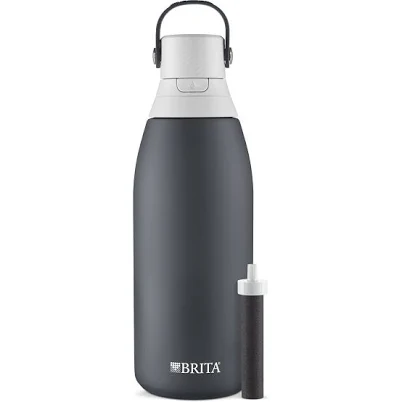
Brita Premium Stainless Steel Water Bottle
Lower concern due to materials, but Brita makes no PFAS disclosure.
Stainless steel poses lower PFAS risk than plastics or nonstick finishes. Brita hasn't disclosed PFAS testing or treatment details for this model.
We flunk more products than we pass. This one earned its grade. How we grade
Material
Stainless steel bottle with standard cap/lid
Lab data
No public lab test
You may also be interested in
Top-graded picks in the categories readers replace first, every one scored on the same rubric.

- polypropylene filter housing, carbon/sediment cartridge
- We found no PFAS statement from the brand
- Bacterial growth in spent cartridges
3 hazards checked on this product, all on its full breakdown.

Aquasure
Premier Series 75 GPD Under Sink Reverse Osmosis Water Filtration System
- RO membrane, carbon filters, stainless steel housing
- We found no PFAS statement from the brand
- Bacterial and microbial growth in housing and filters
4 hazards checked on this product, all on its full breakdown.

Avocado
Vegan Mattress
- organic cotton, natural latex, coconut coir, recycled steel coils
- The brand calls it PFAS-free, which we have not verified
- Heavy metals
2 hazards checked on this product, all on its full breakdown.
What Brita Premium Stainless Steel Water Bottle is made of, ingredients and materials
The Brita Premium Stainless Steel Water Bottle is constructed from food-grade stainless steel (typically 18/8 or similar chromium-nickel alloy) for the bottle body, which is chemically inert and does not leach metals into water under normal use. The cap and lid likely contain thermoplastic components (polypropylene or similar) and possibly silicone gaskets for sealing. Stainless steel is a material not linked to PFAS for beverage storage because it does not corrode, does not require a plastic coating, and is not susceptible to the degradation issues that affect ceramic or enamel-lined bottles.
What’s concerning
No PFAS disclosure
No public statement from the brand about PFAS in this product.
Thermoplastic cap/lid leaching
The plastic components of the cap (likely polypropylene or polyethylene) show lower concern regarding plasticizer leaching, though prolonged exposure to acidic beverages or high heat may cause minor leaching of plasticizers. No specific safety incidents are on record for Brita's cap design.
Silicone gasket degradation and micro-particle release
Silicone gaskets can degrade over time or with exposure to certain substances, potentially releasing small particles into water. This is a slow process and not typically hazardous unless the gasket visibly deteriorates; regular inspection and replacement every 1-2 years minimizes risk.
Bacterial growth in bottle interior or cap threads
Any reusable water bottle can accumulate bacteria if not dried thoroughly between uses or cleaned regularly. Stainless steel itself does not support biofilm growth, but the cap seal and bottle mouth are susceptible; proper air-drying and weekly cleaning are standard preventive measures.
What’s reassuring
Bare uncoated material
Recorded as a bare, uncoated material with no surface coating or treatment.
Heavy metals
Food-grade stainless steel (18/8 or 304 grade) does not leach chromium, nickel, or iron into neutral or acidic water under normal storage conditions. No established concerns exist for this specific product or material class in public safety records.
Source, FDA ↗Coating or lining degradation
Stainless steel bottles do not rely on protective coatings or enamels, eliminating the risk of ceramic glaze flaking, enamel chipping, or Teflon-type coating fume release. The bare metal construction is inherently durable.
How is this PFAS grade calculated?
The brand's record and disclosure
Brita is known for water filtration products and has not faced major documented recalls or safety controversies specific to their stainless steel bottle line. The company does not make explicit public statements about PFAS in their stainless steel bottles, though the material itself does not inherently require PFAS-based coatings or treatments. Brita's filtration cartridges have been the focus of some scrutiny regarding plastic durability and end-of-life disposal, but the bottle itself carries no established safety red flags in the public record.
How it compares in its category
Stainless steel water bottles show lower concern in the reusable bottle category compared to plastic (which can leach BPA or BPS) and ceramic-lined bottles (which may contain lead in glazes). The Brita branded version offers the same material advantage as generic stainless steel bottles but may carry a premium price for the brand name and integrated filter compatibility. No independent testing results comparing Brita's specific bottle to direct competitors are widely available in the public domain.
If you buy it
Hand-wash the bottle and cap rather than placing in the dishwasher, as high heat and harsh detergents can degrade rubber gaskets over time. Do not fill with boiling liquids immediately after manufacture, as thermal shock can stress seals. Replace the silicone gasket or cap assembly every 12-24 months if you notice reduced seal integrity or visible wear. Avoid using abrasive sponges on the interior to prevent micro-scratching; mild soap and water or a bottle brush are sufficient.
What is not known about PFAS in this product?
- Basis
- Model estimate, 72% confidence, not a lab result
- Lab test
- None on record for this exact product
- Brand statement
- Brita has made a specific claim
Formulations change between production runs, so check the current label. How we grade.
More water filters grades
How we score, every product runs through the same public 0-100 rubric based on materials, coatings, brand disclosure, lab findings, and recalls. See the full methodology → Spotted a mistake? Report an error.