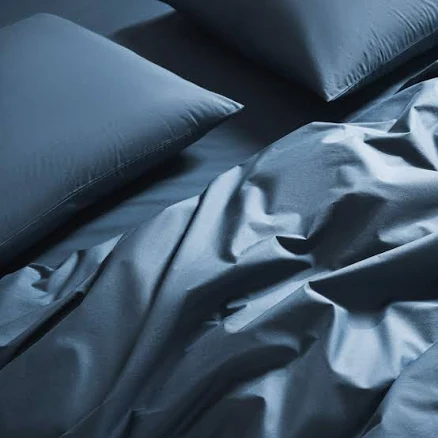
Brooklinen · Stain-Resistant Bed Sheets
Classic Cooling Percale Fitted Sheet in Blue, Full
Lower-concern choice; plain cotton sheets rarely contain PFAS without brand confirmation.
Classic Cooling Percale in Blue is 100% cotton without Teflon-family coating, water-resistant, or stain-resistant coatings that typically introduce PFAS. Brooklinen does not make PFAS claims either way.
We flunk more products than we pass. This one earned its grade. How we grade
Material
100% cotton percale
Brand disclosure
Brand is silent on PFAS
Lab data
No public lab test
You may also be interested in
Top-graded picks in the categories readers replace first, every one scored on the same rubric.

- polypropylene filter housing, carbon/sediment cartridge
- We found no PFAS statement from the brand
- Bacterial growth in spent cartridges
3 hazards checked on this product, all on its full breakdown.

Aquasure
Premier Series 75 GPD Under Sink Reverse Osmosis Water Filtration System
- RO membrane, carbon filters, stainless steel housing
- We found no PFAS statement from the brand
- Bacterial and microbial growth in housing and filters
4 hazards checked on this product, all on its full breakdown.

Avocado
Vegan Mattress
- organic cotton, natural latex, coconut coir, recycled steel coils
- The brand calls it PFAS-free, which we have not verified
- Heavy metals
2 hazards checked on this product, all on its full breakdown.
What Classic Cooling Percale Fitted Blue, Full is made of, ingredients and materials
This sheet is 100% cotton woven in a percale weave, a tightly-woven plain weave that produces a crisp feel. Cotton fiber itself does not bioaccumulate toxins and is inert when unfinished. Brooklinen's product page does not claim stain resistance chemistry (the product title includes 'stain-resistant' but this typically refers to percale's natural resistance to visible spotting due to tight weave, not chemical treatment). The critical question for cotton sheets is finishing, whether dyes, resins, or flame retardants were applied post-weave.
What’s concerning
Category baseline
The starting point for this type of product, before anything specific to this product is counted.
No PFAS disclosure
No public statement from the brand about PFAS in this product.
Formaldehyde / VOCs
Cotton textiles sometimes receive durable-press or wrinkle-resistant treatments using formaldehyde-based resins. Brooklinen does not disclose whether this sheet undergoes such finishing. Off-gassing is typically minimal after one wash but detectable in unwashed fabric. No recalls or complaints specific to this product are on record.
Source, ATSDR ↗Heavy metals
The 'Abyss' blue dye composition is not disclosed. Azo dyes are not inherently unsafe but some restricted azo compounds can degrade to carcinogens under skin contact plus sweat and heat; compliance with REACH and US regulations is assumed but not verified. OEKO-TEX certification would exclude high-risk azo dyes; this product lacks that.
Source, FDA ↗Allergenic dye residues or excess sizing
Unwashed sheets may retain dye pigments and starch-based sizing that trigger contact dermatitis in sensitive skin. Washing before use mitigates this. No brand-specific allergy complaints are documented for Brooklinen sheets, and this is a category-wide concern, not unique to this product.
What’s reassuring
Base material not linked to PFAS
The main material recorded for this product is not one associated with PFAS.
Flame retardants
Cotton percale sheets sold in the US are not legally required to meet flame-retardant standards (those apply to mattresses and some furniture). No evidence suggests Brooklinen treats this line with added flame retardants. Standard cotton has inherently low flammability and requires no chemical boost.
Source, EPA ↗Microplastic shedding
Percale is a natural cellulose fiber and does not generate microplastics. Pilling or fiber breakage from wear produces lint, not synthetic particles. No synthetic fibers are present in this 100% cotton product.
How is this PFAS grade calculated?
The brand's record and disclosure
Brooklinen publishes material content on product pages but does not explicitly state whether sheets undergo flame-retardant or formaldehyde-resin finishing. The brand holds no third-party textile certifications (OEKO-TEX, Global Organic Textile Standard) on record for this line, which would have flagged restricted chemicals. Brooklinen's website emphasizes materials with lower concern but provides no chemical testing reports or restricted substances lists. This is a common omission for mainstream bedding brands and not a red flag specific to Brooklinen.
How it compares in its category
Percale cotton sheets are among the least chemically treated in the bedding category; they require no coating (unlike sateen or microfiber) and are typically dyed with standard fiber-reactive or vat dyes. Brooklinen's lack of certification is typical for a mid-market brand, but competitors like Parachute and L.L.Bean also skip third-party certification on standard cotton lines. Premium alternatives (Coyuchi, Boll & Branch) carry GOTS certification, which explicitly bans certain dyes and resins; this product does not, creating ambiguity.
If you buy it
Wash before first use to remove loose dyes and any residual finishing chemicals. Cotton percale softens and becomes less crisp with repeated washing; expect increased wrinkle retention after 50+ wash cycles. Dry on low to medium heat or air-dry to prevent shrinkage (percale typically shrinks 2-5% in length). Replace sheets every 3-5 years or when fabric thins visibly; worn cotton does not off-gas but loses structural integrity and may harbor dust mites more readily.
What is not known about PFAS in this product?
- Basis
- Model estimate, 72% confidence, not a lab result
- Lab test
- None on record for this exact product
- Brand statement
- Brooklinen has made none
Formulations change between production runs, so check the current label. How we grade.
More stain-resistant bed sheets grades
How we score, every product runs through the same public 0-100 rubric based on materials, coatings, brand disclosure, lab findings, and recalls. See the full methodology → Spotted a mistake? Report an error.