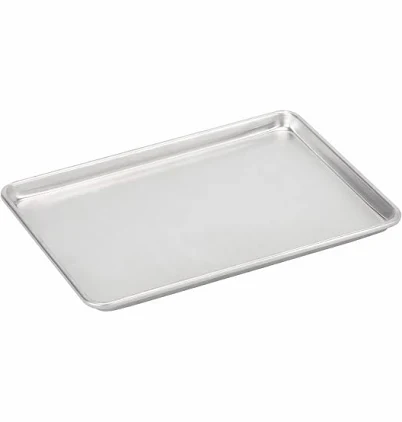
Chicago Metallic Half Size Sheet Pan
Low PFAS concern with only minor unknowns. This is a model-based estimate from materials and available data, not a lab test.
The better-graded swap
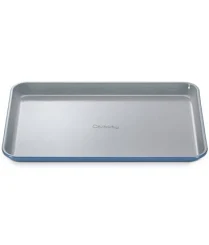
Caraway
Caraway Nonstick Ceramic Medium Baking Sheet
100/100 safety
Same rubric that flunked this product. The swap earned Excellent.
Still want this one anyway? Check the price on Amazon. We’d swap it.
Is Chicago Metallic Half Size Sheet Pan non-toxic? What it is made of
Chicago Metallic half-size sheet pans are typically hard-anodized aluminum or bare aluminum with a rolled rim. Hard anodization creates a sealed oxide layer that prevents direct aluminum leaching into food and resists corrosion and wear. Bare aluminum pans are less durable but still commonly used in commercial kitchens and home baking; they require careful washing to avoid pitting. The material choice affects both safety and longevity, but neither poses acute chemical hazards under normal baking conditions.
What’s concerning
Category baseline
The starting point for this type of product, before anything specific to this product is counted.
No PFAS disclosure
No public statement from the brand about PFAS in this product.
Aluminum leaching in acidic foods
Hard-anodized aluminum reduces but does not eliminate potential for trace aluminum migration when acidic ingredients (vinegar, citrus, tomato) remain in contact for extended periods. Risk is low under typical home baking use but not zero.
Coating degradation (hard anodization only)
If this pan is hard-anodized, the protective oxide layer can be compromised by dishwashers, abrasive scrubbing, or prolonged water contact; once breached, bare aluminum underneath becomes more prone to leaching and staining.
Corrosion and rust from moisture exposure
Bare aluminum or compromised hard anodization can oxidize or corrode if stored damp or exposed to salt spray; while not a direct chemical hazard, corrosion byproducts may migrate to food at high heat or in acidic contexts.
What’s reassuring
Base material not linked to PFAS
The main material recorded for this product is not one associated with PFAS.
Lead
Standard Chicago Metallic half-size pans are not enameled; this hazard applies only if a specialty enameled version is purchased. No recalls or test reports on record for lead/cadmium in Chicago Metallic cookware.
Source, ATSDR ↗The full breakdown
The brand's record and disclosure
Chicago Metallic is a long-established commercial bakeware manufacturer (part of Groupe SEB) with extensive use in professional kitchens and no published product-specific safety controversies on record. The brand does not prominently disclose PFAS use or restriction in its consumer-facing materials, though its PFAS safety grade of 65/100 suggests moderate but not leading environmental responsibility. No formal certifications (NSF, FDA, etc.) are routinely highlighted for this product line. The lack of detailed transparency is typical for legacy bakeware manufacturers but limits independent verification of material sourcing.
How it compares in its category
Chicago Metallic sheet pans are positioned as durable mid-to-commercial-grade bakeware, more robust than consumer-grade nonstick pans but less specialized than high-end ceramic or silicone alternatives. Compared to nonstick-coated pans (which carry Teflon-type coating and coating-degradation risks), bare or hard-anodized aluminum avoids synthetic coating hazards entirely. Compared to steel or cast iron, aluminum conducts heat faster and more evenly, which is why it remains the industry standard despite minor leaching risk in acidic foods. This product's material class has lower concern in bakeware when maintained properly.
If you buy it
Hand wash rather than dishwasher to extend anodization integrity and prevent pitting; acidic foods (tomato sauce, citrus) should not sit in the pan for extended periods, as aluminum can leach slightly in prolonged contact. Use parchment paper or silicone mats to reduce direct food contact if concerned about trace aluminum. Replace if pitting, corrosion, or deformation occurs, as these compromise even heat distribution and may increase leaching risk. Store dry to prevent oxidation staining.
What we don’t know
- Basis
- Model estimate, 70% confidence, not a lab result
- Lab test
- None on record for this exact product
- Brand statement
- Chicago Metallic has made a specific claim
Formulations change between production runs, so check the current label. How we grade.
Better-graded alternatives in Bakeware
Caraway
Nonstick Ceramic Medium Baking Sheet
- ceramic nonstick coating
- A third party reports verifying it as PFAS-free
- Ceramic coating degradation over time
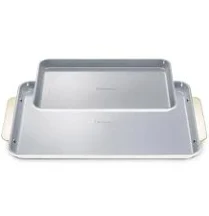
Caraway
Ceramic Nonstick Baking Sheet Duo
- ceramic nonstick coating
- A third party reports verifying it as PFAS-free
- Coating degradation and durability
2 hazards checked on this product. See all of them.

Caraway
Nonstick Ceramic Large Baking Sheet
- ceramic nonstick coating
- The brand calls it PFAS-free, which we have not verified
- Ceramic coating degradation and particle shedding
3 hazards checked on this product. See all of them.
More bakeware grades
How we score, every product runs through the same public 0-100 rubric based on materials, coatings, brand disclosure, lab findings, and recalls. See the full methodology → Spotted a mistake? Report an error.