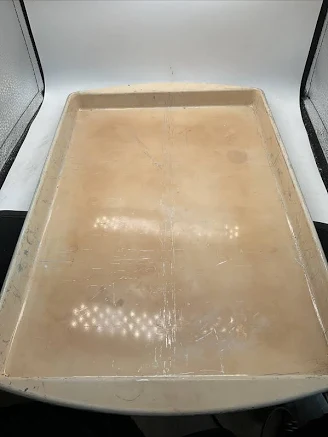
Mirro - Aluminum Cookie Baking Sheet Pan - 15 1/2" X 10 1/2" X 1”
Lower concern. Bare aluminum sheet has no nonstick or applied coating.
Mirro aluminum baking sheet is uncoated bare metal with no PFAS-containing finishes. Standard aluminum cookware poses lower PFAS risk than nonstick-coated alternatives.
We flunk more products than we pass. This one earned its grade. How we grade
Material
Bare aluminum
Brand disclosure
Brand is silent on PFAS
Lab data
No public lab test
Is Mirro - Aluminum Cookie Baking Sheet Pan non-toxic? What it is made of
This is bare, uncoated aluminum sheet metal. Unlike nonstick cookware that relies on applied Teflon-family coating coatings, bare aluminum has no synthetic surface treatment. Aluminum itself is reactive with acidic or salty foods and can leach into food, particularly when heated or in prolonged contact with acidic ingredients like tomatoes or vinegar. The thickness and manufacturing process of this commercial-grade baking sheet influence how quickly reactive leaching occurs, but no test data specific to this Mirro model is on public record.
What’s concerning
Category baseline
The starting point for this type of product, before anything specific to this product is counted.
No PFAS disclosure
No public statement from the brand about PFAS in this product.
Aluminum leaching
Bare aluminum reacts with acidic foods and prolonged heating. Leaching risk increases with food acidity (tomatoes, vinegar, citrus) and contact time. No specific leaching data for this Mirro model is published; standard food-contact aluminum is assumed to meet FDA limits under normal use, but individual exposure depends on cooking habit.
Surface oxidation and corrosion
Bare aluminum oxidizes naturally and can develop a gray or dark patina over time, especially with moisture and acidic foods. While oxidation itself is not acutely toxic, it degrades the aesthetic and functional integrity of the sheet and can transfer a metallic taste to sensitive foods.
Warping or structural failure under heat
Thin aluminum sheets can warp at very high oven temperatures or uneven heat. Warping compromises baking performance and may cause uneven food contact. This Mirro sheet is standard commercial thickness; warping risk is low under normal home-oven use but increases with broiler use or temperatures above 475F.
What’s reassuring
Bare uncoated material
Recorded as a bare, uncoated material with no surface coating or treatment.
Lead
No recalls or test reports document lead or cadmium contamination in Mirro bare aluminum cookware. Food-grade aluminum is required to meet FDA standards, which restrict heavy metal content. However, no third-party certification or test report for this specific product is on record, so assurance is regulatory assumption only.
Source, ATSDR ↗Teflon-type coating or nonstick coating degradation
This product is bare aluminum with no nonstick coating, so Teflon-type coating fume risk is absent. The absence of any applied surface treatment is a hazard reduction compared to coated aluminum pans.
The full breakdown
The brand's record and disclosure
Mirro is a long-established budget cookware brand owned by Groupe SEB. The brand maintains silent disclosure on PFAS, heavy metals testing, or third-party certification of its products. No product recalls specific to this aluminum baking sheet model are documented. The brand does not publish material safety data sheets or independent lab certifications for this product category, so assurance relies on assumed industry baseline standards for food-contact aluminum.
How it compares in its category
Bare aluminum baking sheets are typical entry-level options and cost less than stainless steel or ceramic-coated alternatives. Stainless steel eliminates aluminum leaching entirely but is heavier and more expensive. Nonstick-coated aluminum sheets avoid leaching but introduce Teflon-family coating and coating-degradation risks. This Mirro sheet sits at the low-hazard end for coating safety because no synthetic coating is present, but requires more food-handling discipline to avoid leaching.
If you buy it
Avoid prolonged contact between acidic foods (citrus, tomatoes, vinegar) and the bare aluminum surface; use parchment paper as a barrier for sensitive recipes. Hand wash and dry immediately after use to prevent oxidation stains and corrosion. Do not exceed normal oven temperatures (400-450F for most baking). Replace if surface develops deep pitting, discoloration, or warping. This sheet is not suitable for acidic marinades or storage of cooked foods; use it for cookies, roasted vegetables at moderate acidity, or with a protective layer.
What we don’t know
- Basis
- Model estimate, 82% confidence, not a lab result
- Lab test
- None on record for this exact product
- Brand statement
- Mirro has made none
Formulations change between production runs, so check the current label. How we grade.
Better-graded alternatives in Bakeware
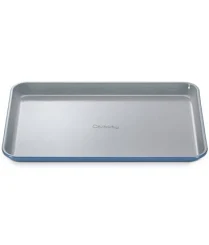
Caraway
Nonstick Ceramic Medium Baking Sheet
- ceramic nonstick coating
- A third party reports verifying it as PFAS-free
- Ceramic coating degradation over time
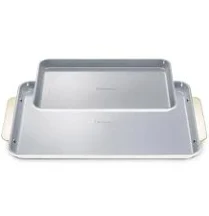
Caraway
Ceramic Nonstick Baking Sheet Duo
- ceramic nonstick coating
- A third party reports verifying it as PFAS-free
- Coating degradation and durability
2 hazards checked on this product. See all of them.
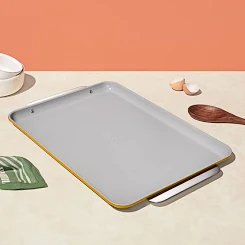
Caraway
Nonstick Ceramic Large Baking Sheet
- ceramic nonstick coating
- The brand calls it PFAS-free, which we have not verified
- Ceramic coating degradation and particle shedding
3 hazards checked on this product. See all of them.
More bakeware grades
How we score, every product runs through the same public 0-100 rubric based on materials, coatings, brand disclosure, lab findings, and recalls. See the full methodology → Spotted a mistake? Report an error.