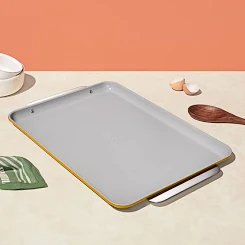
Caraway Nonstick Ceramic Large Baking Sheet
Ceramic nonstick lower concern; ceramic coatings avoid Teflon-type coating-class PFAS.
Caraway's ceramic nonstick baking sheet avoids traditional Teflon-family coating coatings. Brand markets the product as PFAS-free; no independent lab verification found.
Brand says: “Caraway uses ceramic nonstick coating formulated without PTFE/PFOA”
We flunk more products than we pass. This one earned its grade. How we grade
Material
ceramic nonstick coating
Brand disclosure
Brand claims PFAS-free
Lab data
No public lab test
Is Caraway Nonstick Ceramic Large Baking non-toxic? What it is made of
This baking sheet uses a ceramic nonstick coating applied to a steel or aluminum substrate. Ceramic coatings are mineral-based (typically silica, zirconia, or ceramic-type formulations) rather than Teflon-family coating, which eliminates the Teflon-type coating degradation and PFAS-class fluorine risk present in traditional nonstick. The substrate material determines leaching potential, if aluminum core, migration is possible under acidic or high-heat conditions, though baking sheet use (moderate temperature, typically shorter exposure) poses lower risk than cookware with liquid.
What’s concerning
Category baseline
The starting point for this type of product, before anything specific to this product is counted.
Ceramic coating degradation and particle shedding
Ceramic nonstick coatings are more prone to chipping and flaking than Teflon-type coating under mechanical stress (utensil contact, thermal shock). Once coating integrity is compromised, ceramic particles may shed into food.
Aluminum leaching (if substrate)
If the core is bare aluminum, acidic foods (tomato-based, vinegar, citrus) and prolonged contact at elevated baking temperatures can increase leaching. The ceramic coating reduces direct contact, lowering concern compared to uncoated aluminum, but degraded coating areas may reexpose aluminum.
Thermal stress cracking or delamination
Rapid temperature changes (cold water on hot sheet, freezer-to-oven transition) can cause ceramic coating to crack or separate from substrate. This is a durability rather than chemical hazard but compromises the coating barrier.
What’s reassuring
Base material not linked to PFAS
The main material recorded for this product is not one associated with PFAS.
Brand-stated PFAS-free
The brand states this product is PFAS-free. We have not verified the claim.
Lead
No specific lead or cadmium contamination has been reported for Caraway ceramic nonstick bakeware. Modern ceramic coatings in the US and EU market are typically screened, but independent third-party testing results for this product are not publicly available.
Source, ATSDR ↗Fume exposure from coating breakdown at high heat
Ceramic coatings do not emit Teflon-type coating-class fluorine fumes. However, no public data exists on whether ceramic formulations release volatile compounds if overheated well above recommended limits; typical baking use is not a concern.
The full breakdown
The brand's record and disclosure
Caraway markets itself as PFAS-free and has published material sourcing statements emphasizing ceramic nonstick. The brand has not faced documented safety recalls for lead, cadmium, or coating failure in this product line as of current public records. Caraway provides care instructions and acknowledges ceramic coating durability limits, suggesting responsible disclosure of expected product lifecycle.
How it compares in its category
Ceramic nonstick baking sheets occupy a middle tier, they avoid Teflon-type coating fume risk and PFAS, but ceramic coatings typically degrade faster than traditional nonstick or seasoned cast iron under repeated use and abrasion. Compared to bare aluminum sheet pans, this product adds convenience but introduces a coating that will eventually wear. Steel-cored ceramic sheets (if applicable here) lower aluminum leaching concern compared to aluminum-core variants.
If you buy it
Hand-wash only; dishwasher agitation accelerates ceramic coating wear. Avoid metal utensils and scouring pads; use silicone, wood, or plastic. Do not preheat empty or expose to temperatures above manufacturer specification (typically 400-500F). Expect coating degradation within 2-5 years of regular use depending on care. Once coating chips or flakes noticeably, discontinue use to avoid ceramic particles in food and loss of nonstick function.
What we don’t know
- Basis
- Model estimate, 82% confidence, not a lab result
- Lab test
- None on record for this exact product
- Brand statement
- Caraway has made a specific claim
Formulations change between production runs, so check the current label. How we grade.
Better-graded alternatives in Bakeware
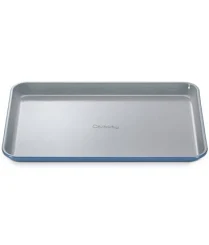
Caraway
Nonstick Ceramic Medium Baking Sheet
- ceramic nonstick coating
- A third party reports verifying it as PFAS-free
- Ceramic coating degradation over time
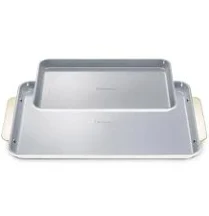
Caraway
Ceramic Nonstick Baking Sheet Duo
- ceramic nonstick coating
- A third party reports verifying it as PFAS-free
- Coating degradation and durability
2 hazards checked on this product. See all of them.
More bakeware grades
How we score, every product runs through the same public 0-100 rubric based on materials, coatings, brand disclosure, lab findings, and recalls. See the full methodology → Spotted a mistake? Report an error.