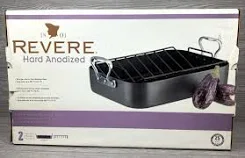
Revere Ware Hard Anodized Stainless Steel Ovenware Baking Roasting Pan w/ Rack, 15in, Two-Piece | Easy to Clean | Gas |
Lower concern. Hard anodized stainless steel cookware with no nonstick coating.
Hard anodized stainless steel is an aluminum oxide barrier that does not contain PFAS. No nonstick coating means no Teflon-family coating risk. Brand makes no PFAS claims.
We flunk more products than we pass. This one earned its grade. How we grade
Material
Hard anodized stainless steel, bare uncoated
Brand disclosure
Brand is silent on PFAS
Lab data
No public lab test
Is Revere Ware Hard Anodized Stainless Steel non-toxic? What it is made of
This pan is hard anodized stainless steel, meaning the steel substrate has been electrochemically treated to form a dense aluminum oxide surface layer that hardens it and improves corrosion resistance. Hard anodizing creates a ceramic-like barrier without added polymer coatings, resins, or fluorinated nonstick chemicals. The 15-inch roasting format with included rack is designed for oven use at typical baking temperatures (up to 500F for most stainless steel cookware), and the absence of a nonstick topcoat means there is no risk of thermal degradation or fume release at normal cooking temperatures.
What’s concerning
Category baseline
The starting point for this type of product, before anything specific to this product is counted.
No PFAS disclosure
No public statement from the brand about PFAS in this product.
Aluminum leaching
Hard anodized stainless steel reduces but does not eliminate aluminum contact with food. Acidic or salt-rich foods (tomatoes, citrus, brine) may cause slow passive leaching; the anodized layer delays this compared to bare aluminum, but prolonged or frequent exposure to highly acidic media warrants caution. Typical baking use (roasting vegetables, meats) presents lower risk than prolonged boiling o
Coating degradation over time
Hard anodized surfaces are durable but not permanent. Mechanical wear from scouring, thermal shock, or abrasive contact can compromise the protective layer over years of use. Once breached, the layer does not self-repair, and continued use may increase metal contact with food. Visual inspection during cleaning can detect early wear; visible pitting or exposed silver substrate warrants replacement.
Stainless steel nickel leaching
Stainless steel cookware typically contains nickel (5-10% in 18/10 or 18/8 grades) to improve corrosion resistance. Small amounts of nickel can leach into acidic or salt-rich foods, particularly if the surface is scratched or worn. For individuals with nickel sensitivity or allergies, this is a consideration; for the general population, migration is below levels of concern in normal home cooking.
What’s reassuring
Bare uncoated material
Recorded as a bare, uncoated material with no surface coating or treatment.
Lead
This product is bare hard anodized stainless steel with no ceramic glaze, enamel, or paint finish on the cooking surface. No decorative or functional glazed coating is present on the listed materials. No public record of lead or cadmium contamination in Revere hard anodized cookware exists.
Source, ATSDR ↗Teflon-type coating or nonstick fume release
Hard anodized stainless steel is not coated with Teflon-type coating (Teflon) or other Teflon-family coating nonstick surfaces. There is no nonstick polymer layer to degrade, off-gas, or release fumes at high heat. This eliminates a primary thermal hazard in modern cookware.
The full breakdown
The brand's record and disclosure
Revere Ware is a heritage cookware brand now owned by Groupe SEB. The company has not published specific PFAS avoidance claims or third-party certifications for this product line. No recalls related to leaching, coating failure, or chemical contamination have been publicly reported for hard anodized stainless steel cookware from Revere. The brand's silence on material transparency is typical for the cookware category but does not indicate a safety issue with this specific product.
How it compares in its category
Hard anodized stainless steel roasting pans occupy a middle tier of cookware safety, they avoid PFAS entirely (unlike nonstick Teflon-type coating or ceramic-coated alternatives) and do not shed microplastics or off-gas volatile organic compounds like silicone or enamel-coated pans can. Compared to bare stainless steel, hard anodized variants reduce the likelihood of passive aluminum leaching due to the protective oxide layer, though neither poses high concern at normal use. This design is considered a reliable choice for frequent home baking without chemical addition concerns.
If you buy it
Use this pan in conventional ovens and gas ovens at temperatures up to the manufacturer's stated limit (confirm via packaging or Revere's website, typically 500F). Hard anodized surfaces are durable but can gradually thin with repeated scouring or acidic foods over years; avoid steel wool and abrasive cleaners. Hand wash or use low-abrasion dishwasher cycles. If the anodized layer shows visible pitting, wear-through to bare aluminum, or discoloration after many years, consider replacement to maintain the barrier function, though minor surface wear does not trigger immediate food safety concern.
What we don’t know
- Basis
- Model estimate, 88% confidence, not a lab result
- Lab test
- None on record for this exact product
- Brand statement
- Revere has made none
Formulations change between production runs, so check the current label. How we grade.
Better-graded alternatives in Bakeware
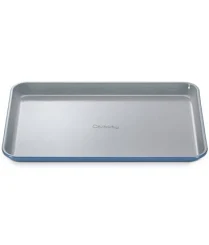
Caraway
Nonstick Ceramic Medium Baking Sheet
- ceramic nonstick coating
- A third party reports verifying it as PFAS-free
- Ceramic coating degradation over time
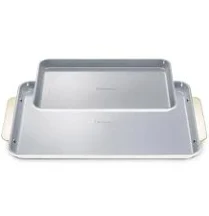
Caraway
Ceramic Nonstick Baking Sheet Duo
- ceramic nonstick coating
- A third party reports verifying it as PFAS-free
- Coating degradation and durability
2 hazards checked on this product. See all of them.

Caraway
Nonstick Ceramic Large Baking Sheet
- ceramic nonstick coating
- The brand calls it PFAS-free, which we have not verified
- Ceramic coating degradation and particle shedding
3 hazards checked on this product. See all of them.
More bakeware grades
How we score, every product runs through the same public 0-100 rubric based on materials, coatings, brand disclosure, lab findings, and recalls. See the full methodology → Spotted a mistake? Report an error.